Ridgid vs Ryobi Cordless Tools: How Their Prices Compare for DIYers
What's inside
As an Amazon Associate I earn from qualifying purchases. This post may contain affiliate links at no extra cost to you.
Ridgid and Ryobi both offer cordless tools aimed at homeowners, but their prices work differently. Ryobi’s broad ONE+ lineup is built around frequent sales and a large range of homeowner tools. Ridgid typically costs more at regular prices, but its tools are aimed at heavier use and may include a lifetime service agreement if you meet the registration requirements. That agreement is not the same as a blanket lifetime warranty.
For a DIYer who drills occasionally, builds a few shelves, or handles seasonal yardwork, the cheapest kit that does the job is often the better value. If you use a tool hard, need more capable batteries, or want to keep a set for years, Ridgid can justify the extra upfront cost.
As an Amazon Associate we earn from qualifying purchases at no extra cost to you.


Typical prices: kit deals matter more than bare-tool tags
Prices change with promotions, but these ranges are useful for comparing common kits at full or near-full retail. A kit usually includes a battery and charger; a bare tool does not. Compare the contents before judging the price, since a second battery can be worth $50 or more depending on capacity and sales.
| Purchase | Ryobi typical range | Ridgid typical range | What to check |
|---|---|---|---|
| Basic drill/driver kit | $80–$150 | $130–$200 | Battery capacity, charger, and whether the drill is brushed or brushless |
| Drill and impact-driver combo | $150–$250 | $200–$350 | Two tools do not always mean two batteries |
| Brushless combo kit | $250–$400 | $300–$500 | Included battery sizes and the number of tools |
| Bare-tool circular saw | $70–$150 | $100–$200 | Blade size, cutting depth, and battery requirement |
These are comparison ranges, not price guarantees. Holiday events and retailer promotions can move a kit well below them, while a bare tool can look like a bargain until you add a battery and charger. For a first purchase, compare complete kits. If you already own batteries for one brand, the bare-tool price is usually the more relevant number.
Where Ryobi saves money
Ryobi is often the lower-cost way into a cordless platform. Its ONE+ batteries work across a large selection of tools, including drills, sanders, fans, lights, and lawn equipment. That range is useful to a homeowner who might buy a tool every year rather than outfitting a shop at once. A sale on a drill kit can also provide batteries and a charger for later purchases.
The trade-off is that Ryobi’s lineup includes basic tools intended for lighter work. A budget drill can handle pilot holes, furniture assembly, and occasional holes in wood. It may run hot or feel slow when asked to drill many large holes or drive long fasteners repeatedly. For typical weekend projects, that is an acceptable limitation; for daily construction work, it can become a reason to upgrade.
If you need a low-cost starting point, compare current Ryobi ONE+ drill-driver kits. Look for a kit with at least one 2.0Ah battery for light work, or a larger pack if you plan to use a circular saw or other demanding tool.
When Ridgid’s higher price can pay off
Ridgid kits usually cost more, especially outside sale periods. The added expense can buy a more capable tool or a better-equipped kit, but the brand name alone does not guarantee that every tool is superior. Compare the actual tool, battery, and included accessories. A brushless drill is generally a better choice for sustained use than a brushed one, though it may be unnecessary for a handful of household repairs.
Ridgid’s lifetime service agreement can add value for buyers who plan to keep tools. Registration rules apply, and coverage depends on the agreement’s terms; keep receipts and confirm which tools and batteries qualify. Do not pay a large premium solely because you assume every battery will be replaced forever without conditions.
Ridgid is a sensible choice if you regularly drill into dense material, drive long screws, or expect to use the same tools on demanding projects. If your drill comes out six times a year, spending an extra $100–$200 may buy performance you rarely use. Compare Ridgid cordless drill kits against Ryobi kits with similar battery counts and capacities, rather than comparing a Ridgid two-battery kit with a Ryobi bare tool.
Batteries can erase the price gap
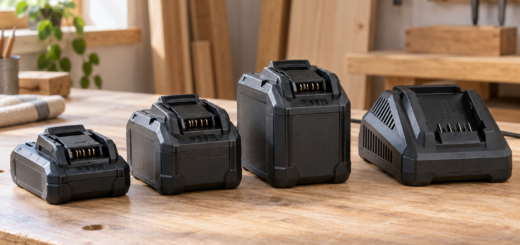
Battery capacity affects runtime and cost. A 2.0Ah pack is lighter and fine for a drill or impact driver used in short bursts. A 4.0Ah pack is more useful for a saw, shop vacuum, or extended work, but adds weight and expense. A compact drill with a large battery can also become tiring overhead.
Do not mix battery prices into a comparison without checking compatibility and kit contents. Both brands have multiple battery sizes, and a tool may be sold with no battery at all. If you own a platform already, staying with it avoids buying another charger and spare packs. If you are starting fresh, estimate the cost of the next two tools you expect to buy, not just the first kit.
Choose by the work you actually do
For picture hanging, flat-pack furniture, small repairs, and occasional deck maintenance, Ryobi is usually the better budget pick. A basic drill kit and an impact driver cover many household jobs; there is little reason to pay for a top-tier set if the tools will spend most of the year on a shelf. For a homeowner building furniture or making regular cuts, compare Ryobi ONE+ circular saws with the cost of a battery capable of running one comfortably.
For repeated cutting, remodeling, or work that keeps a tool running for long stretches, step up to a brushless kit and a larger battery. Ridgid is worth considering when its kit offers the needed performance and its service agreement fits your plans. A cheaper tool can fail through overheating, slow cutting, or an underpowered battery—not just by breaking. If you have to stop repeatedly to let it cool or recharge, the lower sticker price may not be saving much.
When to buy
Watch for holiday promotions, spring tool events, and retailer bundle deals. Combo kits often provide better value than buying each tool separately, especially when the bundle includes two useful batteries. Before buying, note the kit contents and compare the price with the same tools sold individually. Avoid buying extra tools just because a bundle looks cheap; an unused tool is not a saving.
For most DIYers, the practical rule is simple: choose Ryobi for low-cost, occasional home use and a wide selection of homeowner tools. Choose Ridgid when the specific kit offers better fit or performance for frequent, heavier work—and verify the service terms rather than treating them as automatic. On either platform, a well-timed kit sale and the right battery size matter more than the logo.