Best Gas Ranges for Home Chefs
What's inside
As an Amazon Associate I earn from qualifying purchases. This post may contain affiliate links at no extra cost to you.
The best gas ranges for home chefs are the Wolf 36-inch dual-fuel range for maximum control, the Thermador Pro Harmony gas range for powerful burners in a slimmer professional format, the GE Profile 30-inch range for value and convection features, and the BlueStar Platinum for exceptionally high-heat cooking.
As an Amazon Associate we earn from qualifying purchases at no extra cost to you.


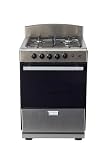
Our Top Picks by Cooking Situation
- Best overall for serious cooks: Wolf 36-inch Dual Fuel Range — Excellent burner control, a large electric convection oven, and dependable service support make it a strong long-term choice.
- Best gas-only professional range: Thermador Pro Harmony PRG366WH — Six burners, high output, and a spacious gas oven suit cooks who want a traditional all-gas setup.
- Best value for frequent family cooking: GE Profile 30-inch Gas Range — It combines a large oven, convection cooking, a powerful center burner, and easier ownership at a much lower price.
- Best for maximum burner heat: BlueStar Platinum — Its open-burner design and very high-BTU options favor wok cooking, rapid boiling, and restaurant-style searing.
- Best for an integrated griddle: KitchenAid Commercial-Style Gas Range — Select configurations offer a built-in griddle without requiring a separate countertop appliance.
What Matters Most in a Gas Range
Burner power is useful only when control is equally good
A burner rated at 18,000 to 25,000 BTU can boil a large pot quickly, but maximum output is only part of the decision. Serious home chefs should also examine the lowest stable setting. A range that can reduce a burner to roughly 500 to 1,000 BTU is more useful for melting chocolate, holding sauces, and simmering stock than one that merely advertises a large maximum number.
Look for a mixture of burner sizes rather than six identical high-output burners. A practical layout includes one or two high-power burners for boiling and wok cooking, two medium burners for sautéing, and at least one small burner with precise low heat. Sealed burners contain spills more effectively; open burners can deliver intense heat but usually demand more cleaning.
Oven capacity should match your largest meal
A 30-inch range commonly provides about 5.0 to 6.0 cubic feet of oven space, while a 36-inch model may offer around 5.7 to 7.0 cubic feet depending on the configuration. Capacity is not the same as usable space: a large oven cavity may still have limited rack clearance for a tall roasting pan.
Measure the height of your stockpot, Dutch oven, and largest roasting pan before buying. If you regularly cook a turkey, multiple sheet pans, or several covered casseroles, a 36-inch range or a double-oven configuration can be more useful than simply choosing the most powerful burners.
Convection performance affects more than browning
Convection fans circulate heated air to improve browning and reduce hot spots, but fan design and rack spacing matter. A true convection or dual-convection system is especially helpful for cookies, roasted vegetables, and multiple trays of food. It does not automatically make every recipe cook faster; begin by reducing the recipe temperature by about 25°F only when the manufacturer or recipe recommends it, and check food early.
Gas ovens often provide strong moist heat for roasting, while electric convection ovens generally offer more even dry heat for pastries. That is why dual-fuel ranges—with gas burners and an electric convection oven—are popular with bakers and cooks who use both stovetop and oven heavily.
Feature Comparison
| Range type or example | Typical width | Burner output | Approximate oven capacity | Convection and griddle notes | Typical market position |
|---|---|---|---|---|---|
| GE Profile 30-inch gas range | 30 inches | Up to about 21,000 BTU | About 5.6 cu. ft. | Fan convection; some models include a center griddle | Midrange |
| KitchenAid commercial-style gas range | 30 or 36 inches | Up to about 20,000 BTU | About 5.8 cu. ft. on many 30-inch models | Convection; selected versions include a griddle | Upper midrange |
| Thermador Pro Harmony PRG366WH | 36 inches | Six burners; up to about 18,000 BTU per burner | About 5.7 cu. ft. | Gas convection; optional or configuration-dependent griddle | Premium |
| Wolf 36-inch dual-fuel range | 36 inches | Four or six burners; up to about 20,000 BTU | About 5.7 cu. ft. | Electric convection; griddle available on selected layouts | Premium |
| BlueStar Platinum range | 30, 36, 48, or 60 inches | Configurations can reach about 25,000 BTU | Roughly 4.8 to 6.5 cu. ft., depending on size | Convection available; griddle configurations vary | Premium to luxury |
Specifications vary by exact model, fuel configuration, and regional version, so confirm the installation sheet before ordering. The table is most useful for comparing scale: a 48-inch range can provide substantially more cooking surface, but it also needs more ventilation, electrical capacity, and room around the controls.
Gas, Dual Fuel, or Induction Conversion?
Choose an all-gas range if you value moist oven heat, simple burner operation, and a lower installation cost than dual fuel. Choose dual fuel if baking, pastry, and multi-rack roasting are major priorities. The electric oven usually gives tighter temperature management and stronger convection performance, but it requires the correct electrical circuit.
Do not select a range solely because it has the highest BTU rating. A high-output burner can overwhelm a lightweight pan, scorch oil, or make a small saucepan difficult to control. Pan thickness, burner spacing, grate stability, and the quality of the low setting often affect daily cooking more than peak output.
Decision Matrix for Home Chefs
| Your situation | Best direction | Why |
|---|---|---|
| Cooking daily in a 30-inch kitchen | GE Profile or KitchenAid 30-inch | Good oven capacity without sacrificing cabinet and walkway space |
| Cooking elaborate meals several times per week | Thermador Pro Harmony or Wolf 36-inch | More burners, stronger layouts, and better space for simultaneous pans |
| Frequent baking and roasting | Wolf dual fuel | Electric convection oven generally favors even multi-rack results |
| Wok cooking and rapid boiling | BlueStar Platinum or another open-burner high-BTU range | Very high heat and direct flame response |
| Regular pancakes, tortillas, or grilled sandwiches | Range with an integrated griddle | Faster setup and better stability than a loose griddle over a grate |
| Limited cleaning tolerance | Sealed-burner 30-inch range | Fewer exposed parts and easier spill containment |
Griddle Options: Built-In Versus Removable
An integrated griddle is convenient for breakfast foods and high-volume searing, but it replaces one or more standard burners and can be slower to clean. Check whether it is cast iron, stainless steel, or a coated surface. Cast iron retains heat well but may require seasoning and careful drying. Stainless steel is less vulnerable to flaking but can develop stuck-on residue if used without enough fat or preheating.
A removable cast-iron griddle is more flexible and less expensive to replace. It can also be lifted away for burner access. However, it may heat unevenly across two burners and can be awkward to store. For occasional pancakes, removable is usually the better value; for weekly griddle cooking, an integrated design earns its space.
Cleaning and Ownership Realities
The parts most likely to become troublesome are burner ports, igniters, grates, oven door seals, and griddle surfaces. Food debris around an igniter can cause delayed ignition or repeated clicking. Clean burner caps and ports only after they cool, keep them correctly seated, and avoid blocking the small gas openings with metal tools.
- Wipe spills after the surface cools but before sugary or acidic food hardens.
- Lift grates rather than sliding them, which can scratch the cooktop.
- Use manufacturer-approved cleaners on stainless steel and avoid abrasive pads.
- Do not line the oven floor with foil; it can interfere with heat circulation and damage the cavity.
- Clean convection filters or vents as specified, since grease buildup can reduce airflow.
- Have gas connections and ventilation installed by qualified professionals.
Professional-style ranges also cost more to install and maintain. Budget for a suitable hood, gas line, electrical connection, anti-tip hardware, and possible service visits. A range with slightly lower headline power but accessible parts and nearby service support can be the better ownership choice.
Bottom Line
For the broadest combination of burner control, oven consistency, and long-term cooking flexibility, choose a Wolf dual-fuel range. For all-gas cooking with a professional layout, Thermador is a strong choice. BlueStar is the specialist option for maximum flame power, while GE Profile and KitchenAid offer more practical pricing and simpler fit for many homes. Match the burner layout and oven type to the food you cook most often, then verify clearances, ventilation, electrical requirements, and exact capacity before purchase.