Best Floor-Standing Wine Racks for Home Storage
What's inside
As an Amazon Associate I earn from qualifying purchases. This post may contain affiliate links at no extra cost to you.
The best floor standing wine racks for home storage are the ones that keep bottles horizontal without wasting floor space: choose a compact 12–24-bottle rack for a kitchen, a heavier 30–60-bottle cabinet or modular rack for a dining room, and a deep, stable steel or wood system for a cellar.
As an Amazon Associate we earn from qualifying purchases at no extra cost to you.
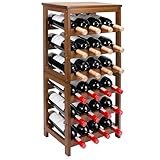

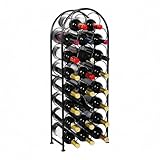

Our Top Picks
 Kings Brand 13-Bottle Freestanding Wine Rack Tower with10" W x 10" D x 42" H8.5 poundsCheck on Amazon


Quick comparison: which floor-standing wine rack fits your room?
| Rack type | Typical capacity | Typical footprint | Materials | Best room | Assembly |
|---|---|---|---|---|---|
| Compact countertop-height floor rack | 9–18 bottles | 12–18 in. wide × 9–13 in. deep | Wood, bamboo, or coated steel | Small kitchen or apartment dining area | None to 30 minutes |
| Freestanding lattice rack | 24–48 bottles | 24–36 in. wide × 10–14 in. deep | Solid wood or powder-coated steel | Dining room or pantry | 30–90 minutes |
| Modular cellar rack | 40–120 bottles | 24–48 in. wide × 12–16 in. deep | Redwood, pine, metal, or composite | Wine cellar or dedicated storage room | 1–3 hours; anchoring often required |
| Enclosed wine cabinet | 20–50 bottles | 24–36 in. wide × 16–22 in. deep | Furniture-grade wood, veneer, glass, and metal | Dining room or entertaining space | 30–120 minutes |
| Heavy-duty metal rack | 48–100+ bottles | 30–48 in. wide × 12–18 in. deep | Steel, often powder-coated | Cellar, utility room, or garage | 45–120 minutes; wall restraint recommended |
Capacity figures assume standard 750 ml bottles. Champagne, sparkling-wine, Burgundy, and some natural-wine bottles are wider, so a rack advertised for 48 bottles may hold closer to 36–42 mixed bottles in everyday use.
Best choices by situation
Best for a small kitchen: compact 12–18-bottle rack
A narrow rack with two or three horizontal tiers is usually the most practical kitchen choice. Look for a width under 18 inches, a depth under 13 inches, and feet with rubber or silicone pads. A rack that weighs at least 8–12 pounds when empty is less likely to move when a bottle is removed.
Open steel racks are easy to wipe clean and tolerate occasional splashes better than unfinished wood. Wood or bamboo looks warmer beside cabinets, but it should have a sealed surface and enough clearance beneath the lowest bottle to allow sweeping. Avoid placing any rack directly beside an oven, radiator, dishwasher vent, or sunny window; temperature swings are more damaging to stored wine than the rack material itself.
Best for a dining room: furniture-style 24–36-bottle rack
For visible storage, a freestanding lattice rack or enclosed cabinet offers a better balance of capacity and appearance. A 30-bottle rack commonly occupies about 3 square feet of floor area, but the practical space requirement is larger once you include access. Leave at least 24 inches in front of the rack so bottles can be removed without blocking a chair or walkway.
Furniture-style racks are often made from pine, hardwood, veneer, or metal frames with wood shelves. Solid wood handles small knocks well and can be refinished; veneer gives a polished appearance at lower cost but can chip at exposed corners. Check whether the shelves are fixed or adjustable. Fixed shelves are generally stronger, while adjustable shelves accommodate wide bottles more effectively.
Best for a cellar: modular 48-bottle-and-up system
Cellar storage rewards density and expandability. A modular rack lets you add matching sections as your collection grows rather than buying one oversized unit immediately. Redwood and other naturally durable woods are popular in cellar construction, while powder-coated steel is useful where humidity or cleaning is a concern.
Choose a rack at least 12 inches deep if you store mixed bottle shapes. A 10-inch-deep rack may fit standard Bordeaux bottles but can leave Burgundy bottles protruding. In a cellar, keep the rack away from any damp wall and use adjustable feet or shims on uneven concrete. Tall units should be anchored to a stud, masonry wall, or a properly installed cellar framing member.
What to compare before buying
Bottle capacity versus usable capacity
Manufacturers usually count bottles arranged in the ideal pattern. Real collections contain bottles with different diameters, foil capsules, and awkward shoulders. For a useful estimate, reduce the stated capacity by 15% if you mainly buy standard bottles and by 25% if you regularly buy sparkling or Burgundy-style bottles.
For example, a 36-bottle rack has an estimated usable capacity of:
36 × 0.85 = 30.6 bottles for a mixed standard-bottle collection.
That leaves room for roughly 30 bottles without forcing wide bottles into narrow slots or storing some upright on top.
Footprint and wall clearance
Measure the rack body, then add access space. A 14-inch-deep rack does not need to sit 14 inches from the wall; however, leave approximately 1–2 inches behind it for baseboards, uneven walls, and ventilation. Enclosed cabinets may require more clearance if the manufacturer specifies air circulation around the back or sides.
Never assume a narrow rack is automatically stable. Height matters: a 60-inch rack that is only 10 inches deep can tip more easily than a 30-inch rack with the same footprint. Prefer a low center of gravity, a wide base, adjustable levelers, and an included anti-tip strap or brackets.
Materials and humidity resistance
- Powder-coated steel: strong, easy to clean, and well suited to cellars, but inspect welds and coating for chips that could begin to rust.
- Solid hardwood: attractive and repairable, though it costs more and can move slightly with changes in humidity.
- Pine or other softwood: economical and common in modular cellar racks; dents and screw holes are more noticeable.
- Bamboo: light and appealing for small racks, but confirm that joints are glued and the finish is sealed.
- Veneered furniture board: visually polished, but protect edges from standing water and avoid overloading shelves beyond their stated limit.
Assembly and load rating
Assembly quality affects stability as much as the material. A good rack should have accurately drilled holes, captive or substantial fasteners, and instructions that identify the correct orientation of every shelf. Do not fully tighten every screw until the frame is square; tighten the joints gradually after checking that the rack sits flat.
Estimate the load before filling it. A standard 750 ml bottle of wine weighs roughly 2.5–3 pounds when full. A 48-bottle collection therefore adds approximately 120–144 pounds, before counting the rack itself. If the rack uses thin shelves, confirm its total load rating rather than assuming each visible slot is independently supported.
Decision matrix for common buyers
| Your situation | Recommended choice | Target specifications | Why |
|---|---|---|---|
| Limited budget and fewer than 15 bottles | Open compact rack | 9–18 bottles; under 18 in. wide; 8 lb or more | Low cost, simple assembly, and minimal floor use |
| First-time buyer unsure how fast the collection will grow | Modular wood or steel rack | 24–36 bottles initially; stackable or expandable | Avoids paying for unused capacity |
| Frequent entertaining in a dining room | Stable furniture-style rack or cabinet | 24–50 bottles; 16–22 in. deep; finished exterior | More attractive in a living area and easier to organize |
| Wide bottle collection | Adjustable shelf rack | At least 12 in. internal depth; removable dividers | Fits sparkling and Burgundy bottles without forcing them |
| Long-term cellar storage | Anchored modular cellar system | 48+ bottles; 12–16 in. deep; levelers and wall restraint | High capacity, serviceable parts, and better expansion options |
Setup mistakes that shorten a rack’s life
- Skipping leveling: A twisted frame transfers weight to one corner and can loosen joints. Adjust feet or use hard, non-compressible shims.
- Overloading the top: Do not use the top surface as extra storage unless it is rated for the weight. Two cases of bottles can exceed the load rating of a decorative cabinet.
- Leaving bottles upright for years: Store cork-sealed bottles horizontally or at a slight angle that keeps the cork in contact with the wine. Screw-cap bottles do not require this for seal maintenance, but horizontal storage still saves space.
- Ignoring wall clearance: Baseboards can push a tall rack forward, making it less stable. Measure the skirting board and use an appropriate spacer or anchor.
- Cleaning with excess water: Wipe wood with a barely damp cloth and dry it immediately. For coated steel, use mild soap and dry any chipped or exposed area thoroughly.
Ownership costs and maintenance
The rack itself usually needs less maintenance than the storage environment. Inspect fasteners after the first month and again every six to twelve months, especially on wooden racks that experience seasonal humidity changes. Replace cracked plastic feet, bent dividers, or rusting fasteners rather than continuing to load the rack.
Budget roughly $25–$80 for a basic compact rack, $80–$250 for a substantial freestanding rack, and $200–$700 or more for a large modular or enclosed system. A cheaper rack is not a bargain if its slots cannot accept your bottles or if it requires replacement after one move. For most homes, the best value is a stable 24–36-bottle rack with 15–20% unused capacity, allowing the collection to grow without crowding.
Final recommendation
Choose a compact coated-steel or sealed-wood rack for a kitchen, a finished 24–36-bottle rack with a broad base for a dining room, and an expandable, anchored system for a cellar. Prioritize usable bottle width, stability, and access clearance over the largest printed capacity. Those details determine whether the rack remains convenient and safe after it is filled, moved, cleaned, and used for several years.