Best Single Player Xbox One Games to Play Now
What's inside
- Top 3 Picks
- Quick Comparison
- How We Chose
- 1. Tomb Raider: Definitive Edition – Best for a Cinematic Solo Campaign
- 2. Just Cause 4 – Best for Open-World Chaos on a Budget
- 3. Watch Dogs – Best for Hacking-Flavored Open-World Stealth
- 4. Dark Souls Trilogy – Best for Long-Term Challenge and Content Volume
- 5. Titanfall 2 – Best for a Short, Sharp Shooter Campaign
- 6. Sniper Ghost Warrior Contracts – Best for Slow, Tactical Sniping
- 7. Hello Neighbor – Best for Stealth Puzzle Fans and Younger Players
- How to Choose
As an Amazon Associate I earn from qualifying purchases. This post may contain affiliate links at no extra cost to you.
The best single-player Xbox One game to play right now, for most people, is Tomb Raider: Definitive Edition — a complete, self-contained action-adventure campaign that runs natively on Xbox One, needs no online connection, and can be finished in a week or stretched across a month. It suits players who want a story with a beginning, a middle and an ending, and no live-service obligations attached. If raw hours per dollar matter more than production polish, Dark Souls Trilogy puts three full games plus their expansions on three discs, the highest content volume on this list by a wide margin. If you want the cheapest entry point, Just Cause 4 and Watch Dogs are both budget-tier open-world games with 20-plus-hour campaigns. And if you only get five or six hours of screen time a week, Titanfall 2‘s short, tightly edited campaign is the one that respects that schedule. The rest of this guide sorts all seven picks by genre, campaign length, difficulty and how they actually behave on an Xbox One console.
Our Top Picks


Top 3 Picks
Best overall: Tomb Raider: Definitive Edition
This is the safest recommendation on the list because it does everything a solo player needs without asking for a subscription, a co-op partner or a hundred-hour commitment. The remastered campaign is roughly 12 to 15 hours if you push straight through, and 20 to 25 if you hunt the optional tombs and collectibles. It suits anyone who wants a cinematic third-person adventure they can finish and move on from.
Best budget: Just Cause 4
Budget-tier pricing plus one of the largest open-world maps in the series makes this the best hours-per-dollar pick for players who like to make their own fun. The story runs 20 to 30 hours, and the side content can double that if you enjoy liberation-style map clearing. There is no difficulty selector, which is either liberating or maddening depending on your temperament.
Best premium: Dark Souls Trilogy
Three complete games and every piece of downloadable content, collected on three discs, for a price that works out cheaper per hour than almost anything else here — provided you finish it. The catch is that these are deliberately difficult action RPGs with no difficulty setting to soften them, so the value proposition depends entirely on your patience. For the right player it is 130 to 160-plus hours of the best-designed combat in the genre.
Best for a short campaign: Titanfall 2
Five to seven hours, no filler, no grinding, no open world to trudge across. It is the pick for anyone with a full calendar who still wants one genuinely memorable shooter campaign. The trade-off is that the campaign ends quickly and the multiplayer half is a separate mode with its own online requirements.
Quick Comparison
| Product | Best for | Key specs | Price tier |
|---|---|---|---|
| Tomb Raider: Definitive Edition | A cinematic solo campaign with a clear ending | Third-person action-adventure; roughly 12–15 h main story, 20–25 h completionist; multiple difficulty levels; fully offline once installed; Xbox One disc | Premium |
| Just Cause 4 | Open-world physics chaos on a tight budget | Third-person open-world action; roughly 20–30 h story, 40+ h with side content; no difficulty selector; solo play offline; Xbox One disc | Budget |
| Watch Dogs | Hacking-led stealth in a modern open world | Open-world action-adventure; roughly 20 h main story, 35–45 h completionist; multiple difficulty levels; solo campaign playable offline; Xbox One disc | Budget |
| Dark Souls Trilogy | Long-term challenge and maximum content volume | Three full action RPGs plus all DLC on three discs; roughly 130–160+ h combined; no difficulty selector; online optional; Xbox One discs | Premium |
| Titanfall 2 | A short, sharp shooter campaign | First-person shooter; roughly 5–7 h campaign; several difficulty tiers; campaign fully offline; separate online multiplayer mode; Xbox One disc | Mid-range |
| Sniper Ghost Warrior Contracts | Patient, tactical sniping and stealth | First-person tactical sniping; roughly 10–15 h campaign plus challenge objectives; difficulty tiers; solo play offline; Xbox One disc | Mid-range |
| Hello Neighbor | Stealth puzzling with a lighter tone | First-person stealth puzzle; roughly 8–12 h across three acts; adaptive AI antagonist; solo play offline; Xbox One disc | Budget |
How We Chose
Every pick here was selected against four criteria drawn from published product listings, genre conventions and how each title behaves on Xbox One hardware rather than from hands-on play. First, category fit: each game had to be genuinely enjoyable solo, without a co-op partner or a lobby full of strangers to make it work. Second, verifiable specs: campaign structure, difficulty options, offline requirements and whether the disc installs and runs natively on Xbox One. Third, use case: we weighted short campaigns, long campaigns, stealth, open-world freedom and narrative separately, because a player with five spare hours a week and a player with thirty want different things. Fourth, upgrade path and longevity: how the game holds up over repeat sessions, whether the content runs out, and whether it still plays on newer hardware through backward compatibility. Titles that depend heavily on live servers, seasonal content or an active player base were excluded, because a single-player recommendation should still work in five years.
1. Tomb Raider: Definitive Edition – Best for a Cinematic Solo Campaign
As an Amazon Associate we earn from qualifying purchases at no extra cost to you.
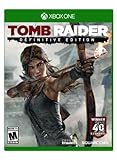
This is the game to start with if you have not played a big single-player adventure in a while. It is a third-person action-adventure built around exploration, light survival crafting, environmental puzzles and set-piece combat, and it tells one complete story with a definitive ending. The Definitive Edition is the eighth-generation console version of the 2013 reboot, rebuilt with reworked character models, improved lighting and a presentation tuned for 1080p-class displays, so it looks and runs noticeably better than the version that shipped on the previous generation of hardware.
Who it suits: players who want a linear, authored experience rather than an open world; newcomers to the series who want to start at the beginning of the modern timeline; anyone who prefers a game they can finish in a fortnight; and players who want something that works entirely offline with no subscription.
Key specs:
- Genre: third-person action-adventure with survival, stealth and puzzle elements
- Structure: a linear main path through interconnected hub areas, with optional challenge tombs and collectibles off the critical route
- Campaign length: roughly 12–15 hours for the main story; roughly 20–25 hours if you clear the tombs, relics and documents
- Difficulty: multiple selectable difficulty levels, so the combat can be tuned without changing the story
- Offline: the campaign plays without an internet connection once the disc has installed
- Format: Xbox One disc; also playable on Xbox Series X through backward compatibility, since that console has a disc drive
- Publisher: Square Enix
Strengths: the pacing is the standout. The campaign alternates between quiet exploration, climbing and puzzle solving, and loud, scripted action sequences, and it rarely lets any one of those outstay its welcome. The optional tombs are genuinely optional — short, self-contained puzzle rooms that give you something to do if you want more without padding the critical path. The upgrade system is light enough that you never feel punished for ignoring it. And because the game has a fixed ending rather than an endless endgame loop, it is easy to put down and move on, which matters if your backlog is already deep.
Pros
- Complete, self-contained story that finishes properly
- Runs natively on Xbox One and needs no online connection
- Remastered presentation that holds up better than the original release
- Optional tombs give completionists extra content without bloating the main path
- Frequently available at premium-tier pricing that is still modest for the hours on offer
Cons
- Shorter than the open-world titles on this list — a fast player can finish it in a weekend
- The story is linear, so there is little replay value beyond a harder difficulty run
- Collectible hunting can feel like busywork if you chase 100 percent
- Some set pieces lean heavily on scripted sequences, which reduces player freedom
How it compares with the nearest alternative: the closest pick in spirit is Titanfall 2, because both are tightly authored campaigns that end when they say they will. The difference is pace and perspective — Tomb Raider is slower, exploration-led and third-person, while Titanfall 2 is a fast first-person shooter that lasts a third as long. Against Just Cause 4, Tomb Raider is the opposite philosophy: a directed story versus a sandbox where you invent your own objectives. If you want a narrative you can follow rather than a map you can dismantle, take Tomb Raider.
2. Just Cause 4 – Best for Open-World Chaos on a Budget

Just Cause 4 is a third-person open-world action game built around a grappling hook, a wingsuit and an enormous amount of destructible scenery. You play as Rico Rodriguez, working through a fictional South American nation divided into regions that you liberate one at a time. The Definitive Edition era of the series has always been about player expression rather than tight storytelling: the tools are the point, and the mission structure exists mainly to give you somewhere to use them.
Who it suits: players who like setting their own goals; anyone who enjoys physics sandboxes and emergent chaos more than scripted narrative; budget-conscious buyers who want the biggest possible map for the smallest outlay; and players who do not mind a loose story in exchange for total freedom.
Key specs:
- Genre: third-person open-world action with vehicles, explosives and traversal tools
- Structure: a large map divided into regions and settlements, with a main story mission chain and a deep layer of optional liberation objectives
- Campaign length: roughly 20–30 hours for the main story; 40-plus hours if you chase regional completion
- Difficulty: no difficulty selector — the challenge comes from the situation you create, not a menu setting
- Offline: fully playable solo without an internet connection once installed
- Format: Xbox One disc; backward compatible on Xbox Series X
- Publisher: Square Enix
Strengths: the traversal toolkit is the best reason to own it. The grappling hook can tether objects together, retract, and combine with the wingsuit to turn movement across a huge map into its own game. Weather systems add genuine spectacle, with extreme conditions that change how you approach a region. The liberation loop is satisfying in the same way clearing a checklist can be satisfying: every settlement you take gives you a foothold, a fast-travel point and something to do next. And because it sits in the budget tier, the risk of trying it is low.
Pros
- Budget-tier price for one of the largest open worlds in the series
- Traversal tools that make simply moving around entertaining
- Dozens of hours of content if you enjoy completion-style play
- No online requirement and no live-service dependencies
- Easy to dip into for 30 minutes or disappear into for a weekend
Cons
- The story and characters are thin compared with Tomb Raider or Watch Dogs
- No difficulty setting, so combat balance is what it is
- Mission variety thins out over a long playthrough
- Large install footprint, which matters on a 500 GB console
How it compares with the nearest alternative: the direct comparison is Watch Dogs, the other budget-tier open-world game here. Both give you a city-sized playground, but they reward different instincts. Watch Dogs rewards planning, observation and stealth, with hacking as your primary lever; Just Cause 4 rewards improvisation and destruction, with a grappling hook as your primary lever. If you want to think your way through a compound, choose Watch Dogs. If you want to attach three fuel tanks to a helicopter and see what happens, choose Just Cause 4.
3. Watch Dogs – Best for Hacking-Flavored Open-World Stealth

Watch Dogs is an open-world action-adventure set in a near-future version of Chicago where the city’s infrastructure is centrally controlled and therefore centrally hackable. You play as Aiden Pearce, a vigilante with a phone that can read the environment around him. The core loop is observation: you profile the people and systems around a target, disable cameras, raise bollards, trigger traffic lights and cut power, then decide whether to slip through unnoticed or start a firefight.
Who it suits: players who prefer stealth and planning to run-and-gun combat; anyone who enjoys open-world games with a strong systems layer rather than pure sandbox physics; players who want a full-length campaign at budget-tier pricing; and anyone who likes near-future settings over fantasy or post-apocalyptic ones.
Key specs:
- Genre: open-world action-adventure with stealth, hacking and driving
- Structure: a main story mission chain across a city map, plus a substantial layer of side activities, fixer contracts and collectibles
- Campaign length: roughly 20 hours for the main story; 35–45 hours for full completion
- Difficulty: multiple selectable difficulty levels, and stealth approaches that let you avoid most direct combat
- Offline: the solo campaign is playable offline; some connected extras in older titles of this type depend on publisher services that can be retired over time, which is worth knowing before you buy for anything other than the campaign
- Format: Xbox One disc; backward compatible on Xbox Series X
- Publisher: Ubisoft
Strengths: the hacking layer changes how you read an open world. Instead of looking at a building and asking which door to kick in, you look at it and ask which camera to hijack, which junction box to overload and which guard’s phone to distract. The city has enough density that wandering produces small stories on its own. Driving is competent, side content is plentiful, and the campaign has a coherent arc with a defined ending. It is also one of the cheapest ways on this list to get 20-plus hours of a well-produced open world.
Pros
- Stealth-first design that rewards patience and observation
- Budget-tier price for a full-length open-world campaign
- Hacking mechanics give combat and traversal a distinctive flavour
- Plenty of optional content if you want to stretch the playthrough
- Adjustable difficulty makes it approachable for less experienced players
Cons
- The story’s tone is dark and self-serious, which is not for everyone
- Side activities can feel repetitive if you clear the whole map
- Driving physics are functional rather than enjoyable
- Older open-world titles can show their age in mission design and checkpoints
How it compares with the nearest alternative: Just Cause 4 is the obvious head-to-head, since both are budget-tier open-world games. Watch Dogs has the better story, the tighter mission design and a real difficulty curve; Just Cause 4 has the bigger map, the better traversal and far more emergent comedy. Against Sniper Ghost Warrior Contracts, both are stealth games, but Watch Dogs gives you a whole city and a toolkit of electronic tricks, while Contracts gives you a handful of dense maps and a rifle. If you want stealth as a system, take Watch Dogs. If you want stealth as a discipline, take Contracts.
4. Dark Souls Trilogy – Best for Long-Term Challenge and Content Volume
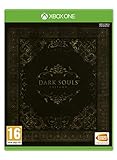
Dark Souls Trilogy collects three complete action RPGs and all of their downloadable content on three discs: the remastered first game, the expanded second game, and the third game with its expansions. Each is a full-length title in its own right, built around deliberate combat, interconnected level design, punishing death mechanics and lore that is told through environment and item descriptions rather than cutscenes. Together they represent the single largest block of content on this list.
Who it suits: players who want a game to live inside for months rather than weeks; anyone who enjoys mastering systems and learning enemy patterns; players who are comfortable losing repeatedly and improving incrementally; and anyone who wants the best hours-per-dollar ratio available here, provided they stick with it.
Key specs:
- Genre: third-person action RPG with stamina-based combat, interconnected levels and character builds
- Structure: three separate full games, each with its own campaign, bosses, areas and downloadable expansions
- Campaign length: roughly 40–50 hours for the first game, roughly 50–60 for the second, and roughly 35–45 for the third, before expansions — a combined 130–160-plus hours for a single playthrough of each
- Difficulty: no difficulty selector. Challenge is tuned by design and can be softened indirectly through levelling, equipment, build choices and optional in-game summoning
- Online: online features are optional; every game is fully completable solo and offline
- Format: three Xbox One discs. Each title installs separately, so the set occupies a large block of the console’s internal storage — plan on freeing up substantial space rather than a few gigabytes
- Publisher: Bandai Namco
Strengths: the value is structural. Buying three games and their expansions as one collection typically costs less than buying them separately, and the sheer length means the cost per hour drops below almost anything else in the category. Each game stands alone, so you can play them in order, out of order, or stop after the first without losing anything. The combat systems reward genuine skill development: you can feel yourself getting better, and enemies that once seemed impossible become routine. And because all three are single-player experiences at heart, there is no risk of the games becoming unplayable when servers eventually wind down.
Pros
- Three complete games plus all DLC in one purchase
- 130-plus hours of content for a premium-tier price that is modest per hour
- No online requirement and no live-service dependency
- Deep build variety that supports multiple playthroughs
- Each game is a self-contained story, so you can pace yourself
Cons
- No difficulty setting — the barrier to entry is real
- Three separate installs consume a large share of a standard console drive
- Three discs means swapping media if you jump between games
- The second game divides opinion among long-time players of the series
How it compares with the nearest alternative: the closest philosophical match is Sniper Ghost Warrior Contracts, since both ask you to slow down, respect the systems and accept that a mistake costs you. The difference is scale: Contracts gives you discrete missions you can replay and master in a dozen hours, while the trilogy gives you three enormous campaigns with no end in sight. Against Tomb Raider: Definitive Edition, the split is accessibility versus depth — Tomb Raider is the one you can hand to anyone, and the trilogy is the one that rewards the player who wants a long-term project.
5. Titanfall 2 – Best for a Short, Sharp Shooter Campaign

Titanfall 2 is a first-person shooter with a single-player campaign that runs five to seven hours and wastes almost none of them. You play as a pilot who bonds with a Titan — a large, pilotable machine — and the campaign alternates between fast, mobile on-foot combat and heavier Titan sections. It is the shortest game on this list by a wide margin, and that is precisely the point: it is designed to be finished, remembered and replayed rather than stretched.
Who it suits: players with limited weekly gaming time who want one satisfying campaign rather than an open-ended commitment; anyone who prefers movement-based shooters to cover-based ones; players who want to try a shooter without committing to a hundred-hour service game; and anyone who values level design over map size.
Key specs:
- Genre: first-person shooter with wall-running, sliding and double-jumping traversal
- Structure: a linear, mission-based campaign with a small number of handcrafted levels
- Campaign length: roughly 5–7 hours on a standard difficulty; longer if you play on the hardest tier
- Difficulty: several difficulty tiers, so you can dial the challenge up or down independently of the story
- Offline: the campaign is fully playable offline. Online multiplayer is a separate mode, and on Xbox One online multiplayer for a paid game generally requires a paid subscription tier — the campaign does not
- Format: Xbox One disc; backward compatible on Xbox Series X
- Publisher: Electronic Arts
Strengths: the level design is the reason this game keeps appearing on recommendation lists years after release. Individual levels introduce a mechanic, explore it thoroughly, and then move on before it becomes repetitive — a structure that many much longer games never manage. The movement system makes ordinary firefights feel expressive, and the Titan sections give the campaign a second rhythm that prevents fatigue. It also has one of the lowest barriers to entry on this list: no build planning, no stat allocation, no open world to navigate. You press start, you play, you finish.
Pros
- Short, dense campaign that respects your time
- Excellent movement and level design
- Multiple difficulty tiers for different skill levels
- Campaign works completely offline
- Easy to replay for a quick weekend run
Cons
- Over in five to seven hours — poor value if you measure games by length alone
- The multiplayer half is separate and carries its own online requirements
- Little to no progression or customisation in the campaign
- Players who dislike fast, twitchy shooters will bounce off it
How it compares with the nearest alternative: Sniper Ghost Warrior Contracts is the other shooter here, and the two could not be more different in tempo. Titanfall 2 is fast, vertical and forgiving; Contracts is slow, horizontal and brutal. If you have 45 minutes after work and want to feel competent, take Titanfall 2. If you want to spend an hour planning a single shot, take Contracts. Against Tomb Raider: Definitive Edition, Titanfall 2 is the shorter but more mechanically inventive campaign — roughly half the length, and considerably more replayable per hour.
6. Sniper Ghost Warrior Contracts – Best for Slow, Tactical Sniping

Sniper Ghost Warrior Contracts is a first-person tactical shooter built around a set of open-ended contracts rather than a linear campaign. Each contract drops you into a large map with a target, a set of optional challenge objectives, and complete freedom in how you approach it. Sniping is simulated rather than simplified: you account for bullet drop, wind, distance and breathing, and stealth is the default because a loud firefight usually ends badly.
Who it suits: players who enjoy planning a route and executing it; anyone who likes replayable missions with score-style objectives; players who prefer precision over spectacle; and anyone who wants a shooter that rewards patience rather than reflexes.
Key specs:
- Genre: first-person tactical sniping with stealth, reconnaissance and gadget use
- Structure: discrete contracts set in large, open-ended maps, each with a primary target and optional challenge objectives
- Campaign length: roughly 10–15 hours to complete the contracts; considerably more if you replay them for all challenge objectives
- Difficulty: multiple difficulty tiers, and the contract structure means you can approach harder objectives later
- Offline: fully playable solo without an internet connection
- Format: Xbox One disc; backward compatible on Xbox Series X
- Publisher: CI Games
Strengths: the mission structure is the standout feature. Because each contract is a self-contained map with multiple approaches, you can replay the same objective three different ways and get three different experiences — a ridge-line approach with a long rifle, a close-quarters infiltration with a suppressed pistol, or a gadget-heavy route using drones and traps. The ballistics modelling gives the sniping weight without becoming a simulation spreadsheet. And the challenge objectives give completionists a reason to return to maps they have already cleared, which is unusual for a game this length.
Pros
- Replayable, open-ended contract maps
- Ballistics and stealth systems that reward planning
- Completable in 10–15 hours without feeling rushed
- Fully offline and free of live-service dependencies
- Difficulty tiers accommodate different patience levels
Cons
- Punishing when a plan collapses — mistakes are expensive
- Enemy AI can behave inconsistently, which undermines stealth runs
- Presentation is functional rather than polished compared with bigger-budget shooters
- Not a good fit if you want constant action
How it compares with the nearest alternative: against Dark Souls Trilogy, both games punish carelessness and reward system mastery, but Contracts gives you discrete, replayable missions you can finish in an evening, while the trilogy demands a long-term commitment. Against Titanfall 2, it is the direct inverse: one is about speed and momentum, the other about stillness and calculation. If you have already played Titanfall 2 and want a shooter that slows everything down, this is the natural next step.
7. Hello Neighbor – Best for Stealth Puzzle Fans and Younger Players

Hello Neighbor is a first-person stealth puzzle game about breaking into a neighbour’s house to find out what he is hiding. The antagonist is controlled by an AI that watches how you play and adapts: routes you use repeatedly get blocked, hiding places you favour get checked, and traps appear where you previously succeeded. It is structured across three acts, each set in a progressively stranger version of the same house.
Who it suits: players who enjoy puzzle solving more than combat; households where a lighter, less violent game is preferable to the shooters and action RPGs above; anyone who likes the tension of stealth without the gore; and players who want something they can pass to a younger family member after they finish it.
Key specs:
- Genre: first-person stealth puzzle with mild horror elements
- Structure: three acts across an evolving house environment, driven by puzzle solving rather than combat
- Campaign length: roughly 8–12 hours, though puzzle-solving speed varies enormously between players
- Difficulty: no formal difficulty selector; the adaptive AI effectively sets the challenge based on your own behaviour
- Offline: fully playable solo without an internet connection
- Format: Xbox One disc; backward compatible on Xbox Series X
- Publisher: Gearbox Publishing
Strengths: the adaptive AI is the hook, and it produces genuinely different experiences for different players. Because the challenge scales with your habits, the game stays tense without simply increasing enemy health or damage. The tone is deliberately cartoonish rather than graphic, which makes it one of the few titles on this list that works in a shared living room. The puzzle structure means progress comes from understanding rather than reflexes, which suits players who find twitch-based games frustrating.
Pros
- Adaptive AI that responds to how you actually play
- Puzzle-first design with no combat requirement
- Lighter tone than anything else on this list
- Budget-tier pricing for an 8–12 hour campaign
- Fully offline and self-contained
Cons
- Puzzle solutions can be obscure, leading to trial-and-error frustration
- Controls and physics feel less polished than bigger-budget titles
- The adaptive AI can feel unfair when it seems to predict your moves
- Short by open-world standards, and limited replay value once solved
How it compares with the nearest alternative: Sniper Ghost Warrior Contracts is the other stealth-driven game here, but they occupy opposite ends of the genre. Contracts is a tactical shooter where stealth is a means to survive; Hello Neighbor is a puzzle game where stealth is the entire vocabulary and there is no rifle to fall back on. Against Watch Dogs, both involve sneaking and observation, but Watch Dogs offers a full city, a mature story and dozens of hours, while Hello Neighbor offers a smaller, stranger, more family-friendly experience you can finish in a few evenings.
How to Choose
Choosing a single-player game is mostly a budgeting exercise — not of money, but of time, patience and storage. The seven titles above span roughly 5 hours to 160-plus hours, and picking the wrong end of that range is the most common reason a purchase goes unplayed.
Start with your realistic weekly time budget
Be honest about this. If you get four hours a week, a 150-hour trilogy is a nine-month project, and many players never finish projects that long. A five-to-seven-hour campaign, by contrast, is finished inside two weeks and delivers a complete experience. The table below maps common situations to a recommendation.
| Your situation | What matters most | Pick |
|---|---|---|
| Under 5 hours a week | A campaign that finishes quickly and needs no memory of complex systems | Titanfall 2 |
| 5–10 hours a week, wants a story | Authored narrative with a clear ending and adjustable difficulty | Tomb Raider: Definitive Edition |
| Wants maximum hours per dollar | Content volume, replay value, willingness to be challenged | Dark Souls Trilogy |
| Tight budget, wants a big open world | Price tier, map size, freedom to set your own goals | Just Cause 4 |
| Prefers stealth and planning to firefights | Systems depth and multiple viable approaches | Watch Dogs or Sniper Ghost Warrior Contracts |
| Shared living room, younger players around | Lighter tone, puzzle focus, no graphic violence | Hello Neighbor |
| Plays offline only, no subscription | No online requirement for the campaign | Any of the seven — all campaigns are solo and offline |
| 500 GB console, already full | Install size discipline | Play one large open-world title at a time |
Match difficulty to temperament, not ego
Two of these games — Dark Souls Trilogy and, to a lesser extent, Sniper Ghost Warrior Contracts — have no difficulty selector. That is a design decision, not an oversight, but it means the challenge curve is fixed and you either meet it or you do not. The other five offer adjustable difficulty, which makes them far easier to recommend to a mixed-skill household. If you have never played a demanding action RPG before, buying a three-game collection as your introduction is a gamble; buying a single game with difficulty options and seeing how you get on is not.
Do the cost-per-hour maths before you buy
Length alone is a poor measure of value, but it is a useful tiebreaker when two games cost similar amounts. The worked example below uses typical market ranges for each tier rather than current prices, since those move constantly.
| Scenario | Typical outlay | Hours played | Cost per hour |
|---|---|---|---|
| Budget open-world game, campaign plus half the side content | around $15 | 30 | roughly $0.50 |
| Mid-range shooter, campaign only, one playthrough | around $20 | 6 | roughly $3.30 |
| Premium three-game collection, each finished once | around $45 | 150 | roughly $0.30 |
| Premium three-game collection, abandoned after 6 hours | around $45 | 6 | roughly $7.50 |
The lesson is not that long games are better. It is that the cheapest-per-hour purchase becomes the most expensive-per-hour purchase the moment you stop playing it. A short campaign you finish beats a long collection you abandon, every time.
Plan for storage before you plan for anything else
Storage is the constraint most buyers forget. A 500 GB Xbox One leaves roughly 360 GB usable after the system reserves its share for the operating system and updates; a 1 TB model leaves somewhere in the region of 780 GB. Large open-world games, three-game collections and shooters with heavy asset libraries each claim a substantial slice of that. Before buying a multi-disc collection, check how much free space you actually have, because installing three separate titles back to back will consume a large portion of a 500 GB drive. If you are close to full, buy one game, finish it, delete it, and move on — which is another argument for the shorter campaigns on this list.
Understand what “offline” actually gets you
Every game here has a solo campaign that plays without an internet connection once installed, which is the single most important feature for a single-player buyer. What varies is the extras. Some titles in this list include online-connected components — multiplayer modes, invasion systems, community features — that sit alongside the campaign and depend on publisher services staying online. Those services are not guaranteed forever, particularly for older releases. The safe approach is to buy these games for the campaign and treat any online component as a bonus that may or may not be there in five years.
Consider the disc, not just the game
All seven titles ship on Xbox One discs, and all seven are backward compatible on Xbox Series X because that console includes a disc drive. The Series S does not, which means a disc purchase is only useful if you plan to stay on Xbox One or move to a Series X.