Is a Premium Cordless Tool Brand Worth It for Occasional DIY Use?
What's inside
As an Amazon Associate I earn from qualifying purchases. This post may contain affiliate links at no extra cost to you.
A premium cordless tool is not automatically a better buy for someone who drills a few holes, assembles furniture, or tackles a weekend repair. The extra cost often pays for longer service life, stronger performance under heavy use, and a broader compatible battery system. If your tools spend most of the year in a cupboard, those advantages may not repay the difference.
As an Amazon Associate we earn from qualifying purchases at no extra cost to you.


Start with the job, not the badge
For occasional DIY, an 18V or 20V-class drill-driver is enough for most household tasks: pilot holes, screws, flat-pack furniture, and light work in wood or drywall. A compact 12V drill can handle many of those jobs too, and is lighter to hold overhead. Neither voltage label tells you exactly how powerful a tool is; battery design, motor, gearing, and build all matter.
For a shelf installation or a handful of small holes each year, a budget drill with a clutch, two speed settings, and a battery included is usually a sensible starting point. Choose a cordless drill-driver kit based on the work you actually expect, not a promise that you might someday build a deck.
What the premium price buys
Premium tools are generally designed to tolerate more frequent use. They may have better heat management, sturdier housings, more refined controls, and motors that maintain speed more effectively under load. Those differences show up when driving long screws repeatedly, drilling larger holes, or using a tool for hours rather than minutes. A stronger tool can also be less tiring if its grip and balance suit your hand—but premium does not always mean lighter.
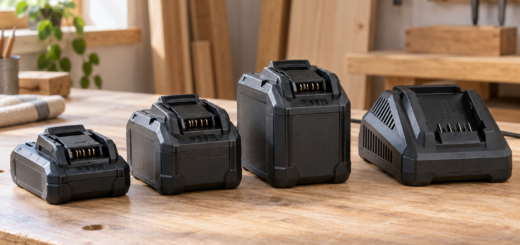
Battery quality and availability are part of the price. A well-established platform may offer replacement batteries and compatible saws, lights, sanders, and other tools. That matters if you intend to expand. It matters less if you only need one drill. Batteries age even when stored, and a replacement can cost enough to make a bargain kit less attractive years later.
Premium tools can fail, too. Electronics, switches, chargers, and batteries are potential failure points in any cordless system. Check the warranty terms and local service options rather than assuming an expensive tool will be repaired quickly or free of charge.
Compare the real cost
Prices change with sales and kit contents, so compare what is in the box rather than relying on the brand tier alone. A bare tool is only a bargain if you already own a compatible battery and charger.
| Option | Typical fit | What to check | Main trade-off |
|---|---|---|---|
| Budget drill kit | Light, occasional household jobs | Battery, charger, clutch, warranty | May run hot or feel less refined under repeated heavy work |
| Midrange platform kit | Regular DIY or plans to add tools | Battery compatibility, tool range, replacement cost | Costs more upfront, but can spread across several tools |
| Premium drill kit | Frequent use, tougher materials, long sessions | Service support, ergonomics, included battery size | Hard to justify if it rarely leaves the cupboard |
| Used or bare tool | Owners of an existing battery platform | Battery condition, charger compatibility, return policy | Unknown wear or extra costs can erase savings |
As a rough buying rule, compare the kit price with the cost of a bare tool plus a genuine compatible battery and charger. If the kit includes only a small battery, consider whether it will last through your job. A compact battery may be fine for drilling a few pilot holes; extended sawing or repeated large-hole drilling can drain it quickly.
When budget is enough
A cheaper tool is a good choice when the task is low-volume and a failure would be inconvenient rather than costly. For example, installing curtain brackets in softwood is not a compelling reason to buy a professional drill. Use the correct bit, make pilot holes where needed, and avoid forcing the tool. If it bogs down, pauses or overheats, let it cool rather than leaning harder on the trigger.
Budget tools are less suitable for repetitive work or jobs where a stalled tool can damage material. Driving long structural screws into dense timber, drilling many large holes, or mixing thick materials can expose the limits of a small motor and battery. The failure mode may be a hot tool, a tripped thermal cutoff, a stalled bit, or a battery that empties before the job is done—not necessarily a broken drill.
If your likely work is occasional but tougher, a brushless cordless drill kit in the middle of the market can be a practical compromise. Brushless motors can be more efficient and durable under sustained use, but a brushless label alone does not guarantee good balance, a useful warranty, or better value.
Buy for the next tool only if it is likely
A battery platform becomes valuable when you will actually use more than one tool. If you expect to add a saw, impact driver, or garden tool within a year or two, compare the platform’s tool prices and battery options. If not, avoid paying extra today for an imagined collection. One dependable drill kit may be better value than a premium ecosystem you never expand.
An impact driver is useful for driving many screws, but it is not a substitute for a drill: it does not have a standard drill chuck for ordinary round-shank bits, and its hammering action is a poor choice for delicate fasteners. For a single shelf or occasional furniture assembly, buying one may add cost and bulk without solving a real problem. If you do regular screw-driving work, compare a drill and impact-driver combo kit with separate purchases.
Time the purchase without overthinking it
Seasonal promotions can make premium kits worthwhile, especially when a battery, charger, or second tool is included. Before buying, check the exact kit contents and compare the sale price against recent regular prices at more than one retailer. A “free tool” promotion has little value if you would not buy that tool otherwise. Also check whether the included battery is the small capacity version; a low kit price can reflect a battery that is adequate for light DIY but limiting for longer sessions.
For most occasional users, buy the least expensive kit that has a suitable chuck, clutch, battery, and warranty for the jobs on your list. Pay more when repeated heavy use, proven service support, or a real plan to add compatible tools justifies it. For a few household jobs a year, a premium brand may feel nicer—but that alone is not a strong reason to spend more.