6 Best Cordless Circular Saws for Plywood (October 2026) Reviews & Picks
Our Top Picks
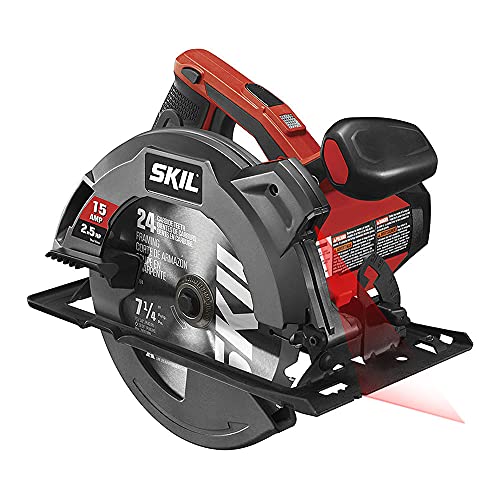 SKIL 15 Amp 7-1/4 Inch Circular Saw with7-1/4 Inch (Pack of 1)14.2 x 9.8 x 8.5 inches8.7 poundsCheck on Amazon
 DEWALT 20V MAX XR Brushless Cordless 7-1/4 in.STANDARD15.35 x 9.4 x 9.6 inches9.88 PoundsCheck on Amazon


What's inside
As an Amazon Associate I earn from qualifying purchases. This post may contain affiliate links at no extra cost to you.
The best cordless circular saw for plywood on this list is the DEWALT 20V MAX XR brushless 7-1/4 inch DCS590B, because its 7-1/4 inch blade, brushless motor and deep cut capacity breeze through full 3/4 inch sheets, and it also handles framing lumber. A circular saw for plywood needs a fine-tooth blade, enough power to avoid bogging down and a flat shoe that rides the sheet cleanly. If you only cut thin sheet goods occasionally, the DEWALT DCS391B or a compact 4-1/2 inch saw may be enough, while the two corded SKIL saws are runner-ups rather than cordless picks.
Quick List
- DEWALT DCS391B 20V MAX – best for occasional plywood cuts on a budget-minded 20V setup
- SKIL 15 Amp 7-1/4 Inch with Laser (corded) – best as a corded runner-up for a shop with outlets
- Extbtfor 4-1/2 Inch Mini Cordless Saw – best for thin plywood, hobby projects and tight spaces
- SKIL 5080-01 13-Amp 7-1/4 Inch (corded) – best as a corded runner-up for general cutting at a bench
- DEWALT DCS590B 20V MAX XR 7-1/4 Inch – best overall for full sheets and frequent plywood work
- GALAX PRO 4-1/2 Inch Mini Cordless Saw – best for light crafts, trim and thin sheet goods
Which One Is Right for You?
| If you… | Choose |
|---|---|
| cut full 3/4 inch sheets regularly and want a cord-free saw | DEWALT DCS590B 20V MAX XR 7-1/4 Inch |
| already own 20V MAX batteries and cut plywood now and then | DEWALT DCS391B 20V MAX |
| mostly cut thin plywood for crafts and models | Extbtfor 4-1/2 Inch Mini Cordless Saw |
| want a light compact saw for trim, panels and tight spaces | GALAX PRO 4-1/2 Inch Mini Cordless Saw |
| work at a bench with outlets and want a corded 7-1/4 inch saw | SKIL 15 Amp 7-1/4 Inch with Laser |
| want a basic corded 7-1/4 inch saw for general cutting | SKIL 5080-01 13-Amp 7-1/4 Inch |
Plywood punishes the wrong saw in two ways: tear-out on the face, and bogging when you push a dull or coarse blade through glue layers. Blade choice matters as much as the saw. The two corded SKIL saws are included here because they appear in this product set, but they are not cordless, so we treat them as runners-up. The two mini saws are cordless but limited in depth, which is fine for thin sheets and less so for thick stock.
All 6 Picks in Detail
1. DEWALT DCS391B 20V MAX – Best for occasional plywood cuts
As an Amazon Associate we earn from qualifying purchases at no extra cost to you.
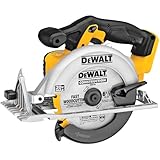
The DCS391B is DEWALT’s long-running 20V MAX circular saw. Despite the listing name leaving out the blade size, retailer pages list it as a 6-1/2 inch saw with a brushed motor, a 0 to 50 degree bevel and a 5,150 RPM no-load speed. It is sold without a battery, so it makes the most sense if you already own 20V MAX batteries. For cutting plywood to size, trimming sheets and general DIY work, it is a sensible tool.
Depth of cut is listed around 2-1/8 to 2-1/4 inches at 90 degrees and 1-5/8 inches at 45 degrees, with retailers disagreeing slightly, so confirm on the product page. That is plenty for 3/4 inch plywood, including at a bevel. A brushed motor draws more from the battery than a brushless one, so you will want a 4.0Ah or larger pack for long ripping sessions.
Think of it as the entry point to 20V MAX saws. Plenty of homeowners own a drill and impact driver on the same platform, so adding this saw is easy. It is a good choice for cutting subfloor patches, shelving and garage projects, and the magnesium shoe on retailer pages keeps weight down. If you plan to rip many sheets in a row, step up to the brushless DCS590B.
- 20V MAX battery platform, tool only
- 6-1/2 inch blade per retailer pages
- 5,150 RPM no-load per retailer pages
- Bevel 0 to 50 degrees per retailer pages
- Brushed motor; weight about 7 pounds per retailer pages
Pros
- Works with the large 20V MAX battery family
- Enough depth for 3/4 inch plywood
Cons
- Brushed motor is less efficient than brushless
- Battery and charger sold separately
It is lighter and simpler than the DCS590B, but it gives up brushless efficiency and cut depth.
2. SKIL 15 Amp 7-1/4 Inch with Laser (corded) – Best as a corded runner-up

This listing is a corded SKIL circular saw rated at 15 amps with a 7-1/4 inch blade and a single-beam laser guide. It does not match the cordless topic, so we label it a runner-up. For a garage or shop where an outlet is nearby, a corded saw delivers steady power with no batteries to manage, and a 15 amp motor is on the powerful side for this class.
The laser line is a convenience for following a marked cut line, though many carpenters still prefer to line up the blade by eye or with a straightedge for accuracy. For plywood, pair it with a fine-tooth plywood blade, and consider a guide rail for long straight cuts. Check the listing for RPM and weight, as the name does not state them.
Corded saws like this one are also forgiving on blade choice, since they are rarely limited by runtime. That makes it handy if you plan to experiment with several plywood blades on a workbench. Keep the cord looped over your shoulder or behind you so it does not cross the cut path, and use an outlet protected by a ground-fault circuit interrupter when working in a damp garage.
- Corded, 15 amp motor per the name
- 7-1/4 inch blade size
- Single-beam laser guide
- No-load RPM and bevel range not stated; confirm on listing
- Weight not stated; confirm on listing
Pros
- Consistent power with no battery limits
- Laser line for quick layout checks
Cons
- Corded, so it does not suit cordless use
- The cord can catch on sheets and offcuts
Next to the SKIL 5080-01, it has a higher amp rating and a laser guide.
3. Extbtfor 4-1/2 Inch Mini Cordless Saw – Best for thin plywood and tight spaces

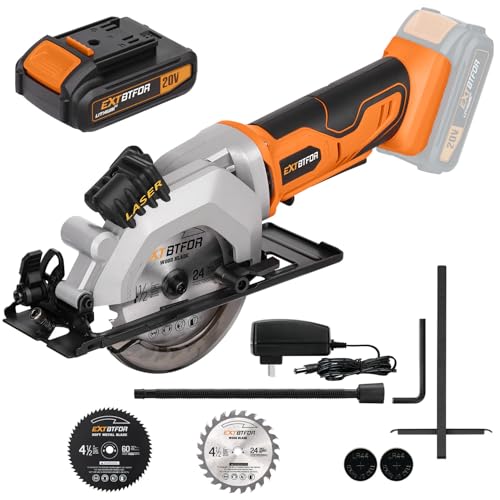
This is a small cordless saw with a 4-1/2 inch blade, a 2.0Ah battery, a laser guide and a 3,400 RPM speed named in the listing. Maximum cutting depth is listed at 1-11/16 inches at 90 degrees, and the saw bevels to 45 degrees. That depth technically clears a single layer of 3/4 inch plywood, but a mini saw has far less power than a full-size one, so it suits thin plywood, craft panels and light jobs.
Because the motor is small and the battery is 2.0Ah, expect slower feeds and limited runtime when cutting thicker sheets. Make shallow, patient passes and keep the blade sharp. It is a good second saw for model makers and DIYers who want a tool that is light and easy to handle with one hand.
Mini saws also earn their spot for one-handed jobs: trimming a plywood back panel in place, cutting a notch or making a quick relief cut. The 45 degree bevel is useful for small miters on thin panels. Make sure the blade guard retracts freely and that the battery locks firmly before every cut. A laser line is only a rough guide on a saw this size, so mark the cut with a pencil as well.
- 4-1/2 inch blade, 3,400 RPM per the listing
- Maximum cut depth 1-11/16 inches at 90 degrees
- 45 degree bevel
- Includes a 2.0Ah battery and laser guide
- Motor type not stated; confirm on listing
Pros
- Light and easy to control
- Complete kit with battery
Cons
- Low power for long cuts in thick plywood
- Small battery limits runtime
It is a lighter-duty alternative to the DCS590B, comparable in class to the GALAX mini saw.
4. SKIL 5080-01 13-Amp 7-1/4 Inch (corded) – Best as a corded runner-up for general cutting
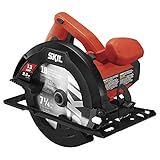
The 5080-01 is another corded SKIL saw, rated at 13 amps with a 7-1/4 inch blade in red. It is a general-purpose corded saw, so it is a runner-up on a cordless list. It makes sense for a bench, a garage or any site with power, and it gives you the standard 7-1/4 inch blade size, which means a wide range of plywood blades are available.
A 13 amp motor is enough for most 3/4 inch plywood cuts with a sharp blade. Because the listing name omits RPM, bevel and weight, confirm those on the product page. If you need to cut away from outlets, a cordless model like the DCS590B is the better choice.
This saw is a reasonable choice for a first circular saw in a workshop, as long as you keep expectations in line with the class. Add a plywood blade and a clamped straightedge and it can produce clean cuts. Because the listing lacks detail on bevel capacity and weight, read the manual or product page, and always unplug the saw before changing the blade.
- Corded, 13 amp per the name
- 7-1/4 inch blade size
- Red SKIL body
- RPM and bevel range not stated; confirm on listing
- Weight not stated; confirm on listing
Pros
- Uses common 7-1/4 inch blades
- No battery to maintain
Cons
- Corded and not suited to remote work
- Less power than the 15 amp SKIL
It sits just below the 15 amp SKIL in power and above it in simplicity, since there is no laser to calibrate.
5. DEWALT DCS590B 20V MAX XR 7-1/4 Inch – Best overall for full sheets

The DCS590B is a brushless 7-1/4 inch cordless saw and the strongest plywood tool in this group. Retailer pages list a 5,500 RPM no-load speed, a maximum depth of cut of 2-9/16 inches at 90 degrees and 2 inches at 45 degrees, and a 0 to 57 degree bevel with stops at 22.5 and 45 degrees. It also has an electric brake, an LED light, a rafter hook and a dust port. It is sold tool only, so you supply 20V MAX batteries.
For plywood, the full-size blade and brushless motor keep speed up during rips, and the brake stops the blade quickly after a cut so it does not drift into your work. Weight figures vary on retailer pages, roughly 8 to 10 pounds, so confirm on the listing. Pair it with a 40 to 60 tooth plywood blade.
The depth and brake are what make it a plywood tool. A 2-9/16 inch depth at 90 degrees leaves headroom for stacked sheets or cuts through plywood plus a sacrificial board. The LED light helps you see the cut line in a dim garage, and the dust port lets you attach a vacuum for cleaner air. If you plan to track-guide the saw, check that the shoe is flat and sits true on your rail.
- 7-1/4 inch blade, brushless motor
- 5,500 RPM no-load per retailer pages
- Depth 2-9/16 inches at 90 degrees; 2 inches at 45 degrees
- Bevel 0 to 57 degrees per retailer pages
- Electric brake, LED light, dust port, rafter hook
Pros
- Brushless power and deep cut capacity
- Brake and LED for cleaner cuts
Cons
- Tool only, so batteries add to the cost
- Heavier than the DCS391B and the mini saws
Against the DCS391B, it gives more depth and efficiency at the cost of weight.
6. GALAX PRO 4-1/2 Inch Mini Cordless Saw – Best for light crafts and thin sheet goods

The GALAX PRO is a compact 20V mini circular saw with a 2.0Ah battery, a laser guide, a 3,400 RPM speed and two 4-1/2 inch blades named in the listing, for cutting wood, plastic and soft metal. As with the other mini saw, the small blade limits cutting depth and the motor limits power, so it is best for thin plywood, trim, laminate and craft work.
Because it is marketed for several materials, the blades may be general purpose; for plywood, a fine-tooth wood blade will give cleaner edges. The listing does not state cutting depth, so confirm it on the product page before using it on thicker sheets.
Two blades in the box is helpful because mini blades dull quickly in plywood glue lines. Swap to a fresh one when cuts begin to burn or the saw labors. Clamp thin sheets close to the cut line to prevent vibration, and keep both hands on the tool, since a small saw can twist suddenly if the blade binds.
- 4-1/2 inch blades, two included
- 20V battery, 2.0Ah, per the listing
- 3,400 RPM per the listing
- Laser guide
- Cut depth and bevel angle not stated; confirm on listing
Pros
- Compact and easy to handle
- Spare blade included
Cons
- Limited depth and power for thick plywood
- Small battery capacity
It is a close cousin of the Extbtfor, with the same class of power and a more general-material pitch.
Specs Compared
| Saw | Power | Blade | Motor | No-load speed | Depth at 90 degrees |
|---|---|---|---|---|---|
| DEWALT DCS391B | 20V MAX battery (not included) | 6-1/2 in per retailer pages | Brushed | 5,150 RPM per retailer pages | About 2-1/8 to 2-1/4 in; confirm on listing |
| SKIL 15 Amp (corded) | Corded, 15 amp | 7-1/4 in | Confirm on listing | Confirm on listing | Confirm on listing |
| Extbtfor Mini | Battery, 2.0Ah included | 4-1/2 in | Confirm on listing | 3,400 RPM | 1-11/16 in |
| SKIL 5080-01 (corded) | Corded, 13 amp | 7-1/4 in | Confirm on listing | Confirm on listing | Confirm on listing |
| DEWALT DCS590B | 20V MAX battery (not included) | 7-1/4 in | Brushless | 5,500 RPM per retailer pages | 2-9/16 in per retailer pages |
| GALAX PRO Mini | 20V, 2.0Ah included | 4-1/2 in | Confirm on listing | 3,400 RPM | Confirm on listing |
How We Chose These
This list is built from research. We began with saw listings that mention cutting wood or plywood and separated cordless models from corded ones. We compared the blade diameter, battery platform, motor type, depth of cut and bevel range that each listing names, and we checked retailer specification pages for the two DEWALT saws to confirm speed, depth and features. Where a listing name leaves out a figure, we say to confirm it on the product page. Because the topic is cordless saws for plywood, we marked the two corded SKIL saws as runners-up and noted the limits of the two mini saws. Products stay in the order listed.
What to Look For
Blade size and cut depth
A 7-1/4 inch blade is the standard for framing and sheet goods and typically cuts around 2-1/2 inches deep at 90 degrees, which covers 3/4 inch plywood with room to spare. A 6-1/2 inch saw reaches roughly 2 inches, and mini 4-1/2 inch saws top out near 1-5/8 to 1-3/4 inches. A good rule is to set the blade so it protrudes about 1/4 inch below the bottom of the plywood; deeper settings increase kickback risk and rough edges. At 45 degrees, depth drops by about 25 percent, so check bevel depth when beveling thick stock.
Blade tooth count and tear-out
Plywood has thin face veneers that splinter easily. A blade with 40 to 60 teeth cuts cleanly on most cutting jobs, while a 24-tooth framing blade is fast but rough. For the best finish, use a thin-kerf plywood blade with alternate top bevel teeth. Because a circular saw blade cuts upward at the front of the shoe, the face of the plywood on the bottom is the cleaner side, so place the good face down. Apply painter’s tape along the cut line and score the line with a utility knife to cut down on splintering.
Motor, battery and runtime
Brushless motors waste less energy as heat and deliver more cuts per charge. For ripping full sheets, a 5.0Ah battery or larger is a good fit; a 2.0Ah battery in a mini saw empties quickly. A rough planning figure is that one cut through a 4-by-8 foot sheet of 3/4 inch plywood takes a modest portion of a larger battery, but a small pack may need a swap mid-project. Keep a spare battery charged so you are not stopping when a cut is half finished.
Supporting and guiding the cut
Support the sheet on foam insulation board or a pair of sawhorses with a sacrificial board so the offcut does not pinch the blade or snap off at the end. Clamp a straightedge or a guide rail to the sheet and run the saw shoe along it; this beats following a laser line when you need a long, straight edge. Always set the blade depth, unplug or remove the battery before changing the blade and wear eye and hearing protection. Keep the cord or hose clear of the blade guard, and let the blade reach full speed before entering the cut.
Safety and kickback. Kickback happens when the blade binds in the cut and the saw is thrown back toward you. Prevent it by supporting both sides of the cut so the kerf stays open, keeping the blade sharp, using the right depth and never forcing the saw. Stand slightly to one side of the cut line and hold the saw with both hands. Let the guard return fully before setting the saw down, and remove the battery for blade changes. These habits matter more than any feature on a spec sheet.
A worked example
Suppose you are building shop cabinets from 3/4 inch plywood. Set the blade depth to about 1 inch, apply tape along the line and place the sheet on foam with the good face down. A 7-1/4 inch brushless saw like the DCS590B with a 5.0Ah battery will rip a 48 inch length smoothly. A 4-1/2 inch mini saw can handle a few trim cuts, but it will struggle with repeated full-length rips.
Questions
Can a cordless circular saw cut 3/4 inch plywood?
Yes. A 6-1/2 or 7-1/4 inch cordless saw with a sharp blade and a decent battery handles 3/4 inch plywood, and a brushless model does it more efficiently. Mini 4-1/2 inch saws can cut it but are better suited to thin stock.
What blade is best for plywood?
Choose a fine-tooth blade, usually 40 to 60 teeth, designed for plywood or finish cuts. A lower tooth count cuts faster but increases tear-out on the veneer.
Which side of the plywood should face up?
With a circular saw, put the good face down, because the blade teeth exit upward on the top surface and cause more tear-out there. Tape and scoring help further.
Are mini circular saws good enough for plywood?
For thin plywood, craft panels and trim, yes. For repeated cuts through thick sheets, they lack power, depth and battery capacity compared with a full-size saw.
Should I get a corded or cordless saw?
Choose corded if you work near an outlet and want steady power without batteries. Choose cordless for jobsite and shop flexibility; a brushless model narrows the power gap.
Do I need a track or guide?
You do not need one for rough cuts, but a clamped straightedge or guide rail makes long, accurate plywood cuts much easier and cleaner.
Update History
- October 20, 2026 – Initial publication; product set drawn from current catalog listings.
- Check the product page for current specifications and availability before buying.
Sources
- Retailer and distributor specification pages for the DEWALT DCS391B and DCS590B saws
- Retailer listing titles and specification fields for all six saws above
- Brand names and product descriptions as they appear in the listings for DEWALT, SKIL, Extbtfor and GALAX