
What's inside
As an Amazon Associate I earn from qualifying purchases. This post may contain affiliate links at no extra cost to you.
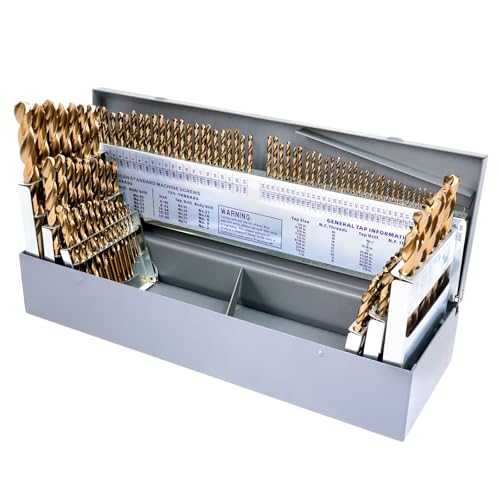
The short answer: the best drill bit sets are the ones that include the right bit types for the materials you drill, in the sizes you actually use, in a case that keeps them organized. A general-purpose set of twist bits covers wood, plastic and light metal. Add brad point bits for clean holes in wood, a masonry set for brick and block, and a harder-alloy set if you drill stainless or other tough metals. One huge “300-piece” kit is rarely as useful as two or three focused sets, because most of those pieces will never leave the case.
This guide does not rank particular products. It explains the bit styles, the materials and coatings behind the marketing terms, the shank types that determine what will fit your drill, and the habits that make any bit last longer. Check current specifications and instructions on every listing and on the tool you will use.
Our Top Picks

Contents
- Bit types and what each is for
- Bit materials and coatings explained
- Shank types and chuck fit
- Sizes, sets and case quality
- Comparison table: common set types
- Technique that extends bit life
- Safety notes
- Buyer checklist
- Mistakes to avoid
- Frequently asked questions
- Bottom line
Bit types and what each is for
Twist bits
The twist bit is the all-rounder. Its spiral flutes carry chips out of the hole, and its angled tip cuts into the material. Twist bits work in wood, plastic and metal, but they are rarely the best choice for any one of them. In wood they can wander at the start of a hole and leave a ragged exit. In hard metal they dull quickly unless made from a suitable material. For general household use, a sensible twist-bit set is the foundation of your collection.
Brad point bits
Brad point bits have a small center spur and two raised outer spurs. The center point locates the hole precisely, and the spurs score the wood fibers before the cutting edges remove material, which produces cleaner, tighter holes with less tear-out. They are designed for wood and are a good pick for furniture, cabinets and any project where the appearance of the hole counts. They are not intended for metal.
Spade and paddle bits
Spade bits have a flat blade with a center point and are used for larger holes in softer wood, particularly for running wires and pipes through framing. They are fast but rough, and they tend to tear the exit side of the hole, so back the workpiece with a scrap board. Use a drill with enough torque and hold it firmly, because these bits can grab.
Forstner bits
Forstner bits cut flat-bottomed, clean-walled holes and are valued by woodworkers for hinge cups, shallow recesses and overlapping holes. They need a stable setup, a slower speed and often a drill press for best results.
Masonry bits
Masonry bits have a carbide tip, usually a wide, blunt chisel shape, brazed to a steel body. They grind away brick, mortar, concrete and stone rather than cutting them. Many are intended for use in hammer drills, while others are meant for rotary drilling only. Read the packaging to confirm which tool a bit suits.
Step bits and specialty bits
Step bits have stacked cones that cut progressively larger holes in thin sheet metal and plastic. They are popular for electrical enclosures and automotive panels. Other specialty bits include countersinks, hole saws and tile or glass bits, each designed for a particular job.
Bit materials and coatings explained
The language on drill bit packaging can be confusing, so here is a plain-language guide. Remember that exact performance varies among manufacturers and the labels are not a guarantee.
High-speed steel
High-speed steel, usually abbreviated HSS, is the standard material for general-purpose bits. It tolerates the heat of drilling better than basic carbon steel and works in wood, plastic and softer metals. Quality varies between brands, so inspect the finish and read reviews for signs of poor edges or bending.
Black oxide
Black oxide is a surface treatment applied to steel bits. It helps resist corrosion and reduces friction a little. It is an economical finish that suits general use, though it does not make a soft bit hard.
Titanium-coated
Titanium nitride and similar coatings are thin, hard layers that add surface hardness and slipperiness. They can extend the life of a good bit, but the coating only goes as deep as its thickness, and sharpening may remove it. A coated bit made from poor steel is still a poor bit.
Cobalt alloys
Cobalt bits are made from steel alloyed with cobalt throughout, rather than merely coated. They resist heat well and are the usual recommendation for stainless steel and other hard metals. They are harder and tend to be more brittle than basic HSS, so they need steady feed pressure and a stable setup. They also tend to cost more, so reserve them for the work that needs them. If you drill metal regularly, a cobalt drill bit set is a sensible specialty purchase.
Carbide
Carbide is very hard and used for masonry tips and some specialized bits. It holds an edge in abrasive materials but is brittle and can chip if it is dropped or bent. Treat carbide-tipped bits carefully and store them separately from other bits.
Shank types and chuck fit
The shank is the end that goes into your drill, and it has to match the tool.
- Round shanks: the most common type, held in a standard three-jaw chuck. They can slip if the chuck is not tight or the bit is smooth and heavily loaded.
- Hex shanks: six-sided shanks that fit quick-change chucks on impact drivers and some drills. They grip well and swap quickly, but they are only as good as the tool that holds them.
- Reduced shanks: some larger bits have a narrower shank so they fit a smaller chuck. Check the listing for the maximum bit diameter for your drill.
- Specialized shanks: rotary hammers often use a dedicated bit system, not a round or hex shank. Do not assume a masonry bit fits a rotary hammer without confirming the shank style.
Impact drivers deliver sudden rotational blows, and not all drill bits are built for that. Look for bits specifically labeled as impact-rated if you plan to use them in an impact driver, because ordinary brittle bits can snap under that load. For a driver-based workflow, an impact-rated drill bit set with hex shanks is the typical match.
Sizes, sets and case quality
Bit sizes come in fractional, number and letter systems, and in metric. A set should clearly mark each size on the bit, the case or both. Fractional sizes are standard in many workshops, while metric sets suit projects that use metric hardware. Check which system a set uses before you buy, and consider whether you need a mix, particularly for fasteners and machine screws that call for tap-drill sizes.
Consider the range as well. A set that covers small pilot sizes up to the middle of the range will do most household jobs. Large bits are often better bought individually as needed.
The case is easy to overlook, but it determines whether the bits stay sharp and organized. Look for a case with a secure latch, labeled slots and sturdy hinges. A case that spills in a toolbox damages cutting edges. An indexed case, with each size in a specific slot, also lets you see at a glance which bit is missing so you do not lose it in the shop. If a set arrives without an adequate case, a drill bit organizer case is a cheap way to protect the bits.
Comparison table: common set types
This comparison covers general categories, not particular products, so verify details on the listing.
| Set type | Best for | Strengths | Watch-outs |
|---|---|---|---|
| General-purpose HSS twist set | Household drilling in wood, plastic and soft metal | Versatile and economical | Not ideal for tear-out-free wood or hard metals |
| Black oxide or titanium-coated set | General use with extra wear resistance | Better corrosion resistance and surface hardness | Coating does not fix poor base steel |
| Cobalt set | Stainless steel and tough metals | Excellent heat resistance | Brittle and more costly |
| Brad point set | Cabinetry, furniture and fine woodwork | Accurate starts, clean holes | Wood only |
| Masonry set | Brick, block, mortar and concrete | Carbide tips for abrasive materials | Check hammer-drill compatibility, dust hazard |
| Mixed multi-material kit | Beginners who want one box of everything | Broad coverage | May include many rarely used pieces |
If you are putting together a first kit, a drill bit set in a labeled case, plus a dedicated brad point set for woodwork, covers most home projects.
Technique that extends bit life
Even the best bit fails quickly if it is used badly. Heat is the enemy, and most dull bits are the result of too much speed, too little feed or both.
- Mark and start accurately: use a center punch on metal and a small pilot hole on larger holes. This stops the bit wandering.
- Choose sensible speed: smaller bits generally run faster and larger bits slower, and harder materials call for lower speeds. Check the bit manufacturer’s recommendations.
- Let the bit cut: apply steady pressure and let the cutting edges do the work. Pushing too hard overheats and can snap a small bit, while too little pressure rubs and dulls the edge.
- Clear the chips: withdraw the bit periodically in deep holes so the flutes can clear debris.
- Lubricate metal: cutting fluid or oil reduces heat and friction in metal. Follow the fluid manufacturer’s instructions.
- Back up the exit: place scrap wood behind the workpiece to prevent blowout.
Bits can be resharpened when they become dull, but it requires skill and the right equipment.
Safety notes
- Eye protection: wear safety glasses every time. Bits can shatter, and chips and swarf are thrown outward.
- Secure the work: clamp the workpiece. Never hold sheet metal or small pieces in your hand while drilling because they can spin and cause cuts.
- Hot swarf and bits: bits and metal chips can be very hot. Let them cool, and do not clear swarf with bare fingers. Use a brush or pliers.
- Loose clothing: keep sleeves, jewelry and hair away from the rotating chuck.
- Masonry dust: dust from brick, concrete and mortar can contain respirable crystalline silica. Control dust and wear a suitable respirator, and check current guidance in your region.
- Hidden hazards: before drilling into walls or floors, consider electrical wires, pipes and gas lines.
- Inspect your bits: discard bent, cracked or heavily chipped bits instead of forcing them to work.
- Chuck key and tightness: remove any chuck key before starting the drill and make sure the bit is gripped firmly.
Check current specifications and instructions for each tool, bit and accessory before use.
Buyer checklist
- List the materials you drill most often and choose bit types to match.
- Confirm the shank type fits your drill, impact driver or rotary hammer.
- Check whether the bits are impact-rated if you will use them in an impact driver.
- Read the material description: HSS, cobalt, carbide-tipped, coated.
- Choose between fractional and metric sizes, or a mix.
- Check that the size range includes the sizes you drill most often.
- Look for markings on the bits and the case.
- Inspect the case latch, hinges and slot labeling in photos and reviews.
- Count usable bits, not accessories or duplicates.
- Confirm that masonry bits are intended for your type of drill.
- Read reviews for reports of bent, dull or poorly ground bits.
- Have eye protection and clamps ready.
Mistakes to avoid
Buying the biggest set for the sake of count
A massive kit often pads the number with pieces you will never use. A focused set of quality bits serves better.
Using wood bits on metal or the reverse
Brad point bits are meant for wood. Using them on metal ruins the tip. Match the bit to the material.
Using standard bits in an impact driver
Brittle bits can snap under impact. Use bits that are labeled for that use.
Running too fast in hard materials
Speed generates heat that softens and dulls cutting edges. Slow down for larger bits and harder materials.
Leaning on the drill
Heavy pressure does not make a dull bit cut better. It snaps small bits and overheats the tool. Replace or sharpen worn bits.
Ignoring storage
Loose bits in a drawer knock their edges together. Keep them in a proper case and store carbide separately.
Frequently asked questions
1. What drill bit set should a beginner buy?
A general-purpose twist-bit set in a labeled case, plus a brad point set if you work with wood. Add masonry or cobalt bits only when a project calls for them.
2. Are titanium-coated bits worth it?
They can add wear resistance, but the quality of the underlying steel matters more. Treat the coating as a bonus, not a substitute for a well-made bit.
3. What bit should I use for stainless steel?
Cobalt bits are widely recommended, used at low speed with steady pressure and cutting fluid. Check the manufacturer’s guidance for your specific material.
4. Can I use regular bits in an impact driver?
Some may work, but many are not designed for the sudden torque and can snap. Choose bits labeled as impact-rated and with the correct shank.
5. How do I stop wood from splintering on the back side?
Clamp a scrap board behind the workpiece, ease off pressure at breakthrough and use a sharp bit. Brad point bits also produce cleaner entries.
6. Can I drill masonry with a regular drill?
You can drill soft masonry with a masonry bit in a standard drill, but a hammer drill is easier on harder materials. Always use bits labeled for masonry.
7. How do I know when a bit is dull?
Signs include smoke, burning smells, needing excessive pressure, rough holes and bits that skid. Inspect the cutting edges for rounding or chips.
8. Should I sharpen or replace bits?
Small inexpensive bits are usually replaced. Larger bits may be worth sharpening if you have the right equipment and skill. Follow the manufacturer’s instructions.
Bottom line
Good drill bits come from matching type, material and shank to the job, not from the highest piece count. Start with a quality general-purpose set in a good case, add specialty sets as your projects require them, drill at sensible speeds and wear eye protection every time. Verify current specifications and instructions before you buy or use any bit. When you are ready, compare a brad point drill bit set and a general-purpose set against the checklist above.
Disclosure: As an Amazon Associate, we earn from qualifying purchases. Links marked as sponsored may earn us a commission at no extra cost to you.
Related guides
More from Amazon
Programs that pair well with the guide above. Offers and eligibility are set by Amazon and may change.
A free business account with business pricing and bulk-buying tools for work, shop or home office.
Create a business accountFree shipping on eligible items, Prime Video and more. Eligible new members can start with a free trial.
Start a Prime free trialAudiobooks and podcasts to listen to on the go. Eligible new members can start with a free trial.
Try Audible freeAd-free music streaming. Eligible new subscribers can start with a free trial.
Try Music Unlimited freeAs an Amazon Associate we earn from qualifying purchases.
Write Your Review
No reviews yet. Be the first to share your experience!