
What's inside
- Contents
- How a hammer drill actually works
- Hammer drill vs impact driver vs rotary hammer
- Corded or cordless?
- Features that matter when comparing models
- Comparison table: types at a glance
- Matching bits to materials
- Safety notes for hammer drilling
- Buyer checklist
- Mistakes to avoid
- Frequently asked questions
- Bottom line
As an Amazon Associate I earn from qualifying purchases. This post may contain affiliate links at no extra cost to you.
The short answer: the best hammer drills are the ones matched to the material you actually drill and the way you work. A cordless hammer drill with a good clutch and a keyless chuck suits most homeowners and general contractors who move between wood, metal, brick and the occasional block wall. A corded model makes more sense if you drill masonry for long stretches and do not want to manage batteries. If you are drilling many large holes in poured concrete, a rotary hammer is a different tool class and is usually a better fit than any standard hammer drill. Brand loyalty to a battery platform you already own often matters more than small differences between models.
This guide does not rank specific products. It explains how hammer drills work, how they differ from impact drivers and rotary hammers, which features deserve your attention, and which safety habits protect your hearing, lungs and wrists. Use it to build a shortlist, then check current specifications and the manufacturer’s instructions for every tool you are considering.
Our Top Picks
 DYRECELVE 12-Piece Masonry Drill Bit Set and Concrete5.51 x 2.95 x 0.64 inches0.45 PoundsCheck on Amazon



Contents
- How a hammer drill actually works
- Hammer drill vs impact driver vs rotary hammer
- Corded or cordless?
- Features that matter when comparing models
- Comparison table: types at a glance
- Matching bits to materials
- Safety notes for hammer drilling
- Buyer checklist
- Mistakes to avoid
- Frequently asked questions
- Bottom line
How a hammer drill actually works
A standard drill pushes a spinning bit into the material and cuts or grinds it away. A hammer drill adds a second motion: while the chuck rotates, the bit is also pulsed rapidly forward and back along its axis. In most designs that pulsing comes from two toothed or ridged discs inside the gearbox that ride over one another, producing a quick series of small impacts. Those impacts help crumble hard, brittle material such as brick, mortar and some concrete, while the rotation clears the debris out of the hole.
Because the hammer action is mechanical and fairly gentle, a hammer drill is not a miniature jackhammer. It excels at small to medium holes in masonry, such as pilot holes for anchors or fastener holes in a brick wall. It struggles with large-diameter holes or dense aggregate, where the impact energy is simply too low. Understanding that limit is the single most useful piece of knowledge you can take into the shopping process.
Nearly every hammer drill has a mode selector. In drill mode the hammer mechanism is disengaged, and the tool behaves like an ordinary drill for wood, metal and plastic. In hammer mode the pulsing is engaged. Many also include a screwdriving setting that works with the clutch. Leaving the selector in hammer mode while drilling wood or metal is a common cause of ragged holes and prematurely dulled bits, so form the habit of checking it before you pull the trigger.
Hammer drill vs impact driver vs rotary hammer
Hammer drill vs impact driver
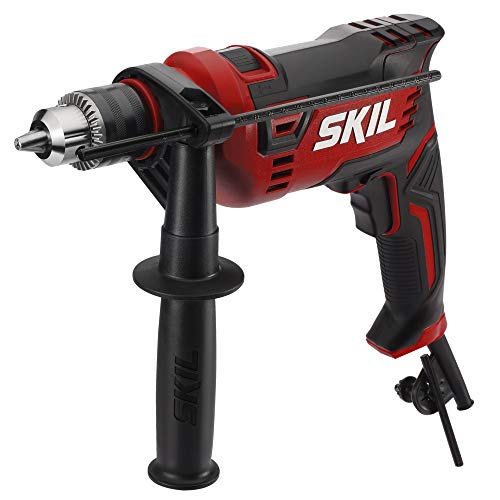
An impact driver delivers bursts of rotational force, not forward-and-back pulsing. It is built to drive long screws and bolts with less wrist strain, and it typically takes quarter-inch hex-shank accessories rather than a three-jaw chuck. A hammer drill, by contrast, accepts round-shank drill bits and delivers axial hammering. If you want to drive structural screws, an impact driver is the more natural choice. If you want to put a hole in brick, a hammer drill is the one that can do it.
Hammer drill vs rotary hammer
A rotary hammer uses a piston-style mechanism that delivers a much more powerful, concentrated blow, and it generally uses a specialized shank system for bits instead of a standard chuck. That extra energy lets it chew through concrete far faster and handle larger holes with less pressure from you. The trade-offs are weight, size, cost and the fact that it is overkill for light work. A useful rule of thumb: if masonry is an occasional task, a hammer drill is likely enough; if it is the heart of your job, price out a rotary hammer before you buy.
Corded or cordless?
Cordless hammer drills
Cordless models are popular because they go anywhere and start instantly. For most household projects, such as hanging a shelf on a brick wall, fixing a fence post bracket to a masonry footing or running a few anchors, a cordless hammer drill is perfectly capable. The real purchase is the battery platform. If you already own batteries and a charger from a given brand, a bare tool that shares them is usually the most economical route, and you can compare the bare-tool and kit options side by side. Check the battery voltage class and the amp-hour capacity on the listing, remembering that higher capacity means longer runtime and extra weight, and that masonry drilling drains batteries faster than driving screws.
Corded hammer drills
Corded models draw steady power from an outlet, so they do not fade as a battery drains, and they often cost less than a comparable cordless kit. They suit a garage workshop or repeated masonry work. The cord limits reach, and long runs call for an extension cord whose gauge suits the tool’s amperage rating; check the manual.
Features that matter when comparing models
Chuck size and type
Most hammer drills use a keyless chuck that you tighten by hand. Look at the stated maximum chuck capacity, because it controls the largest round shank the tool can hold. Half-inch chucks are common on heavier tools, while smaller chucks appear on compact models. A chuck that grips firmly and does not let bits slip under load is more important than any spec sheet number.
Clutch and torque settings
The adjustable clutch ring limits the torque delivered to screws so you do not strip heads or drive fasteners too deep. It is irrelevant in drilling mode, where the clutch is bypassed, but valuable if the tool doubles as a screwdriver.
Speed ranges and variable trigger
Two-speed gearboxes are standard. The low range delivers more torque for large bits and driving screws, while the high range suits small bits and faster drilling. A good variable-speed trigger lets you start a hole slowly, which prevents the bit from walking across tile or smooth masonry.
Side handle and depth rod
An auxiliary side handle is not decoration. When a bit binds in masonry, the tool can twist sharply, and a second hand gives you leverage to resist it. A depth rod or stop lets you drill repeatable holes to the same depth for anchors. Confirm that the listing includes both, or whether you would need to buy them separately.
Comparison table: types at a glance
The table below summarizes the general differences between the tool types discussed in this guide. It describes categories, not specific products, so always confirm details on the actual listing.
| Type | Best for | Strengths | Watch-outs |
|---|---|---|---|
| Compact cordless hammer drill | Light masonry anchors, general drilling, tight spaces | Easy to carry, quick to use, good for overhead work | Less sustained power, smaller batteries may run down quickly in masonry |
| Full-size cordless hammer drill | Homeowners and tradespeople who want one versatile tool | Stronger torque, larger chuck, bigger battery options | Heavier and costlier, battery platform commitment |
| Corded hammer drill | Repeated masonry work in a workshop or near outlets | Steady power, no charging, often lower price | Cord limits reach, extension cord needed on larger jobs |
| Rotary hammer (for comparison) | Frequent or large holes in concrete | Much stronger hammering action | Heavier, specialized bit system, overkill for light tasks |
| Impact driver (for comparison) | Driving long screws and bolts | High rotational force with less wrist strain | Does not drill masonry; takes hex-shank accessories |
If you decide a cordless hammer drill fits your needs, you can browse cordless hammer drills and filter by chuck size, battery platform and kit contents. Shoppers leaning toward steady masonry work may prefer to look at corded hammer drills instead.
Matching bits to materials
A hammer drill is only as good as the bit in its chuck. Masonry bits typically have a carbide tip brazed onto a steel body so they can withstand the repeated impacts. Using a standard twist bit meant for wood or metal in hammer mode can damage the tip and produce poor results. Make sure the bits you use are labeled for masonry and for use with hammer drills, and check the listing or packaging for the recommended drill type.
Bit diameter also matters. Small diameters in brick and block are within the comfort zone of a typical hammer drill, while larger diameters in dense concrete push the tool toward its limit. When the bit stops advancing, resist the temptation to lean harder. Withdraw it periodically to clear dust, let both the bit and tool cool, and switch to a sharper bit if progress stalls. If the bit hits steel reinforcement, stop; carbide tips are not designed to cut rebar, and forcing the issue risks damage and kickback.
For a broader supply of accessories, a masonry drill bit set is usually cheaper than buying single sizes, provided the case includes the diameters you will actually use.
Safety notes for hammer drilling
Masonry drilling is noisier, dustier and more physically demanding than drilling wood. Treat the following as a minimum, and read your tool’s instruction manual for specifics.
- Eye protection: wear safety glasses or goggles every time. Masonry chips and dust can be thrown out of the hole at speed.
- Hearing protection: hammer action is loud, particularly indoors or against hard surfaces. Earplugs or earmuffs are sensible for anything beyond a couple of holes.
- Dust control: dust from concrete, brick and mortar can contain respirable crystalline silica, a hazard when inhaled over time. Use dust-reducing methods such as a vacuum held near the hole or an attachment designed for the purpose, and wear a respirator suited to fine dust. Check current guidance from the relevant workplace safety authority in your region for details.
- Hidden hazards: before drilling into walls, floors or ceilings, consider electrical wiring, plumbing, gas lines and reinforcing steel. Use appropriate detection methods and, if in doubt, consult a qualified professional.
- Two-handed control: use the side handle, plant your feet and keep your body out of the line of rotation in case the bit binds.
- Secure the work: clamp loose material so it cannot spin, and never hold a workpiece in one hand while drilling with the other.
- Cord and battery care: keep cords away from the bit path, do not use damaged batteries or chargers, and store batteries according to the manufacturer’s instructions.
Always check current specifications and instructions for your specific tool, accessories and anchors before use. If a manual and a general guide ever disagree, the manual wins.
Buyer checklist
Work through this list before you add a tool to your cart.
- Identify the materials you will drill most often: wood, metal, brick, block or poured concrete.
- Estimate hole size and quantity. Many large holes in concrete point to a rotary hammer.
- Decide between corded and cordless, and check whether you already own batteries from a compatible platform.
- Confirm the maximum chuck capacity and that it is a keyless design you find easy to tighten.
- Check that the tool has separate drill, hammer and, if wanted, screwdriving modes that are clearly marked.
- Look for a variable-speed trigger, two mechanical speed ranges and an adjustable clutch.
- Verify that a side handle and depth stop are included.
- Read recent reviews for patterns such as chuck slippage, overheating or battery issues.
- Confirm you have eye, ear and dust protection ready before the tool arrives.
Mistakes to avoid
Expecting a hammer drill to behave like a rotary hammer
Buyers sometimes assume any tool labeled “hammer” will power through a concrete slab. It will not do so quickly, and pushing it too hard overheats the motor. Match the tool class to the job.
Forgetting to switch modes
Drilling wood in hammer mode chews the entrance of the hole. Drilling masonry in plain drill mode stalls. Make a mode check part of your routine whenever you change bits.
Using the wrong bits
Wood bits and generic twist bits are not made for the impact load of hammer mode. Use bits intended for masonry, and replace them when the tips are visibly worn or chipped.
Skipping the side handle
People remove the auxiliary handle because it is in the way, then discover how violently a drill can twist when the bit snags. Keep it on for any serious drilling.
Ignoring dust
Masonry dust is not just messy. Cleaning it with a dry broom throws fine particles into the air. Capture dust at the source and clean with suitable methods, not compressed air or dry sweeping.
Frequently asked questions
1. Can a hammer drill replace a regular drill?
Yes, in most cases. With the mode selector set to drill, it behaves like a normal drill/driver. The tradeoff is a little extra weight and bulk compared with a dedicated plain drill.
2. Can a hammer drill go through concrete?
It can drill small to medium holes in many types of concrete, though progress may be slow in dense material. For frequent or large holes, a rotary hammer is generally more appropriate. Check the maximum masonry capacity listed by the manufacturer.
3. Do I need a hammer drill for brick?
It is strongly recommended. Brick and mortar respond well to hammer action, and a regular drill will heat and dull masonry bits quickly.
4. Is a hammer drill good for driving screws?
It can drive screws well using the clutch and a low-speed range, but an impact driver is better for long fasteners and repeated driving. Many people use both together.
5. What chuck size should I choose?
Choose according to the largest shank you expect to use. A smaller chuck keeps the tool compact for general jobs, while a larger one accepts heavier bits. Check the product listing for the stated maximum capacity.
6. How long should a cordless hammer drill battery last?
Runtime depends on battery capacity, material, bit size and how hard you push. Masonry drilling is demanding, so expect less runtime than you would get driving screws.
7. Can I use hammer mode with any bit?
No. Use bits rated for masonry and hammer drilling. Hammer mode on a delicate bit or a standard twist bit can damage it and give poor results.
8. How do I reduce dust when drilling masonry?
Hold a vacuum nozzle close to the hole, use an attachment made for dust capture if available, and wear a respirator suited to fine dust. Clean up with a vacuum designed for fine particles instead of dry sweeping. Check your tool’s manual and local guidance for further steps.
Bottom line
The best hammer drill is a good match for your materials, your workload and the batteries you already own. Choose cordless for flexibility and corded for steady, repeated masonry work, and step up to a rotary hammer if concrete is a regular job. Prioritize a firm chuck, a usable clutch, a side handle, and solid safety habits. Before you buy, confirm current specifications and instructions on the listing and in the manual. When you are ready, you can compare a hammer drill and driver combo kit against the checklist above, and keep a pair of safety glasses in the case.
Disclosure: As an Amazon Associate, we earn from qualifying purchases. Links marked as sponsored may earn us a commission at no extra cost to you.
Related guides
More from Amazon
Programs that pair well with the guide above. Offers and eligibility are set by Amazon and may change.
A free business account with business pricing and bulk-buying tools for work, shop or home office.
Create a business accountFree shipping on eligible items, Prime Video and more. Eligible new members can start with a free trial.
Start a Prime free trialAudiobooks and podcasts to listen to on the go. Eligible new members can start with a free trial.
Try Audible freeAd-free music streaming. Eligible new subscribers can start with a free trial.
Try Music Unlimited freeAs an Amazon Associate we earn from qualifying purchases.
Write Your Review
No reviews yet. Be the first to share your experience!