
What's inside
- Contents
- The main types of circular saw
- Corded or cordless: choosing a power source
- Features that matter in daily use
- Blade size, tooth count and blade types
- Sizing and fit: weight, handle and balance
- Matching a saw to your projects
- Safety and care
- Common buying and using mistakes
- Who should choose what
- Pre-purchase checklist
- Frequently asked questions
- Conclusion
As an Amazon Associate I earn from qualifying purchases. This post may contain affiliate links at no extra cost to you.
Short answer: the best circular saw is the one that fits the work you actually do. For most homeowners and weekend builders, a lightweight 7-1/4 inch sidewinder, corded or cordless, covers decking, shelving, plywood and framing lumber. If you cut a lot of thick, wet or long material, a worm drive or a high-output corded saw earns its extra weight. Decide on power source, blade size, weight and guard design first, then judge comfort, because a saw that feels awkward in your hands is a saw that is harder to control.
This guide covers types, how to choose, key features, blades, safe use and common mistakes. It names no brands and quotes no prices, because the right answer depends on your projects.
Our Top Picks
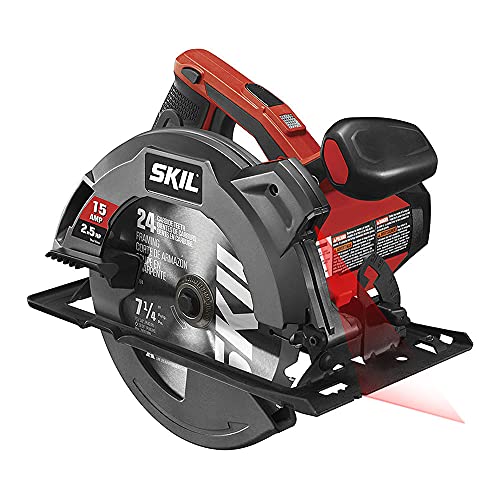 SKIL 15 Amp 7-1/4 Inch Circular Saw with7-1/4 Inch (Pack of 1)14.2 x 9.8 x 8.5 inches8.7 poundsCheck on Amazon

Contents
- The main types of circular saw
- Corded or cordless: choosing a power source
- Features that matter in daily use
- Blade size, tooth count and blade types
- Sizing and fit: weight, handle and balance
- Matching a saw to your projects
- Safety and care
- Common buying and using mistakes
- Who should choose what
- Pre-purchase checklist
- Frequently asked questions
The main types of circular saw
All circular saws spin a toothed disc to cut, but the layout of the motor and gearing changes how the saw handles. Knowing the layouts helps you read product descriptions without relying on marketing language.
Sidewinder (direct drive)
In a sidewinder the motor sits beside the blade, so the motor shaft or a short gear set drives the blade directly. This is the most common layout. Sidewinders are generally lighter, more compact and easier to find in cordless form. Because the motor sits on the right or left of the blade, the saw is a little wider, and the blade usually sits on one side of the base. That affects which direction you can see the cut line, which we cover below.
Worm drive
A worm drive places the motor behind the blade, in line with the saw body, and uses a worm gear to turn the blade. The result is a longer, narrower and usually heavier saw with a lot of torque at lower speeds. Many carpenters prefer them for cutting thick framing lumber, wet lumber and long rip cuts, because the weight helps the saw stay in the cut. The blade is typically on the left side for a right-handed user, which gives a clear view of the line. The trade-offs are weight, size and the need to check and top up gear oil as the manufacturer directs.
Compact and trim saws
Smaller saws take a reduced-diameter blade, roughly 4 to 6 inches. They are light and suit trim, thin sheet goods and flooring, but cutting depth is limited, so check it against your material, especially at a bevel.
Comparison of circular saw types
| Type | Typical strengths | Typical drawbacks | Good fit |
|---|---|---|---|
| Sidewinder, corded | Steady power, no battery to manage, usually lighter than worm drive | Cord limits movement and needs managing | Garage and workshop cutting, general carpentry |
| Sidewinder, cordless | Freedom to move, quick setup, no extension cord | Run time depends on battery; heavier cuts drain it faster | Roof, deck and fence work, occasional DIY |
| Worm drive | High torque, good line of sight, stable in long cuts | Heavy and long; may need gear oil checks | Framing, thick or wet lumber, frequent heavy use |
| Compact / trim | Light and easy to maneuver | Limited cutting depth | Flooring, panels, thin stock, small projects |
| Track or plunge | Very straight, clean cuts in sheet goods | Specialized, needs a guide rail | Cabinetry, worktops, fine panel work |
Corded or cordless: choosing a power source
This is the first fork in the road, and neither answer is universally right.
When corded makes sense
A corded saw delivers steady power without fading, needs no batteries or charger, and is the more forgiving choice for long rips in thick lumber. The downsides are the cord, which can snag or be cut if you are careless, and the need for a properly rated outdoor extension cord. Keep the cord short and route it behind you, away from the cut.
When cordless makes sense
Cordless saws suit roofs, yards, ladders and anywhere an outlet is far away, and there is no cord to trip over. Run time varies widely with battery capacity, blade condition and material; dull blades and wet or dense wood drain a battery fast. If you already own tools on one battery platform, a saw that shares those batteries is usually the most economical path, and a second battery helps on long days.
Features that matter in daily use
Spec sheets list dozens of items. These are the ones that you will notice on the job.
Cutting depth and bevel capacity
Depth of cut is the maximum thickness the blade can pass through at 90 degrees. Bevel capacity is how far the base can tilt, and cut depth shrinks as you tilt. A saw that clears a nominal 2x lumber thickness at 90 degrees may not do so at 45 degrees. If you intend to cut bevels in thick stock, check the stated depth at 45 degrees, not just at 90.
Blade guard design
The lower guard covers the blade and retracts as you cut. It should move freely and snap back. Never pin it open. A sticky guard is a repair or replacement issue, not something to work around.
Brake
An electric brake stops the blade quickly after you release the trigger. It is a genuine safety and productivity feature, because you can set the saw down sooner and a coasting blade is less likely to catch something. Not every saw has one, and it is worth looking for.
Handle and trigger
A comfortable main handle and a secondary front grip help you use two hands, which is safer and more controlled. Trigger lockouts reduce accidental starts. Try the grip with work gloves on if that is how you will use it.
Blade size, tooth count and blade types
A blade is the part of the saw that actually does the cutting, and it often matters more than small differences between saw bodies.
Blade diameter
A 7-1/4 inch blade is the common size for general carpentry in many markets, which makes blades easy to find and affordable. Larger saws exist for deeper cuts, and smaller ones for lighter jobs. The saw’s arbor size and guard limit the blade diameter you can mount, so always match the blade to the saw’s marked size. Never fit a larger blade than the saw is rated for.
Tooth count and what it does
Fewer teeth remove material quickly and leave a rougher edge; more teeth cut more slowly and leave a smoother finish. A rough guide, to be treated as general rather than precise:
- Low tooth count: fast ripping along the grain and rough framing work.
- Medium tooth count: general-purpose blades that handle crosscuts and rips acceptably.
- High tooth count: finer crosscuts, plywood and veneered boards, where tear-out matters.
Blade materials and special blades
Carbide-tipped blades are standard for woodworking because they hold an edge far longer than plain steel. Blades for metal, masonry and fiber-cement exist, but they need a saw rated for them and produce hazardous dust or sparks. Never use a wood blade on other materials.
Sizing and fit: weight, handle and balance
A circular saw is held in the air during a cut, often at awkward angles, so weight and balance affect fatigue and accuracy. A lighter saw is easier on ladders but vibrates more in thick stock; a heavier saw can feel smoother in straight cuts but tires your wrist. Hold candidates in a shop if you can and check that you can reach the trigger and lockout comfortably, that your off hand sits well clear of the blade path, and that you can read the scales without craning. Users with limited grip strength may prefer a compact cordless saw, even with lower capacity, because the extra control makes the cut safer.
Matching a saw to your projects
Instead of asking which saw is best, ask which is best for the project list in front of you.
Decks, fences and outdoor structures
Pressure-treated and outdoor lumber is often wet and dense. A saw with good torque, or a fresh sharp blade on a cordless saw with a high-capacity battery, will cope better. Because you are frequently away from outlets, a cordless sidewinder is a popular pick, with a second battery as backup.
Framing and heavy carpentry
Repeated cuts in thick lumber favor a worm drive or powerful corded saw. The weight and torque keep the blade moving steadily through dimensional lumber.
Safety and care
A circular saw is among the tools most associated with workshop injuries, mostly because of kickback and contact with the blade. A few habits prevent most problems.
Personal protective equipment
Wear safety glasses and hearing protection every time, plus a dust mask suited to the material, and avoid loose sleeves and dangling jewelry.
Support and clamp the work
Support the workpiece so that the offcut will not pinch the blade or fall unsupported partway through the cut. Clamp it down. Cutting with the board resting across two supports, and setting the blade depth so it extends only about a tooth-height or so below the underside of the material, reduces risk. Set the cutting line over open space or a sacrificial surface, not over your legs or the floor you care about.
Understand kickback
Kickback happens when the blade binds, or is pinched, and the saw is thrown back toward the operator. Common causes are a dull blade, twisting the saw during the cut, cutting with a sagging board that closes on the blade, and starting the cut with the blade already against the wood. Reduce risk by:
- Letting the blade reach full speed before it contacts the material.
- Keeping the shoe flat on the workpiece and guiding straight, not forcing curves.
- Keeping a firm two-handed grip with your body to the side of the blade line, not directly behind it.
- Releasing the trigger if the saw binds, and waiting for the blade to stop before withdrawing.
Guards, cords and batteries
Check the lower guard moves freely before every session. Unplug a corded saw or remove the battery before changing blades or making adjustments. Keep cords clear of the blade path. Store batteries and chargers as the manufacturer specifies, away from extreme heat, and do not use damaged batteries.
Common buying and using mistakes
- Buying on one number. Motor amps or battery voltage headline figures tell you little by themselves. Blade quality, weight and ergonomics shape results at least as much.
- Ignoring the blade. A cheap blade on a good saw performs worse than a good blade on a modest saw. Budget for at least one quality blade for your main use.
- Cutting unsupported material. The cause of many pinched blades. Always support both sides of the cut.
- Setting blade depth too deep. Excess blade below the work increases exposure and kickback potential.
- Removing or pinning the guard. The guard is a safety device, and the saw should never be used with it disabled.
Who should choose what
| If you are… | Consider | Why |
|---|---|---|
| A first-time DIYer with occasional projects | Lightweight corded or cordless sidewinder with brake and visible line | Easy to control, versatile, widely supported blades |
| A homeowner building a deck or fence | Cordless sidewinder with spare battery, or corded if near power | Mobility outdoors, adequate depth for common lumber |
| A frequent framer or builder | Worm drive or high-output corded saw | Torque and stability for repeated heavy cuts |
| A hobbyist cutting plywood and shelving | Sidewinder plus a fine-tooth blade and straightedge guide | Clean edges depend more on blade and guide than saw power |
If you are still unsure, a standard 7-1/4 inch sidewinder, ideally with an electric brake, is the safest starting point. You can add a worm drive or a track system later if your projects demand it.
Pre-purchase checklist
- I know whether I will mostly cut near an outlet or away from power.
- I have checked the maximum cutting depth at 90 degrees and at 45 degrees against the lumber I use.
- The saw has a lower guard that moves freely and a trigger lockout.
- An electric brake is included, or I have decided I can do without it.
- If cordless, I know how many batteries I need and whether they fit tools I already own.
Once you have decided, you can browse options such as a circular saw, a replacement circular saw blade, a pair of safety glasses, hearing protection and a set of clamps.
Frequently asked questions
What is the best circular saw for a beginner?
A lightweight 7-1/4 inch sidewinder with an electric brake, a blade guard that moves freely and a comfortable grip is a good beginner choice. Whether it is corded or cordless depends on where you will work. Focus on control and safety features over raw power.
Is a worm drive saw better than a sidewinder?
Not universally. A worm drive typically offers more torque and a more stable feel in long, thick cuts, but it is heavier and longer. A sidewinder is lighter and handier for general work. Choose based on how heavy your typical cuts are and how long you hold the saw.
Corded versus cordless: which is more powerful?
Corded saws deliver steady power without fading, while cordless saws vary with battery capacity and condition. Modern cordless saws handle common DIY work well, but for continuous heavy cutting a corded saw is usually more dependable. Check the specifications and the manufacturer’s guidance for your intended use.
What blade size should I get?
Use the blade diameter your saw is designed for. For many full-size saws that is 7-1/4 inches, but check the label on the saw or the manual. Never mount a blade larger than the rating. For the tooth count, pick lower for fast rough cuts, higher for plywood and finish work.
How deep can a circular saw cut?
It depends on the model and blade size. Look for the stated depth at 90 degrees and at 45 degrees, and compare it with the thickness of material you cut. Remember that depth drops as you bevel.
How deep can a circular saw cut?
It depends on the model and blade size. Look for the stated depth at 90 degrees and at 45 degrees and compare it with your material, remembering that depth drops as you bevel.
Can I cut metal or masonry with a circular saw?
Only with a blade and saw that are specifically rated for that material, and with the correct protective equipment. Do not use a wood blade on metal, masonry or fiber-cement. Check the saw manual to learn whether your saw is suitable.
How do I prevent kickback?
Support and clamp the workpiece, keep the blade sharp, let the blade reach full speed before cutting, set the depth correctly, keep your body to the side of the line of the blade and hold the saw firmly with both hands. If the saw binds, release the trigger and wait for the blade to stop before moving it.
Conclusion
The best circular saw is a matter of fit. Start with power source and blade size, check cutting depth at bevel, and look for a free-moving guard, a brake and a clear view of the line. Spend as much thought on the blade, clamps and eye and ear protection as on the saw itself.
Disclosure: As an Amazon Associate we earn from qualifying purchases. If you click a link and buy, we may earn a commission at no extra cost to you.
Related guides
More from Amazon
Programs that pair well with the guide above. Offers and eligibility are set by Amazon and may change.
A free business account with business pricing and bulk-buying tools for work, shop or home office.
Create a business accountFree shipping on eligible items, Prime Video and more. Eligible new members can start with a free trial.
Start a Prime free trialAudiobooks and podcasts to listen to on the go. Eligible new members can start with a free trial.
Try Audible freeAd-free music streaming. Eligible new subscribers can start with a free trial.
Try Music Unlimited freeAs an Amazon Associate we earn from qualifying purchases.

Write Your Review
No reviews yet. Be the first to share your experience!