
What's inside
- The Short Answer
- In This Guide
- Types of Portable Table Saws
- How to Choose for Your Trade
- Key Features That Matter
- Power, Size and Capacity Explained
- Setup and First-Cut Preparation
- Safety Essentials
- Maintenance and Storage
- Common Mistakes
- Who Should Choose What
- Buying Checklist
- Frequently Asked Questions
- Conclusion
As an Amazon Associate I earn from qualifying purchases. This post may contain affiliate links at no extra cost to you.
Our Top Picks
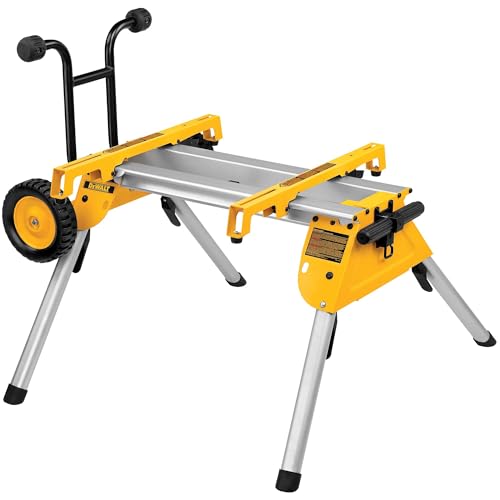
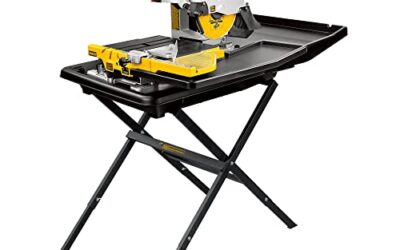
 DEWALT 15 Amp 8-1/4 in. Compact Portable JobsiteOne Size22.75 x 22.75 x 13 inches54 poundsCheck on Amazon


The Short Answer
The best portable table saw for a job site is the one that matches the work you actually do, not the one with the longest feature list. For most trades, that means a lightweight benchtop-style saw if the saw gets carried up stairs and used for trim, a full jobsite saw with a rolling stand if you rip sheet goods and framing lumber daily, and a contractor-style saw only if the job sits in one place for months. Whatever you pick, prioritize four things in this order: a guard system that stays on the saw, a fence that locks square every time, a motor that does not bog down in dense or damp stock, and a stand you will really use.
This guide covers the main types, what the specifications mean, setup on uneven ground, and the mistakes behind most kickback incidents. It does not rank brands or models.
In This Guide
- Types of portable table saws
- How to choose for your trade
- Key features that matter
- Power, size and capacity explained
- Setup and first-cut preparation
- Safety essentials
- Maintenance and storage
- Common mistakes
- Who should choose what
- Buying checklist
- Frequently asked questions
- Conclusion
Types of Portable Table Saws
“Portable” covers a wide range. A saw you can carry with one hand and a saw that needs two people and a ramp can both be sold under that word. Sorting the category into types makes the decision easier, because each type is built around a different compromise between weight, cutting capacity and stability.
Benchtop saws are the lightest and smallest. They have a compact table, a small motor and a short fence rail, and they sit on a workbench, sawhorses or a folding stand. They suit trim, flooring pieces, small repairs and punch-list work where you need a square, repeatable cut but rarely feed long boards. The trade-off is limited rip capacity and less table support.
Jobsite saws on folding or rolling stands are what most people mean by a portable table saw for job sites. They have a larger table, a more capable fence and a stand that folds flat or rolls on wheels. They handle ripping dimensional lumber, trimming plywood to width and cutting sub-floor or cabinet parts. The stand is part of the design, and a good one is the difference between a stable saw and one that walks across the floor mid-cut.
Compact contractor-style saws are heavier, often with a larger induction-type motor, bigger table extensions and a sturdier fence. They have wheels and can move from room to room, but they are not something you lift into a vehicle alone every morning. They suit contractors who set up for a whole project and want smoother, more accurate cuts.
Hybrid and sliding-table portable designs add a sliding table or extended rail system to improve crosscut support and rip capacity. They are heavier and cost more, and make sense mainly for cabinet installers and remodelers doing repeated precise work on site.
Comparison of portable table saw types
| Type | Typical weight class | Best for | Main limitation |
|---|---|---|---|
| Benchtop | Light enough to carry one-handed or with a short two-hand lift | Trim, flooring pieces, small repairs, stair work | Short rip capacity, less table support |
| Jobsite with folding or rolling stand | Moderate; one person can load it with effort | Framing lumber, plywood ripping, general carpentry | Stand quality varies; fence precision is a compromise |
| Compact contractor-style | Heavy; usually a two-person lift | Longer projects in one location, more accurate cuts | Hard to move up stairs |
| Hybrid or sliding-table portable | Heavy and bulky | Cabinet installs, repeated precise panel work | Cost, size, setup time |
How to Choose for Your Trade
Start with the material you cut most. If it is mostly trim, flooring and small stock, a benchtop saw is probably enough and its low weight is a real benefit. If it is dimensional lumber and sheet goods, you need a jobsite saw with enough rip capacity to cut sheets into useful widths and a table large enough to support the work before and after the blade.
Next, consider how you move the saw. Count the stairs, the doorways and the vehicle space. A saw that technically fits in your truck but needs two people to load will be left at home on the days you most want it. Stairs are an honest test: if you often work on upper floors without a lift, weight outweighs almost every other factor.
Then think about power. Many sites run on generators or long extension cords, and a saw that draws more current than the circuit can deliver will stall, trip a breaker or wear out its motor. Compare the tool’s amperage rating with the power you realistically have, and plan on a heavy-gauge cord kept as short as practical.
Key Features That Matter
Guard and splitter system. The blade guard, riving knife or splitter, and anti-kickback pawls are the saw’s safety system. Look for a guard that installs and removes quickly, because a guard that is a chore to refit ends up in the truck bed. A riving knife that rises and falls with the blade stays close to the teeth at any height.
Fence design. The fence is where cheap portable saws most often disappoint. A good one slides smoothly, locks at front and rear, and stays parallel to the blade. Lock it several times at one setting and check that it returns to the same spot. A fence that needs re-measuring every cut costs time and produces tapered rips.
Soft start. A soft start reduces the jolt at spin-up and is easier on generators.
Dust collection. A port that accepts a standard vacuum hose lets you connect collection. It will not capture everything, but it reduces airborne dust and keeps the cut line visible.
Stand and carrying design. Check how quickly the stand opens and whether the legs lock with positive latches. Adjustable or pivoting feet cope better with uneven concrete, gravel and subfloors than a rigid frame.
Power, Size and Capacity Explained
Amperage tells you how much current the motor draws at rated load. Higher amperage generally means a stronger motor, but also a need for a circuit that can supply it. A long, thin extension cord causes voltage drop and a weaker, hotter motor, so match the cord rating to the tool and the length.
Blade diameter sets the maximum depth of cut. Most portable saws use a standard blade that cuts common framing lumber in one pass at ninety degrees. Depth drops when the blade tilts, so if you bevel thick stock, check the depth rating at forty-five degrees.
Rip capacity is the maximum distance from blade to fence. It controls the widest board you can rip and the widest panel you can trim. Check the figure with the table extension fully locked, since marketing sometimes quotes the extended number.
Motor type affects noise, torque and weight. Universal motors are lighter and common in the lightest saws, but louder and more prone to losing speed under load. Induction motors are quieter and hold speed better, but weigh more. Neither is automatically better.
Weight is the number people forget until they are on the stairs. Look at the weight of the saw and the stand separately, since listings often show only one.
Setup and First-Cut Preparation
A few minutes of setup prevents most of the problems that make portable saws feel unreliable.
- Choose the location. Pick firm, level ground with room for your stance and for the work to exit behind the blade. Keep bystanders out of the line of the blade.
- Open and lock the stand. Engage every latch, rock the saw gently to check for wobble, and shim or adjust the feet on uneven surfaces.
- Check the power. Use a cord of adequate gauge, and a GFCI outlet or GFCI-protected cord whenever the site is damp, outdoors or on bare concrete.
- Install the blade. Unplug the saw, fit a clean sharp blade with the teeth pointing toward you at the front of the table, and tighten the arbor nut firmly. Use fewer teeth for ripping and more for crosscutting and panels.
- Fit the guard and splitter. Align the riving knife with the blade and confirm the pawls move freely.
- Square the fence. Measure from the blade to the fence at the front and rear of the blade. The readings should match; if not, follow the manual to adjust.
- Set blade height so the blade rises only slightly above the workpiece.
- Support the work with roller stands or a sturdy outfeed table.
- Make a test cut in scrap and measure it before cutting good stock.
Safety Essentials
Table saws are among the most hazardous tools on a site, and portable versions can be less stable than a shop saw. Treat these points as the minimum.
- PPE. Wear safety glasses or a face shield, hearing protection, and a dust mask or respirator suited to the material. Avoid loose sleeves, dangling jewelry and gloves near the blade.
- Keep the guard on. Use the guard, riving knife and pawls for every through cut, and replace them straight after any non-through operation.
- Understand kickback. It happens when the workpiece pinches the blade or lifts onto the rear teeth and is thrown back at the operator. Common causes are a misaligned fence, a missing splitter, twisted or wet stock, and freehand cutting. Stand slightly to one side of the blade line.
- Use push sticks and blocks for narrow pieces, and never reach over a spinning blade.
- Do not trap work between the fence and the blade for crosscuts, and never cut freehand.
- Wait for the blade to stop before clearing offcuts or adjusting anything.
- Electrical safety. Use GFCI protection on damp or outdoor sites and inspect cords for damage.
- Dust. Dust from engineered boards and treated wood can be harmful; collect it and wear a suitable respirator.
Always follow the manufacturer’s manual for your saw; where it conflicts with this article, the manual wins.
Maintenance and Storage
Vibration, transport and dust punish portable saws, so a few habits matter. Brush or vacuum dust from the motor housing, trunnion area, raising mechanism and table after use, since packed dust makes controls sticky and settings inaccurate. Keep the blade sharp and clean: a dull or gummed blade burns the cut, strains the motor and raises kickback risk. Wax the table with a suitable paste wax so boards slide freely and rust stays away.
Recheck alignment after long trips or hard knocks, inspect the power cord for cuts, and store the saw indoors or under a breathable cover, because moisture is a quiet enemy of the table and the electrics.
Common Mistakes
- Buying on capacity alone. A saw that rips wide boards but wobbles on its stand will not cut well.
- Ignoring the stand. Judge stiffness, latch quality and leg adjustment.
- Removing the guard for good. If it annoys you, look for a more convenient design.
- Cutting warped or wet lumber carelessly. Twisted stock pinches the blade.
- Using an undersized extension cord, which starves the motor.
- Using the wrong blade. A ripping blade tears veneered plywood; a high tooth-count blade burns thick lumber.
Who Should Choose What
A trim carpenter or flooring installer should choose a benchtop or light jobsite saw with a flat table, good fence and dust port; weight and setup speed matter more than rip capacity. A framer or general contractor needs a sturdy stand, a strong motor and wide rip capacity, because the work is rough and the conditions harsher. A remodeler or cabinet installer should lean toward accuracy: a well-designed fence, a bigger table and a stable stand, with a compact contractor-style saw an option for long single-location projects.
A homeowner or new user usually does better with a benchtop or small jobsite saw with an easy guard system, and many occasional users find a circular saw with a guide safer for sheet goods.
Comparison of buyer profiles
| Buyer profile | Suggested type | Top priority | Accessory worth adding |
|---|---|---|---|
| Trim or flooring installer | Benchtop or light jobsite saw | Low weight, fast setup | Fine-tooth blade, dust hose |
| Framer or general contractor | Jobsite saw with rolling stand | Durability, rip capacity | Spare ripping blade, roller stands |
| Remodeler or cabinet installer | Larger jobsite or compact contractor-style | Fence accuracy, table size | Outfeed support, zero-clearance insert |
| Homeowner or occasional user | Benchtop or small jobsite saw | Guard system, ease of use | Push sticks, hearing protection |
Buying Checklist
- Write down the materials you cut most and the widest rip you need.
- Compare the weights of the saw and stand with what you can comfortably lift and load.
- Match the saw’s amperage to your generator or circuit, and plan a suitable cord.
- Confirm the guard, riving knife and pawls install and remove quickly.
- Lock the fence repeatedly and confirm it returns parallel to the blade.
- Check that the table is flat and the extension locks flush.
- Open and fold the stand before the first job and check the latches.
- Confirm depth of cut at both ninety and forty-five degrees.
- Buy push sticks, safety glasses, hearing protection and a respirator with the saw.
- Plan GFCI protection for every damp or outdoor site.
Frequently Asked Questions
What size blade should a portable table saw use?
Use the diameter the saw is built for and never fit a larger blade than the manual allows. Blade size sets your maximum depth of cut, so check depth at a bevel as well as at square.
Is a portable table saw safe for beginners?
It can be, if the beginner learns how kickback happens, keeps the guard system installed, uses push sticks and gets guidance from someone experienced. Quick-attach guards, clear controls and a soft start help. If you stay uncomfortable after practicing on scrap, consider another tool for the task.
Do I need a stand with my table saw?
For most jobsite saws, yes. A stand sets a comfortable height, improves stability and often eases transport. Some benchtop saws are meant for a workbench, but that surface must be sturdy and the saw clamped so it cannot shift.
Can I run a portable table saw on a generator?
Often, but it depends on the saw’s amperage and the generator’s rated output. Motors draw more when starting and under load, so leave a margin, and avoid running other tools at once. Soft start helps. Check both manuals.
How do I prevent kickback?
Keep the riving knife installed, align the fence parallel to the blade, never cut freehand, avoid twisted or wet stock, and use push sticks. Stand slightly to one side of the blade line, feed steadily, and do not force a dull blade.
Is a table saw or a circular saw better for job sites?
They solve different problems. A table saw is better for repeatable rips and narrow accurate cuts; a circular saw with a guide is often better for breaking down full sheets and cutting in place. Many contractors carry both.
Which blade is best for plywood and for lumber?
Fewer, larger teeth with deep gullets suit ripping solid lumber, while a higher tooth count gives cleaner cuts in plywood and veneered panels. A combination blade is a reasonable compromise if you cut a mix.
How often should I check the saw’s alignment?
Check after long transport, bumps, or whenever you see burn marks or uneven cuts. On busy sites, a weekly check of blade-to-fence parallelism is a reasonable habit. Unplug the saw before any adjustment.
Conclusion
Choosing a portable table saw is a balance of weight, accuracy, power and price. Identify your typical material and how you move the saw, then scrutinize the guard system, fence, stand and motor. A saw you can carry, set up quickly and trust to cut straight will be used safely and often, which is worth more than a long list of specifications.
When you are ready to compare options, browse a selection of portable table saws and check each listing against the checklist above. Add a sturdy table saw stand if yours does not include one, pick up table saw blades matched to your material, and keep push sticks and safety gear within reach of every setup.
As an Amazon Associate, we earn from qualifying purchases. If you click a link and buy, we may receive a small commission at no extra cost to you.
Related guides
More from Amazon
Programs that pair well with the guide above. Offers and eligibility are set by Amazon and may change.
A free business account with business pricing and bulk-buying tools for work, shop or home office.
Create a business accountFree shipping on eligible items, Prime Video and more. Eligible new members can start with a free trial.
Start a Prime free trialAudiobooks and podcasts to listen to on the go. Eligible new members can start with a free trial.
Try Audible freeAd-free music streaming. Eligible new subscribers can start with a free trial.
Try Music Unlimited freeAs an Amazon Associate we earn from qualifying purchases.

Write Your Review
No reviews yet. Be the first to share your experience!