
What's inside
- Contents
- What a Wheelbarrow Really Does for You
- The Main Types of Wheelbarrow
- Steel Versus Poly Trays
- Wheels, Tires and Bearings
- Frame, Handles and Balance
- Choosing the Right Size and Capacity
- Comparison Table
- Who Should Choose What
- Safety When Loading and Pushing
- Common Mistakes to Avoid
- Buyer Checklist
- Frequently Asked Questions
- Bottom Line
As an Amazon Associate I earn from qualifying purchases. This post may contain affiliate links at no extra cost to you.
The short answer: the best wheelbarrow is the one matched to what you actually haul and where you haul it. For wet concrete, gravel and masonry work, a sturdy steel tray on a strong frame is the traditional pick. For mulch, soil, leaves and general yard chores, a lighter poly tray is easier to push, easier to rinse and will not rust. If you work on soft ground or struggle with balance, a two-wheel model trades maneuverability for stability. If you move heavy loads uphill or all day, a powered model may be worth the extra cost. Whatever you choose, pay attention to the tire, the wheel bearing, the frame joints and the handle height, because those parts decide how the barrow feels after the first hour.
This guide does not rank specific products. It explains the types, the parts that matter, how to size a barrow to your work, and the mistakes that lead people to buy something that tips, sags or squeaks within a season. Use it to narrow your options, then check each current listing against your own jobs.
Our Top Picks

Contents
- What a wheelbarrow really does for you
- The main types of wheelbarrow
- Steel versus poly trays
- Wheels, tires and bearings
- Frame, handles and balance
- Choosing the right size and capacity
- Comparison table
- Who should choose what
- Safety when loading and pushing
- Common mistakes to avoid
- Buyer checklist
- Frequently asked questions
- Bottom line
What a Wheelbarrow Really Does for You
A wheelbarrow is a lever on a wheel. The load sits between the wheel and your hands, so the wheel takes a big share of the weight and you supply the push and the balance. That simple arrangement is why one person can move material that would be miserable to carry by the bucket. It is also why the position of the load matters so much. A heavy load placed low and just behind the axle feels light. The same load piled high and toward the back feels like it is trying to throw you.
Most buying mistakes come from forgetting that a barrow is a system. The tray holds the load, the frame carries it, the wheel rolls it and the handles let you control it. A great tray on a weak frame fails at the joints. A strong frame with a cheap tire frustrates you every time you hit a bump. When you compare options, look at how the parts work together rather than at any one feature in isolation.
The Main Types of Wheelbarrow
Single-wheel barrows
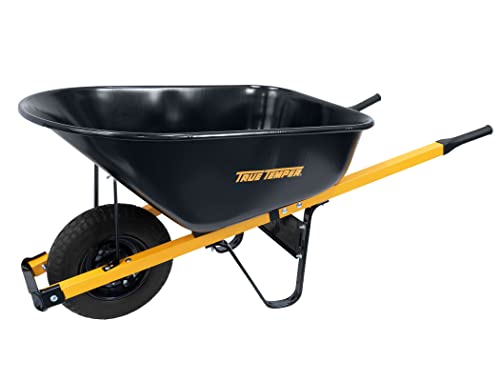
The classic design has one wheel at the front and two legs at the rear. Its great strength is maneuverability. You can steer along a narrow path, pivot around a corner and tip the load by lifting the handles. The weakness is balance. You carry part of the load on your arms, and on uneven or soft ground a single wheel can wander, so your wrists and shoulders do some of the correcting. For most homeowners and most trades, this remains the default.
Two-wheel barrows
Two wheels at the front spread the weight and make the barrow stand on its own. That stability helps people who are new to wheelbarrows, people with back or wrist concerns, and anyone moving fragile or very heavy loads. The price is a wider footprint, so tight gates and narrow garden rows can be a problem, and turning on soft ground can drag. Dumping also feels different, because the barrow pivots on the wheels rather than rocking up on a single point.
Powered barrows
Battery-powered or motorized barrows add a drive system to help carry the load, particularly uphill or over long distances. They can be a real relief for people who haul all day or who cannot manage heavy pushing. They are also heavier, more complex and more expensive, and they depend on a battery that needs charging and care. Think of them as a specialist tool rather than a general upgrade.
Steel Versus Poly Trays
The tray is the first thing most shoppers compare, so it is worth understanding what each material does well.
Steel trays
A steel tray is stiff and tough. It tolerates the edge of a shovel, sharp stone and the occasional drop of a heavy object. It is the usual choice for masonry, concrete and demolition cleanup, because it shrugs off abuse that would gouge plastic. Weight is the tradeoff, since the empty barrow is heavier before you add anything. Steel can also rust if the coating is scratched and the tray is left wet. Washing out concrete promptly and drying the tray protects it, and a quick touch-up of scraped paint buys years.
Poly trays
A polyethylene or similar plastic tray is lighter, will not rust and rinses clean easily. It is quiet, it does not dent the way thin steel does, and for most garden loads it is plenty tough. Concerns include cracking when very cold, flexing under heavy dense loads and wearing near the lip where tools scrape.
Which one wins
Neither material is universally better. Choose steel when the loads are dense and abrasive and you will be tipping stone, brick or concrete. Choose poly when the loads are light to moderate, when you will rinse the tray often or when the weight of the empty barrow matters. If you have both kinds of work, many people end up owning two barrows rather than compromising.
Wheels, Tires and Bearings
The wheel assembly is where cheaper barrows often cut corners, and it is where you feel the difference most. Three questions matter: what is the tire made of, what does the wheel spin on and how is the wheel mounted.
Pneumatic tires
An air-filled tire cushions bumps, rolls over ruts and spreads weight on soft soil. That makes it easier to push and kinder to your arms. The cost is the chance of a puncture and the need to keep the pressure right. Check the manufacturer’s instructions for the correct pressure, because underinflation makes pushing harder and risks damaging the rim.
Flat-free and solid tires
Foam-filled and solid tires cannot go flat, which is attractive for a barrow that lives in a shed and gets used a few times a year. They are usually firmer, so the ride is harsher and heavy loads over rough ground feel less forgiving. For jobs where punctures from nails, thorns and broken material are likely, such as construction cleanup, many people accept the harder ride for the reliability.
Bearings and axles
A wheel on proper bearings turns more freely than one on a plain bushing. Either way, the axle should be a solid bolt or rod with a locking nut, and the wheel should be replaceable separately, since a good frame can outlast several tires.
Frame, Handles and Balance
The frame is the backbone, and its quality shows in the joints. Look for tubes or channels that run from the handles beneath the tray rather than flimsy brackets that only connect at a few points. Welds should look clean and continuous. Bolted joints should use locking hardware and be easy to tighten over time. If the listing shows the frame, picture where the heaviest load will sit and whether that spot is supported.
Handle material and shape
Handles come in wood, steel tube and sometimes composite. Wood absorbs vibration and feels warm in cold weather, but it can crack or rot if left out in the rain. Steel handles are strong and low maintenance, though they can feel cold and hard. Grips matter more than people expect. A comfortable rubber or foam grip reduces fatigue, and a well-shaped handle keeps your wrists straighter than a plain tube.
Choosing the Right Size and Capacity
Capacity is where many shoppers get carried away. A bigger tray is not automatically better, because the volume you can fill is not the volume you can safely push. Dense materials such as wet concrete, gravel and wet soil weigh far more than the same volume of mulch or leaves, so a tray that is perfect for garden clippings can be dangerously overloaded with stone. Look at the stated capacity as volume and weight, and then think about what you will really load.
Match size to material
For heavy dense material, a smaller tray that you fill completely is easier to control than a huge tray that you fill halfway. For bulky light material, such as leaves, a larger tray with a flared or extended side helps you carry more per trip. If you buy one barrow for everything, choose a middle size that you can handle when loaded with the heaviest material you expect.
Comparison Table
The table below summarizes how the main types compare in general terms. It describes tendencies, not guarantees, so confirm details on each product page.
| Type | Best for | Strengths | Watch out for |
|---|---|---|---|
| Steel tray, single wheel | Concrete, masonry, stone, demolition cleanup | Tough, stiff, handles abuse | Heavier empty, can rust if coating is damaged |
| Poly tray, single wheel | Mulch, soil, leaves, general yard work | Light, rust free, easy to rinse | Can flex or crack under heavy dense loads |
| Two-wheel barrow | Beginners, soft ground, heavy awkward loads | Stable, stands on its own | Wide, slower to turn, tight gates are tricky |
| Multi-wheel garden cart | Lawn and garden material | Steady, often easy to dump | Bulky, less suited to heavy masonry |
| Powered barrow | Long hauls, slopes, all-day work | Reduces pushing effort | Weight, cost, battery care |
| Folding barrow | Light loads, small storage spaces | Compact to store | Hinges and locks need careful checking |
Who Should Choose What
Homeowners with ordinary yard work
If you mulch beds, move soil and haul leaves, a poly tray with a pneumatic tire and comfortable handles covers most tasks. It is easy to hose off and light enough to lift into a corner of the garage. Browse poly tray wheelbarrows if that sounds like your workload.
Concrete and masonry projects
When you mix and move concrete, mortar or heavy stone, choose a sturdy steel tray, a strong frame and a tire you trust under load. Washing out the tray right after use matters just as much as the barrow you buy. Compare steel tray contractor wheelbarrows and check the frame joints closely.
People who want more stability
If balance is a worry, or if you carry heavy loads across lawns where one wheel would sink and wander, consider a two-wheel wheelbarrow. Measure your gate first.
Long hauls and hills
For acreage, slopes or daily heavy work, a powered wheelbarrow can reduce strain. Read the current instructions about battery care, charging and load limits before deciding.
Anyone who wants fewer flats
If your barrow sits for months between uses, a flat-free wheel avoids the annoying surprise of an empty tire. You can often buy a flat-free wheelbarrow tire as a replacement, provided the hub size and axle fit. Check the specifications of your existing wheel first.
Safety When Loading and Pushing
Wheelbarrow injuries tend to be ordinary ones: strained backs, pinched fingers, rolled ankles and spilled loads. Most are avoidable with technique and a little planning.
- Load low and forward. Keep the heaviest material near the wheel and below the rim. A load piled high and back makes the barrow tip toward you.
- Lift with your legs. Bend your knees, keep your back straight and let the legs do the work when you raise the handles.
- Walk the route first. Clear hoses, tools and loose stones. Plan a flat path and avoid crossing steep side slopes.
- Go slowly on slopes. Push uphill with a shorter load, and on the way down keep control rather than letting the barrow run ahead of you.
- Protect against concrete. Wet concrete can irritate skin and eyes, so wear gloves and eye protection, and follow the product’s own safety instructions.
If you use a powered model, read the manufacturer’s manual on speed, slopes, battery handling and charging. Do not modify the barrow or exceed its stated limits.
Common Mistakes to Avoid
- Buying by capacity alone. A giant tray tempts you to overload. Think about the weight of dense loads, not just the volume.
- Ignoring the tire. A cheap tire or loose wheel ruins an otherwise decent barrow, so inspect that part first.
- Skipping the frame check. Thin brackets and spot welds tend to fail where the tray meets the legs, especially under concrete.
- Choosing poly for rough masonry work. Sharp rubble and heavy shovel impacts can crack or gouge plastic.
- Leaving concrete to harden. A tray with set mortar is far harder to clean than one rinsed right away.
Buyer Checklist
Run through these questions before you order, and compare them to the current product page for any wheelbarrow you are considering.
- What are the heaviest and most abrasive materials I will actually load?
- Does the tray material match those materials, steel for dense and sharp loads and poly for light to moderate ones?
- Is the tire pneumatic or flat-free, and is that the right tradeoff for how often I use it?
- Does the wheel turn on bearings or a bushing, and is the axle hardware secure and replaceable?
- Do the frame joints look continuous and well supported beneath the tray?
- Are the handle height, grip and spacing comfortable for my body?
- Will it fit through my narrowest gate and across my softest ground?
- Does the stated capacity leave comfortable room above the loads I usually carry?
- Can I get a replacement wheel, tire or grips later?
Frequently Asked Questions
Is a steel or poly wheelbarrow better?
It depends on your loads. Steel is tougher for stone, concrete and demolition work, while poly is lighter, rust free and easier to clean for mulch, soil and yard debris. Many people own one of each.
Are two-wheel wheelbarrows easier to use?
They are usually more stable and easier for beginners or people worried about balance. They are wider and slower to turn, so check your gates and garden paths before choosing one.
Should I choose a pneumatic or flat-free tire?
Pneumatic tires cushion bumps and usually roll easier, but they can puncture or lose air. Flat-free tires avoid that, with a firmer ride. Choose according to how rough your ground is and how often you use the barrow.
What size wheelbarrow do I need?
Choose the size you can control when it is loaded with the densest material you expect to move. For many homeowners, a middle size handles most jobs, and tiny or huge trays suit specialized work.
Can I move wet concrete in any wheelbarrow?
A sturdy steel tray is the common choice because it is stiff and rinses clean, but always check that the barrow and frame are suited to heavy loads. Wash it out before the concrete sets and follow the concrete product’s safety instructions.
How do I stop my wheelbarrow from rusting?
Rinse and dry the tray after use, touch up chipped paint, apply a light protective coating to bare metal and store the barrow where water can drain. Keep it off wet ground.
Is a powered wheelbarrow worth it?
It can be for long distances, slopes or daily heavy hauling, because it reduces pushing effort. For occasional light work, a conventional barrow is simpler, lighter and cheaper to maintain.
How do I know if a wheelbarrow will last?
Look at the frame joints, the wheel and axle hardware, the tray thickness and the availability of replacement parts. Read the current specifications and warranty information, and treat unusually flimsy joints as a warning sign.
Bottom Line
Pick the barrow for the work you do most. Steel suits heavy, abrasive loads, poly suits lighter garden chores, two wheels add stability and powered models help with long hauls. Inspect the tire, frame joints and handles before you worry about the extra features, and always check current specifications and instructions before you buy. When you are ready to compare, start with wheelbarrows for home and job site use and measure each option against the checklist above.
Disclosure: As an Amazon Associate, we earn from qualifying purchases. Links marked as sponsored may earn us a commission at no extra cost to you.
Related guides
More from Amazon
Programs that pair well with the guide above. Offers and eligibility are set by Amazon and may change.
A free business account with business pricing and bulk-buying tools for work, shop or home office.
Create a business accountFree shipping on eligible items, Prime Video and more. Eligible new members can start with a free trial.
Start a Prime free trialAudiobooks and podcasts to listen to on the go. Eligible new members can start with a free trial.
Try Audible freeAd-free music streaming. Eligible new subscribers can start with a free trial.
Try Music Unlimited freeAs an Amazon Associate we earn from qualifying purchases.
Write Your Review
No reviews yet. Be the first to share your experience!