Best Value Cordless Jigsaw for Making Shelves and Simple Curves
What's inside
As an Amazon Associate I earn from qualifying purchases. This post may contain affiliate links at no extra cost to you.
What makes a good-value jigsaw for shelves?
For making shelves and cutting simple curves, you do not need the most powerful cordless jigsaw on the rack. You need a tool that starts reliably, holds its blade square, accepts common T-shank blades, and has enough control to cut plywood, pine, and ordinary hardwood without wandering.
A sensible budget target is a cordless jigsaw with a variable-speed trigger, a four-position pendulum or orbital setting, tool-free blade changes, and a bevel base that locks firmly at 0 degrees. A bare tool commonly costs less than a kit, but the apparent saving disappears if you do not already own batteries and a charger from that brand.
As an Amazon Associate we earn from qualifying purchases at no extra cost to you.

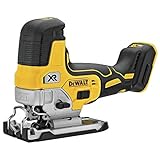


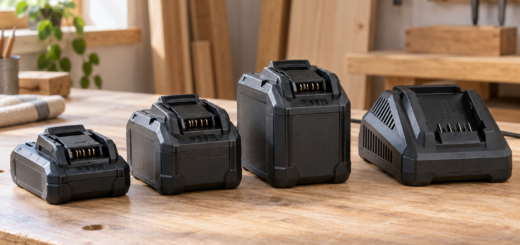
For most home shelving work, a 12V or 18V/20V-class tool is adequate. The larger battery platform generally offers more runtime and a wider range of compatible tools. The smaller platform can be easier to control and lighter, especially when cutting curves in thin stock.
The best value choice for most DIY users
For a first cordless jigsaw, look at a midrange 18V cordless jigsaw kit from a tool brand whose batteries you may use for a drill, sander, or circular saw later. A kit with one 2.0Ah or 4.0Ah battery is usually the better starting point than a very cheap bare tool on an unfamiliar platform.
Expect roughly 2,500 to 3,500 strokes per minute at the top end. That is enough for clean curves in 3/4-inch pine or plywood, provided you use the right blade and do not force the cut. A useful jigsaw should also have a work light and a dust-blower switch. These are not essential, but seeing the layout line is a real advantage when cutting shelf brackets or rounded corners.
The main trade-off is weight. A larger 18V tool with a 4.0Ah battery may weigh 5 pounds or more. That is comfortable for short cuts but tiring during repeated overhead or awkward cuts. If your work is mostly 1/2-inch plywood and small decorative curves, a compact 12V kit may be the better value.
Cordless jigsaw value comparison
| Type | Typical price range | Best use | Main compromise |
|---|---|---|---|
| Basic 18V bare tool | $50–$90 | Occasional shelves if you already own batteries | Battery and charger cost extra; fewer refinements |
| Midrange 18V kit | $100–$180 | Regular DIY shelving and curved cuts | Heavier than compact tools |
| Compact 12V kit | $90–$160 | Thin boards, trim, and controlled curves | Less runtime and cutting capacity |
| Premium cordless kit | $180–$300+ | Frequent work and demanding materials | Hard to justify for a few shelves |
The cheapest option is fine when you have fewer than a dozen cuts to make, use straightedge-guided layouts, and already own a compatible battery. It becomes poor value if the base plate flexes, the blade clamp has noticeable play, or the tool requires excessive pressure to cut 3/4-inch material.
Features worth paying for
Variable speed matters more than headline power. Slow the blade for tight curves, plastic laminate, or delicate veneer. Run faster on softwood and plywood. A tool with only an on-off switch is harder to control and more likely to burn the edge or chip the face veneer.
Orbital action makes the blade cut more aggressively by adding forward movement. Use a low setting for cleaner shelf edges and a higher setting for fast rough cuts. Maximum orbital action can leave a rougher edge and makes curved cuts harder to steer.
A rigid base is critical. Set the shoe to 0 degrees and check it against a small square. If the base rocks or the angle lock slips, the tool may cut a shelf edge that is not square. That creates gaps when two boards meet.
Dust control is helpful but not perfect. A dust port can connect to a shop vacuum, while a blower clears the line when no vacuum is attached. Neither replaces eye protection. Fine plywood dust is unpleasant, and a jigsaw can throw small chips several feet.
Look for a tool that takes widely available T-shank wood jigsaw blades. Blades are a consumable, and proprietary or unusual formats can cost more than the tool over time.
Blades determine the result
For a clean shelf edge in plywood, use a fine-tooth down-cut or clean-cut blade when the visible face must stay tidy. Down-cut blades reduce top-face splintering but can be harder to control and may leave more splintering underneath. For ordinary pine, a medium-tooth wood blade is a good general-purpose choice.
Use a narrow blade for curves and a wider blade for straight cuts. A narrow blade turns more easily, but it can twist if you push too hard. If the blade starts cutting at an angle, stop and replace it rather than leaning the tool to correct the line. A dull blade creates heat, burns the wood, and increases the chance of a wandering cut.
When appearance matters, score the cut line with a sharp knife or apply painter’s tape over the layout. Leave the line visible, clamp the work securely, and support both sides of the cut. Unsupported plywood often vibrates, producing a ragged edge even with a good jigsaw.
When to buy and which platform is best
Battery-tool kits are often discounted during spring home-improvement promotions, Father’s Day sales, and November shopping events. Watch for kits that include a charger and battery rather than judging the bare-tool price alone. A “free tool” promotion can be worthwhile if the extra tool is useful, but it is not a bargain if it locks you into batteries you will never use.
Choose the platform with the accessories and tools you expect to buy next. A cheaper jigsaw is not good value if replacement batteries cost nearly as much as a new kit. Conversely, paying for a premium professional platform is unnecessary when the jigsaw will cut a few shelves each year. In that situation, a basic kit, a quality blade pack, and careful layout will usually produce the better result.
If you already own a compatible battery system, start by checking the bare-tool cordless jigsaws in that platform. Spend the savings on blades and clamps. Those accessories have more effect on shelf-cut quality than a small increase in motor speed.