
Key takeaways
- Compare the best 6-inch random orbital sanders, from dual-mode Bosch and Makita models to brushless Festool and Mirka finish sanders, with full specs.
What's inside
As an Amazon Associate I earn from qualifying purchases. This post may contain affiliate links at no extra cost to you.
- Top Pick: Bosch GET75-6N Dual-Mode Random Orbit Sander
- Runner-up: Makita BO6050J Random Orbit Sander
- Also consider: Festool ETS EC 150/3 EQ-Plus Random Orbital Sander
The best 6-inch random orbital sander for most woodworkers is a dual-mode model such as the Bosch GET75-6N, because the larger pad covers tabletops and panels faster than a 5-inch sander while the turbo mode handles heavy stock removal and the standard mode handles finish work. Woodworkers who only need fine finishing get more from a lightweight brushless model such as the Festool ETS EC 150/3 EQ-Plus or the Mirka DEROS 650X CV, and anyone on a tighter budget can still get brushless performance from the MAXXT R7303.
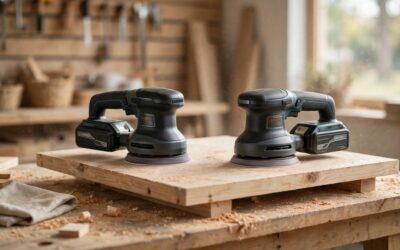
Six-inch sanders sit in a different class from the common 5-inch palm sanders. The bigger pad bridges low spots instead of following them, so wide panels come out flatter, and the two-handed bodies carry stronger motors, larger orbits and proper vacuum ports. This roundup compares five current 6-inch models on pad design, orbit size, motor output, dust extraction and weight, using only published manufacturer and listing specifications.
As an Amazon Associate, we earn from qualifying purchases.
Table of Contents
- Bosch GET75-6N Dual-Mode Random Orbit Sander
- Makita BO6050J Random Orbit Sander
- Festool ETS EC 150/3 EQ-Plus Random Orbital Sander
- Mirka DEROS 650X CV Electric Random Orbital Sander
- MAXXT R7303 Brushless Random Orbital Sander
- How to Choose a 6-Inch Random Orbital Sander
- FAQ
- Conclusion
- Product and ASIN Reference
Bosch GET75-6N Dual-Mode Random Orbit Sander

The Bosch GET75-6N is the most versatile pick in this group because it combines two sanding actions in one tool. Standard random orbit mode suits finish sanding and polishing, while the direct-drive turbo mode forces the pad rotation for aggressive stock removal that Bosch rates at three times the removal rate of the standard mode. That makes it a realistic single-sander answer for shops that strip finishes as often as they apply them.
A 7.5 amp motor drives the 6-inch multi-hole pad at a variable 3,300 to 7,300 orbits per minute. The multi-hole pad pattern works with a wide range of abrasive hole configurations and feeds large channels in the pad, so dust is pulled through the vacuum port efficiently when a hose is attached. An integral pad-dampening braking system helps prevent swirl marks at start-up, and the die-cast aluminum gear housing with a dual-bearing pad mount keeps vibration down for a tool of this power. At 5.7 pounds with a removable front handle that mounts on either side, it is built for two-handed control on big panels rather than one-handed convenience.
Specs:
- Pad size: 6 in. multi-hole hook-and-loop
- Motor: 7.5 A corded electric
- Speed range: 3,300–7,300 OPM, variable
- Modes: random orbit and turbo direct-drive eccentric
- Weight: 5.7 lb
- Dust extraction: vacuum port, two hose adapters included
- Tier: mid-range
Makita BO6050J Random Orbit Sander

The Makita BO6050J takes the same dual-mode approach with a two-mode switch: plain random orbit action for finish sanding and buffing, and random orbit with forced rotation for aggressive sanding and polishing. The 750 watt motor delivers 1,600 to 6,800 orbits per minute and 3,200 to 13,600 sanding strokes per minute, a wider low end than the Bosch that helps when a delicate touch is needed on veneer or between finish coats.
The 5.5 mm orbit diameter is the largest in this roundup, which supports the forced-rotation mode when material has to come off quickly. A tool-less pad change system speeds up abrasive swaps on the 6-inch hook-and-loop pad, and the compact 13-inch body with a barrel grip keeps the tool manageable despite the 5.7 pound weight. Makita includes a side handle, a dust extracting attachment, a pad protector and an interlocking storage case in the box, so the kit is complete for shop use without extra purchases. For woodworkers already invested in Makita corded tools, this is the natural dual-mode alternative to the Bosch.
Specs:
- Pad size: 6 in. (150 mm) hook-and-loop
- Motor: 6.6 A (750 W) corded electric
- Speed range: 1,600–6,800 OPM, variable speed dial
- Orbit diameter: 5.5 mm
- Modes: random orbit and forced-rotation random orbit
- Weight: 5.7 lb (tool only)
- Included: side handle, dust extraction attachment, pad protector, interlocking case
- Tier: mid-range
Festool ETS EC 150/3 EQ-Plus Random Orbital Sander

The Festool ETS EC 150/3 EQ-Plus is the finishing specialist of the group. Its short 3 mm sanding stroke is designed for the finest surface quality before a finish goes on, and the brushless EC-TEC motor holds the steplessly selected speed between 6,000 and 10,000 rpm constant even under load. At just 1.2 kg and 116 mm tall, it is far lighter and lower than the dual-mode sanders, which matters on vertical surfaces, edges and overhead work.
Dust extraction runs through the Multi-Jetstream 2 pad, which pairs intake and exhaust air across the whole pad face to keep abrasive loading down and extraction strong right out to the edge. Festool adds a Vibration Control System to reduce fatigue, a carbide-tipped sanding pad brake for long pad life, and automatic dust control that works with a connected extractor. The Plus version ships in a Systainer3 case with an extra-soft pad fitted, and the tool carries a 3-year manufacturer warranty. It gives up the aggressive geared mode of the Bosch and Makita, so it belongs in the hands of finish-focused woodworkers rather than anyone stripping paint.
Specs:
- Pad size: 150 mm Multi-Jetstream 2, hook-and-loop
- Motor: brushless EC-TEC, 400 W corded electric
- Sanding stroke: 3 mm
- Speed range: 6,000–10,000 rpm, stepless, constant under load
- Weight: 1.2 kg (about 2.6 lb)
- Dust extraction: 27 mm port, Multi-Jetstream 2 pad
- Included: extra-soft sanding pad, wrench, Systainer3 case
- Tier: premium
Mirka DEROS 650X CV Electric Random Orbital Sander

The Mirka DEROS 650X CV comes from the abrasives side of the industry, and it shows in the design priorities: a low-profile body about 99 mm tall, a paddle-style speed lever on top of the housing, and central-vacuum dust extraction designed around mesh abrasives. The brushless 350 W motor runs from 4,000 to 10,000 rpm, and the 5.0 mm orbit gives it a general-purpose balance between removal rate and finish quality that suits furniture and cabinet work.
At 2.3 pounds, the DEROS is the lightest sander in this roundup, and the published noise level of 71 dB(A) is low for the category. The paddle lever lets the user feather the speed while sanding, or lock in a set speed for repetitive work, which is a control layout borrowed from pneumatic sanders. Because it is a central-vacuum design with no onboard dust bag, it only makes sense paired with a shop vacuum or dust extractor, and it is happiest running mesh discs that let dust pass through the entire abrasive face. Production shops and finishers who sand all day put this model at the top of the list for ergonomics.
Specs:
- Pad size: 6 in. (150 mm) hook-and-loop
- Motor: brushless, 350 W, 110 V corded electric
- Speed range: 4,000–10,000 rpm, paddle lever with lockable settings
- Orbit diameter: 5.0 mm (3/16 in.)
- Weight: 2.3 lb (1,043 g)
- Noise level: 71 dB(A) published
- Dust extraction: central vacuum ready
- Tier: premium
MAXXT R7303 Brushless Random Orbital Sander

The MAXXT R7303 brings the brushless, low-profile format down to a budget tier. Its 350 W EC brushless motor drives a 6-inch multi-hole pad through a 5.0 mm orbit at a variable 4,000 to 10,000 RPM, with stepless speed preselection, an LED speed display and constant speed maintained under load. Those are the same headline specifications as the premium finish sanders, delivered by a lesser-known brand at a fraction of the cost.
The soft multi-hole backing pad supports effective dust extraction to a central vacuum, and the box includes a vacuum hose and ten mesh sanding discs, so the sander can be put to work immediately. At 2.34 kg it is noticeably heavier than the Mirka and Festool despite the similar shape, and long-term parts and warranty support from a smaller brand is a fair question mark. As a first 6-inch sander for a home shop, or a second sander dedicated to coarser grits, the specification sheet is hard to argue with at this tier.
Specs:
- Pad size: 6 in. multi-hole hook-and-loop
- Motor: brushless EC, 350 W (3 A), 110 V corded electric
- Speed range: 4,000–10,000 RPM, variable, constant under load
- Orbit diameter: 5.0 mm
- Weight: 2.34 kg (about 5.2 lb)
- Dust extraction: central vacuum ready, hose included
- Included: 10 mesh sanding discs, vacuum hose
- Tier: budget
How to Choose a 6-Inch Random Orbital Sander
Decide whether you need a dual-mode tool. A standard random orbit sander spins and orbits the pad freely, which is ideal for finishing but slow at heavy removal. Dual-mode models such as the Bosch GET75-6N and Makita BO6050J add a geared, forced-rotation mode that removes stock several times faster. If stripping old finish or flattening rough panels is regular work, dual-mode is worth the extra weight. If the sander only prepares surfaces for finish, a lighter single-mode tool is easier to handle.
Match the orbit to the finish you need. Orbit diameter controls the scratch pattern. A short stroke around 3 mm, like the Festool ETS EC 150/3, leaves the finest finish for stain-grade work. A 5 mm orbit is the general-purpose middle ground for furniture and cabinets. Larger orbits and forced-rotation modes trade finish fineness for speed, so they pair with coarser grits.
Take dust extraction seriously. Every sander here is designed to run with a vacuum or extractor rather than a dust bag. Multi-hole and mesh-abrasive systems extract across the whole pad, which keeps discs cutting longer and leaves a cleaner surface. Check the port size on the tool against the hose in the shop before buying, and budget for 6-inch discs in the hole pattern the pad uses.
Weigh the tool, literally. Weights in this class run from about 2.3 pounds for the Mirka DEROS to 5.7 pounds for the dual-mode Bosch and Makita. On flat horizontal panels the heavier tools are comfortable and stable. On vertical panels, cabinet interiors and overhead work, the light brushless models reduce fatigue over a long session.
Consider the abrasives ecosystem. Six-inch discs cost more than 5-inch discs and are stocked in fewer hole patterns. Mesh discs suit the Mirka and MAXXT extraction systems, Festool pads use the Multi-Jetstream 2 pattern, and the Bosch multi-hole pad accepts the widest range of third-party discs. Ongoing abrasive cost and availability should factor into the decision.
FAQ
Is a 6-inch sander better than a 5-inch sander for furniture work?
For wide, flat parts such as tabletops, doors and panels, yes. The larger pad covers more area per pass and bridges dips instead of following them, so surfaces come out flatter. For small parts, narrow rails and tight areas, a 5-inch sander is easier to control and its discs cost less. Many shops keep both sizes.
What orbit size should I choose for finish sanding?
A 3 mm stroke leaves the finest scratch pattern and is the safest choice before clear finishes and stains. A 5 mm orbit removes material faster and still finishes well with finer grits, which makes it the better all-round choice. Match the orbit to the grit progression rather than expecting one setting to do everything.
Do these sanders work without a dust extractor?
They run without one, but extraction performance drops sharply. The Mirka DEROS and MAXXT R7303 are central-vacuum designs with no dust bag option, and the Festool, Bosch and Makita all extract far better through a hose than through their basic attachments. A shop vacuum with the right adapter is enough; a dedicated extractor with auto-start is better.
Can a 6-inch random orbital sander replace a belt sander?
A dual-mode model in its geared mode removes stock at a rate that covers many belt sander jobs, such as stripping finish and leveling panels, with less risk of gouging. A single-mode finishing sander cannot. For fast flattening of rough lumber a belt sander is still quicker, but it is also much easier to damage a workpiece with one.
Conclusion
For one sander that can strip, flatten and finish, the Bosch GET75-6N is the strongest all-round choice, with the Makita BO6050J close behind for shops that prefer its wider speed range and included case. Finish quality and low weight are the priorities at the premium end, where the Festool ETS EC 150/3 EQ-Plus owns fine work and the Mirka DEROS 650X CV owns long-session ergonomics. The MAXXT R7303 proves the brushless 6-inch format is no longer premium-only. Pick by the work mix in the shop, and every model here will outperform a 5-inch palm sander on large panels.
Related guides
More from Amazon
Programs that pair well with the guide above. Offers and eligibility are set by Amazon and may change.
A free business account with business pricing and bulk-buying tools for work, shop or home office.
Create a business accountFree shipping on eligible items, Prime Video and more. Eligible new members can start with a free trial.
Start a Prime free trialAudiobooks and podcasts to listen to on the go. Eligible new members can start with a free trial.
Try Audible freeAd-free music streaming. Eligible new subscribers can start with a free trial.
Try Music Unlimited freeAs an Amazon Associate we earn from qualifying purchases.
Write Your Review
No reviews yet. Be the first to share your experience!