Best Circular Saw Under $150
Our Top Picks
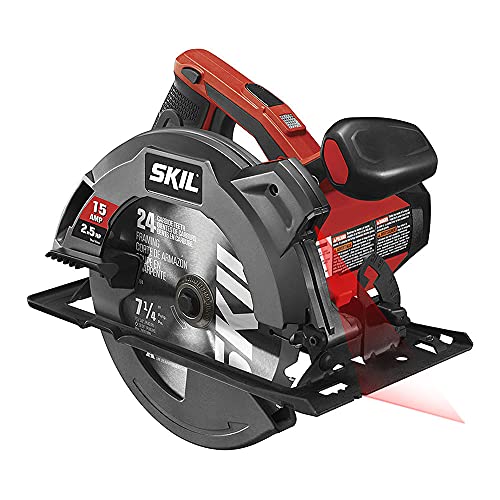 SKIL 15 Amp 7-1/4 Inch Circular Saw with7-1/4 Inch (Pack of 1)14.2 x 9.8 x 8.5 inches8.7 poundsCheck on Amazon
 DEWALT 20V MAX XR Brushless Cordless 7-1/4 in.STANDARD15.35 x 9.4 x 9.6 inches9.88 PoundsCheck on Amazon

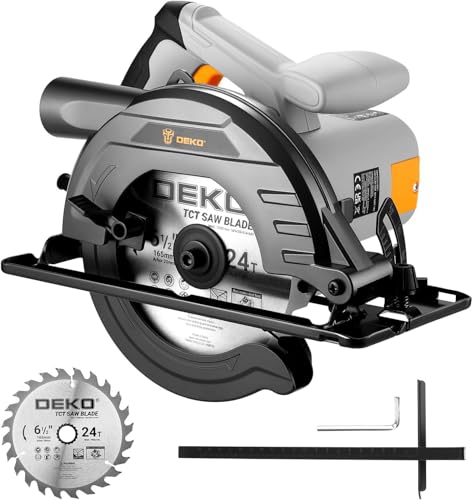

What's inside
As an Amazon Associate I earn from qualifying purchases. This post may contain affiliate links at no extra cost to you.
Under $150 is the most crowded and most manipulated shelf in the saw aisle. It is where 15-amp corded sidewinders, compact 6-1/2 in trim saws and stripped-down cordless kits all chase the same dollars, and it is where strike-through pricing does the most damage. Picking the best circular saw under 150 has less to do with brand loyalty than with choosing the right category for your work and refusing to pay list price for it.
The math is not complicated. A corded saw at this price puts nearly all of your money into motor and capacity because there is no battery in the box. A cordless kit at the same price spends roughly 40 to 60 percent of the budget on a small pack and a charger, so the tool itself is usually the brand’s entry-level brushed model. Both are legitimate buys. Buying the wrong one, at full price, in the wrong month, is not.
As an Amazon Associate we earn from qualifying purchases at no extra cost to you.



| Category | What you actually get | Typical street band | Best for |
|---|---|---|---|
| Corded 7-1/4 in sidewinder | 13-15 amps, full depth of cut, no battery cost | $50-$110 | Framing, decks, sheet goods |
| Corded 6-1/2 in compact | 8-12 amps, lighter body, shallower cut | $40-$75 | Plywood, siding, ladder work |
| Cordless bare tool | Often brushless, no battery or charger included | $80-$140 | Anyone already on a battery platform |
| Cordless kit with battery | Usually brushed, small compact pack | $100-$150 | First cordless tool, light duty |
| Rear-handle or worm drive | Most torque, heaviest, best for rips | Rarely under $150 | Framing crews, wait for a sale cycle |
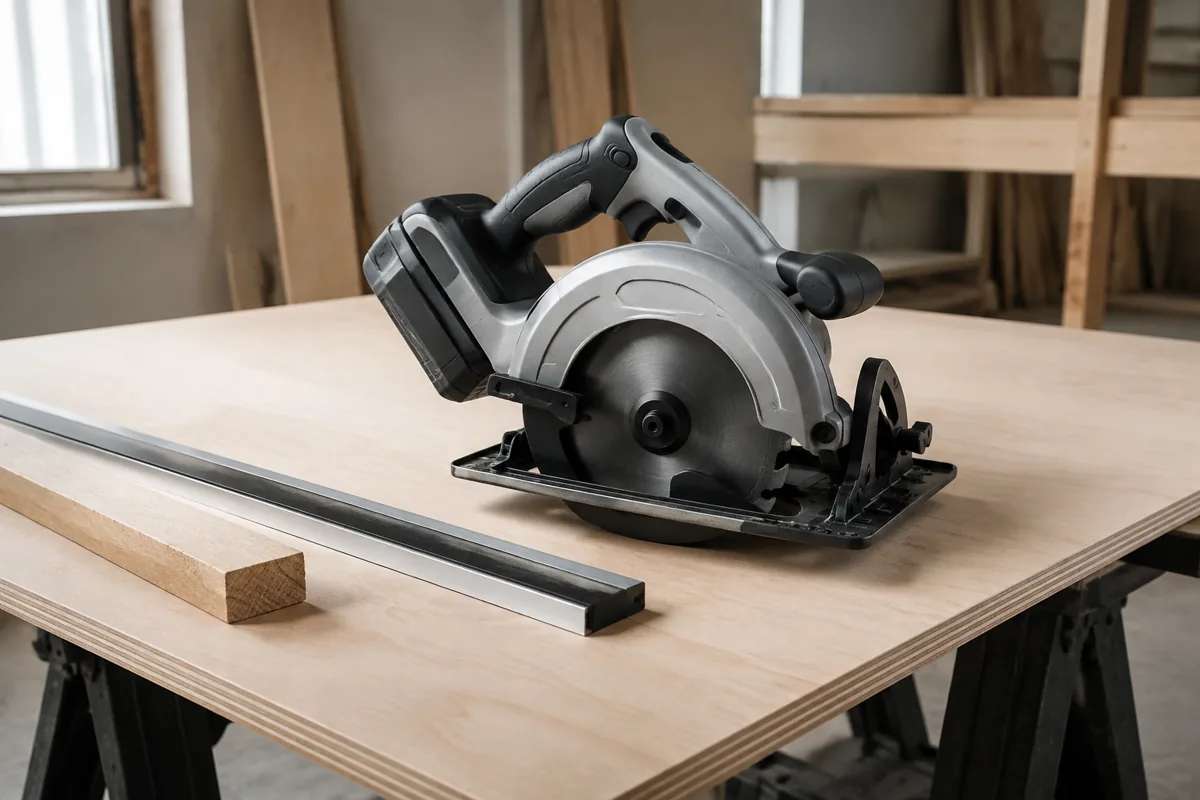
What the best circular saw under 150 actually gets you
In the corded 7-1/4 in class, this budget is more than enough. Expect 13 to 15 amps, no-load speeds in the 5,000 to 5,800 rpm range, roughly 2-7/16 in of depth at 90 degrees, bevel to 45 degrees or beyond, and an 8 to 10 ft cord. That is the same headline capacity as saws costing three times more. What you give up is refinement: a stamped steel shoe instead of cast magnesium, coarser depth and bevel adjustment, more vibration, and sometimes no electric brake.
On the cordless side you get either a bare-tool brushless saw from a serious line or a complete brushed kit. Cordless 6-1/2 in saws clear 2x lumber in a single pass and are genuinely nicer for breaking down sheet goods on sawhorses with no cord to snag. What they will not do is run all day on one compact battery.
Corded 7-1/4 in sidewinder: most saw per dollar
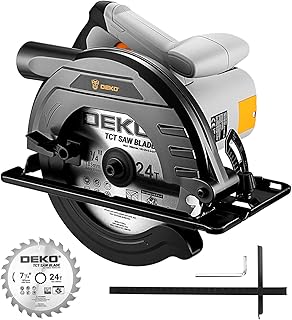
If this is your only saw and you cut framing lumber, plywood or deck boards, buy corded and put the savings into a good blade. A 15-amp sidewinder in the low end of its price band will out-cut any complete cordless kit at the same money and will not fade as a pack drains. Look for a rigid shoe, levers you can work with gloves on, and a spindle lock.
Corded versus cordless at this price
If you already own packs from DeWalt 20V MAX, Milwaukee M18 or Makita LXT, a bare tool is almost always the smarter buy. Brushless saws from the DeWalt XR, Milwaukee FUEL and Makita LXT brushless families drop into the top of this band during sale events, and you get a better motor than any kit at the same price. If you own no batteries at all, resist entering a platform through a saw. Saws are the hungriest tool on a battery system, and one compact pack will frustrate you inside an hour.
- ✔ Full-size depth of cut well under the 150 dollar ceiling
- ✔ Constant power from the first cut to the last
- ✔ Nothing else to buy and no platform commitment
- ✔ Cheap enough to keep as the dirty saw for reclaimed lumber
- ✘ Cord management on ladders, roofs and long rip cuts
- ✘ Needs a heavy-gauge extension cord for long runs
- ✘ Stamped shoes flex, so check bevel accuracy with a square
- ✘ More vibration and noise than premium saws
Battery downgrades and inflated was-prices
Every fall this shelf fills with promotions engineered to look bigger than they are. Four patterns are worth memorizing.
The kit-number shuffle. Same saw, different kit suffix, smaller battery. A kit that saves you 20 or 30 dollars by swapping a high-capacity pack for a compact one is a downgrade, not a discount. Small packs sag under saw loads, trip protection mid-cut and leave burn marks in the kerf.
Brushed motors in brushless clothing. Holiday and special-buy SKUs sometimes borrow a premium family’s branding while shipping the brushed tool. Check the tool model number, not the box art or the shelf tag.
The inflated was-price. A percentage only means something measured against what the saw actually sold for last month. Forty percent off a list price nobody ever paid can be ten percent off the real street price. Look at a 90-day price history first. Retailer-exclusive model numbers exist for the same reason, so when the numbers do not match across stores, compare amps, depth of cut, shoe material and warranty instead.
The blade you are not being given. A 24-tooth thin-kerf framing blade in the box is fine. A no-name blade is a hidden 15 to 40 dollar cost, because that is what a decent replacement runs. Budget for a blade in every one of these purchases.
Brushless bare tool for existing battery owners
Bare tools are where the real value sits under 150 dollars, as long as you already have two or more high-capacity batteries. You get a brushless motor, an electric brake and better sightlines than any starter kit. Confirm blade size and arbor before ordering, and note that bare tools sometimes cost more than the full kit during promotions.
Specs that matter and specs that are decoration
Worth paying for: amperage or a brushless motor, a shoe that does not flex when you lean on it, depth and bevel levers you can reach mid-cut, an electric brake, a spindle lock for blade changes, a dust port if you cut indoors, and at least 8 ft of cord. Blade-left saws also give right-handed users a clear view of the cut line.
Mostly decoration: laser guides that disappear in daylight, work lights on corded saws, no-load rpm claims quoted with no load figure, flimsy included rip fences, and soft-grip overmold sold as a feature. None of them make your cut straighter.
Compact 6-1/2 in corded saw for sheet goods and trim
A light corded 6-1/2 in saw is the underrated pick if you mostly break down plywood, cut siding or work overhead where weight matters. It gives up depth and will bog in wet 2x stock, but it sits in the cheapest band here, which leaves room for a quality blade and a clamp-on straightedge.
When to buy and when to wait
Corded saws barely move. They tend to float within about 10 to 25 percent of their normal street price all year, so if you find one near the bottom of its band with a usable blade included, buy it and stop tracking. Cordless kits are the opposite. They are promotional products, and 30 to 45 percent off is routine during spring tool season, mid-summer sales events, Black Friday through Cyber Monday, and post-holiday clearance.
Wait if you want cordless, have no urgent job, and are more than a month out from a major sale window. Buy now if you have a project this weekend, or if a corded 7-1/4 in saw is priced at the low end of its band. Factory-reconditioned stock from authorized sellers is also worth a look, often 20 to 30 percent below new with a shorter but real warranty.
Frequently asked questions
Is a 6-1/2 in saw enough, or do I need 7-1/4 in? A 6-1/2 in saw clears 2x lumber at 90 degrees, so for plywood, decking and general DIY it is enough. Go 7-1/4 in if you bevel-cut 2x stock, cut 4×4 material in one pass, or want the widest and cheapest blade selection.
Can a cordless saw under 150 dollars handle framing? For a repair, a shed or a fence, yes. For a full day of framing, no, and the limit is batteries rather than power. One high-capacity pack per few hours of cutting pushes the real cost well past this budget.
How much of the budget should go to the blade? Plan on 15 to 40 dollars. Swapping a bundled blade for a quality 24-tooth framing blade or a 40 to 60-tooth finish blade improves cut quality more than spending another 50 dollars on the saw.
The cheapest reliable path to good cuts under 150 dollars is a corded 7-1/4 in saw, a sharp blade and a straightedge. The most satisfying path, if you already own batteries, is a brushless bare tool caught inside a real sale window. Everything else at this price is a compromise wearing a percentage sign.
Check prices on Amazon →