Best Affordable Torque Wrench for Routine Brake and Wheel Work
What's inside
As an Amazon Associate I earn from qualifying purchases. This post may contain affiliate links at no extra cost to you.
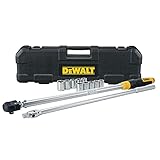
A torque wrench for routine brake and wheel work does not need to be expensive. It does need to cover the torque values you actually use, release cleanly, and be accurate enough to avoid guessing on safety-critical fasteners. For most home mechanics, a 3/8-inch click wrench covering roughly 10–80 ft-lb is a sensible first buy. Add a 1/2-inch wrench if your vehicle’s lug nuts need more torque or you want more leverage.
As an Amazon Associate we earn from qualifying purchases at no extra cost to you.


Choose the right range
Check your vehicle’s service manual or owner’s manual for the specified wheel-nut torque. Passenger cars commonly call for about 80–100 ft-lb, while some trucks and SUVs require 120–150 ft-lb or more. Brake fasteners vary widely: caliper bracket bolts can require substantially more torque than guide-pin bolts, and some fasteners have a torque-plus-angle procedure. Do not substitute a familiar number for the vehicle’s specification.
Torque wrenches are generally most useful away from the very bottom and top of their range. A wrench rated from 10 to 150 ft-lb may technically cover a 15 ft-lb caliper bolt, but a smaller wrench gives better control there. For a one-wrench setup focused on light brake work, a 3/8-inch click torque wrench in the 10–80 ft-lb range is a useful compromise. It will not cover every wheel specification.
If your lug nuts exceed that wrench’s capacity, use a separate 1/2-inch wrench that covers the specified value. Avoid routinely working at the wrench’s maximum setting; a wrench rated to 150 ft-lb is a poor choice for repeated work at 150 ft-lb. Check the stated range before buying, not just the drive size.
Compare budget wrench types
| Type | Typical fit | Advantages | Trade-offs |
|---|---|---|---|
| 3/8-inch click | Brake bolts and lighter fasteners | Good control; common and often affordable | Usually cannot handle higher wheel-nut settings |
| 1/2-inch click | Wheel nuts and higher-torque bolts | More capacity and leverage | Less convenient for low-torque brake fasteners |
| Beam-style | Occasional use and tight budgets | Simple design; no click mechanism to adjust | Needs a clear viewing angle and steady pull |
A basic click wrench from a reputable tool brand is usually the best value for someone who works on a vehicle a few times a year. You are paying for a readable scale, a dependable ratchet, and a mechanism that gives a clear signal—not professional calibration support or a polished case. Compare the warranty and the return policy as well as the price. A very cheap wrench with a sticky adjustment collar or vague click is a false economy.
A beam wrench can be a reasonable low-cost choice for occasional wheel work if you can read its scale while pulling steadily. It does not click, so you must watch the pointer and stop at the specified value. That is awkward in cramped brake work and easy to get wrong if the scale is obscured. A 1/2-inch beam torque wrench can still suit a careful occasional user who wants simple construction over convenience.
Features worth paying for
Look for a scale marked in ft-lb, preferably with a second unit such as N·m, and a locking collar that holds the setting during use. A reversible ratchet head is convenient, but the wrench should measure torque when turned in the direction specified by its maker; not every reversible wrench is rated for accurate measurement in both directions. A clear calibration certificate is a plus, but it does not replace careful handling.
Digital wrenches add an audible or visual alert and may make unit changes easier. They are not automatically more accurate, and batteries and electronics are extra failure points. For routine home work, a 1/2-inch click wrench covering about 20–150 ft-lb is often a better value than buying a digital model, provided that range matches your vehicles.
Use it correctly
Use the torque wrench for the final tightening pass, not to loosen stuck bolts or spin fasteners down with an impact wrench. Start threads by hand, seat the fastener, then pull smoothly on the handle until the wrench signals. Keep your hand on the marked grip area if one is shown. Jerking, leaning on the wrench, or adding a pipe can produce an incorrect reading and damage the tool.
For wheel nuts, follow the vehicle’s tightening sequence, usually a star pattern, and use clean, appropriate threads. Lubricating threads changes the clamping force at a given torque; do not oil or grease wheel studs unless the service procedure specifically says to. Recheck wheel torque only if the vehicle manufacturer or wheel maker calls for it. A torque wrench will not compensate for damaged threads, a dirty hub face, or a loose wheel seat.
Brake hardware needs the same care. Verify which bolts are single-use, whether threadlocker is required, and whether the procedure calls for an angle turn after torque. If a fastener requires torque plus angle, a torque wrench alone does not complete the procedure. Guessing is not a safe substitute for the service information.
Care and buying timing
After use, return an adjustable click wrench to its lowest marked setting, not below the scale’s minimum, and store it in its case. Do not leave it set under tension in a hot garage or drop it on concrete. These habits help protect the mechanism, but they do not guarantee calibration. If it has been dropped, feels inconsistent, or will be used for frequent safety-critical work, have it checked or replace it.
For seasonal buying, compare prices before spring tire-change season and before major holiday sales; discounts are common, but a sale is only worthwhile if the wrench covers your actual torque range and has a usable return policy. If you do one brake job and one tire swap a year, a basic click wrench is usually enough. If you service several vehicles or regularly work near the wrench’s capacity, spend more for a broader, better-supported range or keep separate 3/8-inch and 1/2-inch tools. The right budget choice is the one that lets you hit the specified torque without working at the edge of its range.