Best Affordable Torque Wrench for Basic Automotive Maintenance
What's inside
As an Amazon Associate I earn from qualifying purchases. This post may contain affiliate links at no extra cost to you.
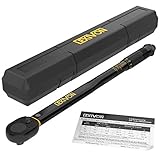
A basic automotive torque wrench does not need to be expensive, but it does need to cover the fasteners you plan to tighten. For wheel lug nuts and common suspension or engine work, a 1/2-inch drive click wrench with a useful range around 20–150 ft-lb is a practical starting point. The value question is less about buying the most features and more about getting a readable scale, a suitable range and a tool you can store and use correctly.
As an Amazon Associate we earn from qualifying purchases at no extra cost to you.



Choose the right range for the job
Check your vehicle’s service manual before choosing a wrench or tightening anything. Many passenger-car lug nuts call for roughly 80–100 ft-lb, but specifications vary; trucks and other vehicles may require more. Tightening by feel or using an impact wrench as the final step can leave nuts too loose or overtightened. Either mistake can cause trouble, including damaged studs, distorted brake components or a wheel that loosens.
A 1/2-inch drive click wrench is a sensible budget choice if wheels are your main task. A common 20–150 ft-lb range covers many lug-nut specifications while leaving room for other larger fasteners. Don’t assume a wrench is accurate across its entire scale: manufacturers typically specify accuracy over a defined portion of the range, and accuracy often suffers near the bottom. If your work includes low-torque fasteners—such as small engine or interior bolts—a separate 3/8-inch or 1/4-inch wrench with a lower range is a better fit than trying to use a large wrench at its minimum setting.
Budget types compared
| Type | Good for | Trade-offs |
|---|---|---|
| Click-style beam or micrometer wrench | Wheel work and occasional repairs | Usually the best value; requires correct setting and storage habits |
| Beam wrench | Infrequent use and low-cost checks | Simple construction, but the scale can be awkward to read in tight spaces |
| Digital torque wrench | Users who want a display, alerts or unit conversion | Costs more and needs batteries; features do not guarantee better accuracy |
For most occasional home mechanics, a basic 1/2-inch click torque wrench in a suitable range is the strongest value. A beam wrench can cost less and has fewer settings to manage, but checking its pointer while tightening may be difficult when access is poor. Digital models can be pleasant to read, though they are not a must-have for changing wheels or doing routine maintenance.
What to check before buying
Look for a stated accuracy specification, commonly ±4% for a basic click wrench, and a calibration statement or certificate if supplied. A low price alone doesn’t tell you whether a wrench is accurate. Read the scale in both ft-lb and N·m if you use specifications from different sources, and make sure the markings are clear enough to set without guesswork. A locking collar or ring helps prevent the setting from moving during use.
Check the head and ratchet direction as well. Many click wrenches measure torque only when tightening clockwise, even if the ratchet can turn both ways. If you need to torque left-hand threads, verify that the tool supports it rather than assuming the reversible ratchet does. A long handle offers leverage, but it also needs room to swing; a compact wrench can be harder to use accurately if you have to pull at an awkward angle.
If the vehicle’s specified lug torque is close to the wrench’s upper limit, choose a wrench with more headroom. Repeatedly using a tool at the edge of its range leaves little margin for measurement error. For very low torque, don’t buy a larger wrench simply because it looks sturdier. A lower-range 3/8-inch torque wrench for smaller fasteners is more appropriate.
Use it without damaging it
First, tighten fasteners by hand or with a ratchet until they are seated. Set the wrench to the specified torque and pull smoothly from the handle’s grip area until it clicks; stop at the first click. Repeated clicks or continuing to pull after the click can add torque beyond the target. Keep the wrench aligned with the fastener and avoid extensions or adapters that change the effective lever length unless you know how to account for them.
For wheels, clean mating surfaces and thread condition according to the vehicle maker’s instructions. Don’t add oil or anti-seize to lug threads unless the specification explicitly calls for it: lubrication changes clamping force at the same torque setting. Tighten in the recommended sequence, often a star pattern, then recheck only if the service procedure calls for it. A torque wrench is not a substitute for inspecting damaged, stretched or corroded studs and nuts.
Care and buying timing
After use, return a click wrench to its lowest marked setting—not below it—so the spring is not left under extra tension. Store it in its case, keep it dry and avoid using it to loosen stubborn bolts. Breakaway force can exceed the wrench’s range and may damage or de-calibrate the mechanism. If it has been dropped, overloaded, or gives inconsistent clicks, have it checked or replace it rather than trusting it for critical work.
Prices on budget tools often move around major sales periods, including spring and holiday promotions. Compare the current price with the exact range, drive size, included case and warranty; a discount on a wrench that cannot cover your vehicle’s specification is no bargain. For occasional tire changes and routine automotive work, a reputable basic click wrench is usually enough. Pay extra for a second wrench only when your jobs genuinely span torque ranges that one tool cannot handle well.