How to Choose a Budget Tool That Can Handle Repeated Weekend Use
What's inside
As an Amazon Associate I earn from qualifying purchases. This post may contain affiliate links at no extra cost to you.
A tool used every weekend needs to survive repetition, not just a single job. A low price can be good value if the tool’s capacity, battery, and parts suit your work. It can be false economy if it overheats, drains batteries quickly, or wears out before the job is done.
Before comparing brands, estimate what “repeated use” means for you: how many hours you’ll run the tool, what materials you’ll cut or fasten, and whether you need it away from an outlet. That points you toward the right class of tool—and helps you avoid paying for features you won’t use.
Start with the workload, not the sale price
Write down the job, material, and rough weekly runtime. Drilling a few pilot holes in softwood is not the same workload as drilling dozens of holes through hardwood or masonry. A tool rated for light DIY work may handle the first comfortably and struggle with the second.
Pay attention to how long a tool can work before it needs a break. On a cordless drill, repeated heavy drilling can heat the motor, battery, and chuck. On a circular saw, pushing too quickly through thick lumber can stall the blade and strain the motor. If a task makes the tool slow down, smell hot, or cut out repeatedly, stop and let it cool; persistent overload can shorten its life.
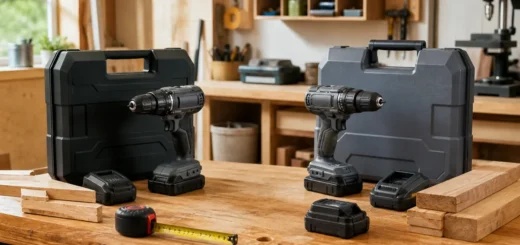
If you expect several hours of work each weekend, look at brushless cordless tool kits. Brushless motors can use battery power more efficiently and typically have fewer motor-wear parts than brushed designs. But they often cost more, and a brushless tool is not automatically the best buy if your jobs are light or occasional.
Compare the cost of owning it
The sticker price is only one part of the budget. For a cordless tool, check whether the price includes a battery and charger, then note the battery capacity in amp-hours (Ah). A bare tool may look cheaper but require a separate battery, charger, or both. If you already own compatible batteries, that can be a real saving—provided the platform has the tool you need.
Battery runtime varies with the tool, material, and work pace, so treat manufacturer runtime claims as estimates rather than guarantees. A higher-Ah battery can run longer but adds cost and weight. For a tool you use in short bursts, a smaller battery may be easier to handle; for repeated cutting or drilling, a second battery can prevent long charging waits.
| Option | Often suits | Cost and trade-off |
|---|---|---|
| Budget corded tool | Stationary work near an outlet; occasional or steady light-duty jobs | Usually the lowest entry cost and no battery expense, but cords restrict movement and require care around the work area. |
| Entry-level cordless tool | Short jobs around a home, especially where outlets are inconvenient | Convenient at a low price, but check included battery capacity, charging time, and limits under sustained load. |
| Mid-range cordless tool | Regular weekend work with varied materials or longer sessions | Higher upfront cost may buy better runtime, speed control, or durability; value depends on whether you’ll use those advantages. |
| Higher-capacity kit with spare battery | Long sessions or several tools on one battery platform | Reduces downtime, but the second battery adds weight to the budget and is unnecessary for many short jobs. |
For fixed work where you can safely route a cord, a corded circular saw can be a sensible budget choice. It avoids battery replacement costs and offers uninterrupted power. The trade-off is less mobility and the need to manage the cord so it stays clear of the blade and workpiece.
Check durability and service, not just features
Useful signs of value include a comfortable grip, a secure battery connection, an easy-to-adjust guard or depth stop, and controls you can operate with gloves. If possible, handle the tool before buying. Excess weight matters more over a full afternoon than during a quick test in a shop.
Look up the warranty terms and whether the brand sells replacement batteries, chargers, blades, belts, or other wear parts. A cheap tool with no practical parts support may be hard to repair after a common failure. Conversely, a basic tool that is inexpensive to replace can be perfectly reasonable if you use it only a few times a year and the job is not safety-critical. A longer warranty is useful, but check what it covers and whether registration or proof of purchase is required.
For tools that create dust or debris, check whether the design allows a vacuum attachment or simple cleanup. Packed dust can obscure a cut line, interfere with adjustments, and add cleanup time. For cutting tools, include suitable blades in the budget: a poor or worn blade can make even a capable saw cut slowly, wander, or burn the material.
Match capacity to the material
Choose a tool that can do your hardest regular task without being pushed constantly. If your drill will mostly drive screws and make small holes in softwood, a basic cordless drill may be enough. If you regularly drill large holes, work in hardwood, or use hole saws, more torque, a side handle where available, and a suitable battery matter more. Don’t force a small drill through an oversized bit; it can overheat, bind, or twist your wrist.
For wood cutting, check the saw’s cutting depth against the thickness you actually need to cut. For sanding, consider the size of the workpieces and whether dust collection is practical. Buying extra power “just in case” can add weight and cost, but choosing a tool that is underpowered for your regular material can make every job slower and more tiring.
Buy at the right time—and avoid false savings
Seasonal sales can make a kit a better deal, especially when it includes a battery, charger, and a second useful tool. Compare the package contents and current price with the cost of buying the parts separately; bundles sometimes include a small battery or tools you will never use. Check the return window and keep the receipt so you can test the tool during normal work without losing the option to return it.
Do not buy only because a discount looks large. A dependable corded tool may be a better weekend purchase than a low-priced cordless kit with an awkward battery setup. A cheaper tool is fine when its capacity matches the job, the expected runtime is modest, and replacement is easy. Spend more when it solves a real recurring problem—such as overheating, downtime, poor cuts, or lack of compatible batteries—not simply because a higher price sounds more durable.