How to Compare Tool Performance Claims Against the Price Tag
What's inside
As an Amazon Associate I earn from qualifying purchases. This post may contain affiliate links at no extra cost to you.
A tool’s performance claim is only useful when you can connect it to the work you actually do. “More power,” “twice the runtime,” and “professional grade” sound persuasive, but they do not tell you whether the tool will finish your project faster or survive long enough to justify its price. The useful comparison is not the biggest number on the package. It is the cost of getting a job done, including batteries, accessories, downtime, and replacement parts.
Start With the Job, Not the Spec Sheet
Write down the hardest task you expect to perform and how often you will perform it. Drilling a few holes in pine is a different buying decision from installing a deck, building cabinets, or cutting framing lumber every weekend.
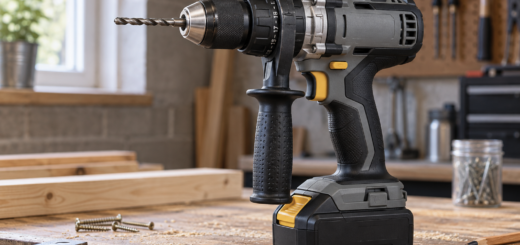
For example, a basic cordless drill may handle 20 to 30 small holes in softwood without trouble. The same drill can overheat when boring dozens of 1-inch holes in joists. A compact circular saw may be adequate for occasional plywood cuts, while repeated cuts through 2-by lumber will expose its limits through slower feed rates, shorter battery life, and more frequent blade changes.
If your work is light and intermittent, consider a budget cordless drill driver. If the tool will run for hours at a time, compare its cooling, warranty, battery options, and service support—not just its peak torque or voltage.
Translate Marketing Claims Into Measurable Work
Tool claims are often measured under conditions that do not match a job site. A drill’s maximum torque may be recorded in a stall test. That number tells you how hard the motor can twist before stopping, but it does not predict how quickly the drill will bore a hole or how long the clutch and gearbox will last.
Battery claims have similar limits. A “4.0Ah” battery stores roughly twice the energy of a 2.0Ah battery at the same voltage, but runtime depends on load, temperature, battery age, and the tool’s efficiency. A saw cutting hardwood may drain it far faster than a drill driving small screws.
Brushless motors generally run cooler and use battery power more efficiently than brushed motors. That can matter for daily use, but it does not automatically make a brushless tool the better buy. For a homeowner who drives 50 screws a month, a brushed tool costing $50 less may deliver years of adequate service.
Look for independent evidence: measured cutting speed, tested runtime, charging time, vibration, noise, and temperature after sustained use. If a claim has no test conditions, treat it as a sales description rather than a specification.
Compare Total Cost, Not Bare-Tool Price
A $99 bare tool is not a $99 working tool if it needs a $120 battery and an $80 charger. Conversely, a $160 kit may be a better value if it includes two batteries that you would otherwise buy separately.
| Cost item | Budget option | Higher-priced option | What to check |
|---|---|---|---|
| Tool | $60–$120 | $150–$300 | Actual output, ergonomics, warranty |
| Battery and charger | $50–$150 | $100–$250 | Runtime, charge time, platform compatibility |
| Consumables | Often higher per job | May use premium blades or bits | Availability and useful life |
| Downtime | More likely under heavy loads | Usually lower, not zero | Cooling, service, spare batteries |
| Replacement value | Lower resale and repair support | Better parts and platform value | Brand ecosystem and warranty length |
Consumables can erase a low purchase price. A cheap jigsaw that burns through blades or leaves rough cuts may cost more in materials and rework than a better saw. Include blades, bits, sanding discs, filters, and protective equipment when calculating the price of a completed project.
Judge Value by Use Frequency
Frequency is the simplest way to decide how much performance you need. For one small project, renting or buying a basic tool is often sensible. A homeowner might save money with a $70 corded angle grinder used twice a year instead of spending $220 on a cordless kit and battery.
For monthly or weekly use, reliability starts to outweigh the lowest price. Suppose a cheaper saw saves $80 but cuts 25 percent slower and forces a battery change every 20 minutes. On a 12-hour project, that lost time can exceed the original savings. If the tool earns money, calculate labor directly: 30 minutes of saved work at $30 per hour is worth $15 each use.
Do not overbuy for imaginary jobs. A high-torque impact wrench is unnecessary if you only assemble furniture and change occasional mower blades. On the other hand, using a low-powered drill for structural screws can cause overheated motors, stripped fasteners, and damaged bits.
Include Brand and Platform Value
Brand value is practical only when it provides something you will use. A broad battery platform can reduce future costs because one battery may power a drill, light, inflator, and cordless impact driver. But platform loyalty also locks you into that brand’s battery prices. Check the cost of a replacement battery before choosing a first tool.
Warranty terms matter, but read the exclusions. Some warranties cover manufacturing defects but not worn switches, overheated motors, or commercial use. A two-year warranty with easy local service may be more useful than a five-year warranty requiring expensive shipping.
Check whether batteries remain available five years from now. A bargain tool is poor value if its battery is discontinued or costs nearly as much as a new kit. This is especially important for niche brands and seasonal clearance products.
Use Seasonal Pricing Without Chasing False Deals
Prices commonly fall around major holiday promotions, spring home-improvement events, Father’s Day, and end-of-year clearance. Battery starter kits and multi-tool bundles often offer better value during these periods than individual bare tools. Compare the normal price history, though. A “40 percent off” label may simply reflect an inflated list price.
Clearance is safest for corded tools, hand tools, and common accessories. Be more cautious with clearance cordless kits, where an old battery platform may have limited future support. If you see a substantial discount on a cordless circular saw kit with battery and charger, verify battery availability and replacement cost first.
Know When the Cheap Tool Is a Bad Bargain
Walk away when reviews repeatedly mention the same failure: chucks that loosen, batteries that stop charging within a year, switches that stick, excessive runout, or motors that shut down during ordinary use. One isolated complaint may be a defective unit. A consistent pattern is a design or quality-control problem.
Also reject a tool whose performance claim depends on accessories not included in the box. A sander with poor dust collection may require a special vacuum adapter. A router may need a separate guide, collet, or premium bits to produce acceptable results. Price those items before deciding.
The best value is the least expensive tool that completes your real workload safely, at a reasonable speed, with support for the years you expect to use it. Sometimes that is a budget corded tool. Sometimes it is a premium cordless kit bought during a seasonal sale. The price tag matters, but the useful comparison is cost per successful job.