Best Affordable Benchtop Jointer for a Compact Woodworking Shop
What's inside
As an Amazon Associate I earn from qualifying purchases. This post may contain affiliate links at no extra cost to you.
What a compact shop needs
A benchtop jointer earns its space when you need to flatten one face of a rough board and square an adjoining edge before planing or ripping. It does not replace a thickness planer: a planer makes the second face parallel to the first, while a jointer creates a flat reference face. For furniture parts, even a small jointer can save time over hand-planing. For short trim or already-flat, store-bought boards, it may not be worth the bench space.
Most affordable benchtop jointers have a cutting width around 6 inches and tables roughly 28 to 30 inches long. That width is adequate for common furniture stock, but the short tables are the main limitation. A long, bowed board can rock or sag as you feed it, so the machine may flatten only a section instead of correcting the full length. In a compact shop, plan for infeed and outfeed support; the tool itself is not the whole setup.
As an Amazon Associate we earn from qualifying purchases at no extra cost to you.


What to compare before buying
| Feature | Why it matters | Practical check |
|---|---|---|
| Cutting width | Limits the widest face you can joint in one pass | A 6-inch capacity covers much everyday furniture stock; wider boards need a different method. |
| Table length | Helps control long boards through the cut | Expect short tables on portable machines; add level supports for long work. |
| Cutterhead | Affects noise, finish, and maintenance | Straight knives cost less to replace; helical-style heads usually cost more but can be quieter and easier to maintain by rotating inserts. |
| Fence adjustment | Determines how reliably you can make a square edge | Check that the fence locks securely and can be set accurately to 90 degrees. |
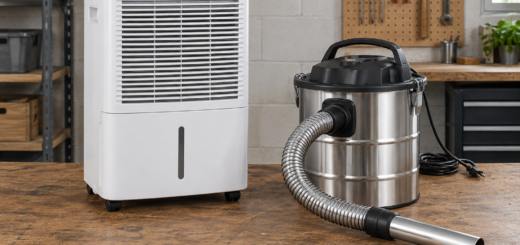
| Dust collection | Jointer chips build up quickly | Confirm the port size and whether your shop vacuum or collector can keep up. |
A straight-knife machine is usually the lower-cost choice and can produce a good surface with sharp, properly aligned knives. Its trade-off is maintenance: dull or nicked knives leave ridges, and aligning replacement knives can take patience. A cutterhead with indexed inserts typically costs more up front, but a damaged insert can often be rotated or replaced individually. Compare the replacement cost and availability, not just the advertised feature.
Best value for most small shops
For occasional furniture work, look for a 6-inch benchtop jointer with a rigid fence, accessible knife adjustment, and a dust port that matches your collection setup. A basic straight-knife model is often enough if you can set it up carefully and accept more noise. Spend extra only when the better cutterhead, fence, or support accessories solve a real problem in your shop.
Prices vary by brand, stock, and sales, so compare the delivered price and what is included. A stand, push blocks, and an extra set of knives can change the value calculation. Avoid choosing solely by motor horsepower: on this class of machine, a larger number does not fix short tables, poor fence alignment, or dull cutters. A sturdy base and repeatable setup matter more in day-to-day use.
When the cheaper option is fine
The lowest-cost jointer can make sense if you work mostly with boards under about 4 feet, joint a few pieces at a time, and are willing to check alignment before use. Short boards are easier to control on short tables, and a careful operator can get useful results without premium features. If you are preparing rough lumber every weekend or regularly working near the machine’s full width, a flimsy fence or inconsistent tables will become frustrating quickly.
For occasional edge jointing only, a jointer is not always the best buy. A router table with a straightedge, a hand plane, or a track saw and careful reference setup can handle some edge-preparation jobs. Those alternatives will not flatten a wide board face as conveniently, but they may be better value if face jointing is rare. Buying a jointer for a single project can leave you with a bulky machine that spends most of its time stored away.
Setup and common failures
Before the first cut, check that the tables are coplanar and the fence is square to the outfeed table. Feed with the board’s concave side down when flattening a bowed face, and take light cuts—often around 1/32 inch or less on a small machine. Heavy cuts can bog down the motor, tear the grain, or make it harder to control the board. Keep hands clear of the cutterhead and use push blocks, especially near the end of a pass.
Two common errors look like machine defects. Snipe or a hollow at the ends often comes from lifting or pressing down unevenly as the board crosses the cutterhead; keep pressure on the infeed side until the board is supported by the outfeed table, then transfer pressure forward. A board that comes out tapered may indicate poor technique, tables that are not aligned, or a fence that shifts under pressure. Check the setup before trying to correct the problem with deeper cuts.
When to buy
Benchtop jointers often see discounts during major holiday sales and seasonal tool promotions, but the best deal is not always the lowest sticker price. Compare the current price with the cost of replacement knives or inserts, a suitable stand, and dust fittings. If a machine is discounted but has hard-to-find consumables, it may cost more to own. Search for replacement jointer knives before committing, and verify they fit the exact machine you are considering.
For a small woodworking shop, the right affordable jointer is usually a dependable 6-inch model with a fence that stays square and tables you can support safely. Choose straight knives when purchase price matters and you are comfortable with maintenance; pay more for indexed inserts when quieter operation and simpler cutter changes justify the added cost. Whichever route you take, budget space for long stock, dust collection, and careful setup—the machine’s limits are easier to manage when you account for them before buying.