Best Affordable Tools for Basic Appliance Installation
What's inside
As an Amazon Associate I earn from qualifying purchases. This post may contain affiliate links at no extra cost to you.
Basic appliance installation does not call for a full contractor’s tool chest. For a dishwasher, range, refrigerator or over-the-range microwave, a small set of hand tools and a few inexpensive checks cover most routine work. The important exception is that appliance connections can involve electricity, gas, water and heavy loads. Use the appliance manual and local code, and hire a qualified installer when the work goes beyond your skill or requires a new circuit, gas line or plumbing alteration.
As an Amazon Associate we earn from qualifying purchases at no extra cost to you.


Buy the core tools first
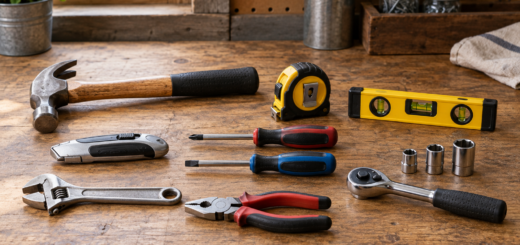
A 16- to 25-foot tape measure, a torpedo level, a #2 Phillips screwdriver and a set of combination wrenches are useful across nearly every installation. A tape in the $8–$15 range is adequate; paying more mainly gets a tougher case, better blade coating or a standout that stays rigid farther from the housing. For occasional home use, those upgrades rarely change the result.
A 9-inch torpedo level is easier to fit on a dishwasher or range than a long carpenter’s level. A basic magnetic model commonly costs $8–$15 and is fine for checking front-to-back and side-to-side alignment. Magnets help on steel appliance panels, but are not essential; verify that the level reads accurately by flipping it end for end on the same surface. If the bubble shifts, do not trust it.
Buy a screwdriver with a comfortable handle and a #2 Phillips tip, plus a small flathead for trim and clamps. A multi-bit driver is a sensible space-saving choice. Cheap bits can round off under force, so keep a spare #2 bit on hand. Stop if a screw resists rather than leaning harder: stripped heads are a common, avoidable installation problem.
Where to spend and where to save
| Tool | Useful budget range | Worth paying more when |
|---|---|---|
| Tape measure, 16–25 ft | $8–$15 | You use it often or need a tougher case |
| Torpedo level, about 9 in | $8–$15 | You need a more durable vial or frequent readings |
| Adjustable wrench, 8–10 in | $10–$20 | You want less jaw play and a smoother adjustment |
| Nut-driver set | $10–$25 | You regularly work with appliance panels or hose clamps |
| Non-contact voltage tester | $15–$30 | You want clearer indicators and a known, reputable tester |
Prices vary by retailer and season; these are typical ranges, not guaranteed sale prices. A homeowner installing one appliance can buy basic hand tools. A person doing several installations a year will notice the value of better handles, tighter wrench jaws and more durable cases.
Wrenches and drivers for connections
An 8- or 10-inch adjustable wrench is a versatile budget pick for hex fittings and locknuts. It is not a substitute for the correct fixed-size wrench when a fitting must be held securely. Jaw play can round a brass nut, especially if the wrench is too large or tilted. For supply hoses, use the size and tightening method specified by the appliance instructions; do not overtighten compression fittings.
A basic nut-driver set is handy for sheet-metal screws and appliance access panels. A set with common 1/4-, 5/16- and 3/8-inch drivers often covers household work. For occasional use, inexpensive hand drivers are enough. A drill can speed up cabinet screws, but use a low clutch setting and finish by hand so you do not strip a screw or crack a plastic fitting. Avoid using a powered driver on water or gas connections.
For a first kit, a basic 8-inch adjustable wrench is a better value than a large, heavy plumbing wrench. If you already own a decent wrench, there is no benefit in buying another just for an appliance.
Safety tools and electrical limits
A plug-in outlet tester, usually around $10–$20, can reveal some common wiring faults at a standard receptacle. It cannot prove an outlet is safe, verify every wiring condition or replace an electrician’s testing. A non-contact voltage tester can help check for voltage near accessible conductors, but it can give false readings and should not be treated as proof that a circuit is de-energized. Follow its instructions and use a properly rated tester for electrical work.
Do not remove a range cord, alter a receptacle or install a new circuit unless you are qualified and the work is permitted. Appliance instructions specify voltage, amperage, grounding and cord requirements. If those do not match what is present, stop and call an electrician. For gas appliances, do not improvise with a wrench or rely on a soap solution as a substitute for proper leak testing; use a qualified gas fitter where required.
Buy specialty items only for the job
Dishwasher work may call for a shallow pan, towels and a bucket to catch residual water, plus a hose or connector approved for the appliance. Reusing an old supply hose can save a few dollars but risks a leak if it is worn, kinked or incompatible. Check the manual and local requirements before buying a replacement. A dishwasher installation kit with a compatible water line can be convenient, but confirm its fittings, length and approval rather than assuming every kit fits.
For a refrigerator, measure the route into the kitchen as well as the final opening. A cheap tape measure is enough; the costly mistake is forgetting door swing, handles or clearance for ventilation. If connecting an ice-maker line, use a new compatible line and follow the manufacturer’s instructions. A floor protector or scrap of rigid board can help move the appliance without gouging flooring, but do not drag a loaded refrigerator across an unprotected floor.
Ranges and over-the-range microwaves can be heavy and awkward. A second person is a better value than a specialized lifting tool for most homeowners. Use the supplied bracket and fasteners for a microwave, and confirm that the wall structure can support it. If the mounting surface is uncertain or the appliance cannot be handled safely, arrange professional installation.
Timing and value
Tool kits and hand tools often see discounts around major holiday sales and spring home-improvement promotions. Compare the price of a kit with the cost of the individual tools: bargain kits sometimes include weak bits or tools you will never use. Buy the core pieces before installation day, then add a specialty item only after checking the manual. That avoids paying rush prices for a tool that turns out not to fit.
For a one-time job, borrow a rarely used driver or buy an inexpensive version of a non-safety-critical tool. Spend more on tools that must give reliable readings or grip fittings cleanly, and spend nothing on a tool that does not solve a real requirement. A level, tape, sound screwdriver, suitable wrench and careful preparation are enough for many straightforward installations; they do not make unsafe electrical, gas or structural work a DIY job.