Best Value Laser Measure for Home Remodeling Estimates
What's inside
As an Amazon Associate I earn from qualifying purchases. This post may contain affiliate links at no extra cost to you.
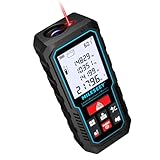
For home remodeling estimates, the best-value laser measure is usually a basic 2-point model with a stated range of about 100 to 165 feet. You do not need Bluetooth, a camera, or advanced layout functions to price drywall, flooring, paint, trim, or cabinets. You need repeatable measurements, readable numbers, and a tool that does not quit when the job gets dusty.
A good budget laser measure can replace a tape for most room dimensions, but it is not automatically more accurate in every situation. Dark walls, bright sunlight, glass, angled surfaces, and shaky hand placement can all produce bad readings. The best purchase balances range and durability against features you will actually use.
As an Amazon Associate we earn from qualifying purchases at no extra cost to you.



What to Look for in a Remodeling Laser Measure
Start with accuracy. Most useful consumer models claim accuracy around plus or minus 1/16 inch over typical indoor distances. That is adequate for estimating flooring, baseboard, paint, and many framing materials. A cheaper unit rated at plus or minus 1/8 inch may still be fine for rough estimates, but the error becomes noticeable when you multiply measurements across a long wall.
Range matters less than many buyers expect. A 100-foot range is sufficient for nearly every interior room and most residential exteriors. Choose a 165-foot or longer model if you regularly measure large additions, long rooflines, or open lots. Maximum range ratings usually assume a clean, reflective target and controlled lighting. In direct sun, the practical range can be much shorter.
Useful functions include area, volume, continuous measurement, addition, and subtraction. Area is helpful for flooring and paint estimates; volume is useful for rough HVAC or insulation calculations. A built-in end-piece or reference switch is important because the tool must know whether it is measuring from its front or back edge.
For most homeowners, a basic 100-foot laser measure with area and volume is the value sweet spot. Models with Bluetooth are worth considering only if you will transfer dozens of measurements into an app or estimate program. Otherwise, the phone connection adds cost and another battery to manage.
Best Value by Feature Level
| Type | Typical price | Best use | Main compromise |
|---|---|---|---|
| Basic 65- to 100-foot | $15-$30 | Rooms, flooring, paint, trim | Less reliable outdoors; simpler display |
| 100- to 165-foot with area and volume | $25-$60 | Most remodeling estimates | May lack a camera or data storage |
| Bluetooth-enabled | $45-$100 | Frequent estimating and documentation | Higher price and app dependence |
| Professional long-range model | $100-$250+ | Bright outdoor work and daily jobsite use | Overkill for occasional home projects |
A $20 basic tool is not a bad choice if you are measuring one room for new flooring. It becomes less attractive when you need to record several rooms, work in sunlight, or verify measurements repeatedly. Spending another $15 to $30 often buys a better screen, more reliable buttons, a stronger housing, and useful memory or calculation functions rather than gimmicks.
Brand Value Compared With Low-Cost Options
Established tool brands generally offer better quality control, clearer instructions, and more dependable service. Their lasers may not be dramatically more accurate on paper, but the readings tend to be more consistent, and the cases and battery doors usually tolerate jobsite handling better. That matters if the tool will live in a truck instead of a desk drawer.
Budget brands can deliver excellent value for occasional indoor work. The main risks are inconsistent calibration, weak laser visibility, confusing reference settings, and poor long-term support. Before buying, check whether the listing states accuracy, range, operating temperature, warranty, and the included battery type. A suspiciously cheap product with no accuracy specification is not a bargain; it is an unknown measuring instrument.
If you want a better-built option without jumping to professional pricing, compare a midrange Bosch laser measure with similarly priced offerings from other established tool brands. The right choice is usually the one with the clearest display and simplest controls, not the one listing the most modes.
Accuracy, Setup, and Common Failure Modes
Measure from the same reference point every time. If the tool is set to measure from its rear edge for one wall and its front edge for another, the result can differ by several inches. Confirm the reference indicator on the screen before starting a room takeoff.
Use a solid target. A white sheet of cardboard works better than a dark textured wall, shiny tile, or glass. On bright exteriors, shade the target or place a piece of light-colored material at the endpoint. Keep the tool still until the reading locks. A small tilt can send the laser to a different point, especially across a long room.
Do not trust a single reading for expensive materials. Take the measurement twice, then reverse the direction if possible. For a wall, measure the full length and compare it with the sum of shorter sections. If the readings differ by more than about 1/8 inch indoors, investigate before ordering material.
Laser measures also struggle with open doorways and corners. The beam may hit the door casing rather than the wall, or the tool may sit slightly away from the corner. For tight trim work, verify the final dimension with a tape measure. A laser is an estimating tool, not permission to skip field verification.
When to Buy and What to Pay
Prices often soften around major holiday sales, spring home-improvement promotions, and the November shopping period. The biggest discounts tend to apply to premium or connected models, while inexpensive units may drop only a few dollars. Compare the current price with the usual range rather than trusting a claimed “sale” percentage.
For a homeowner, a sensible target is $25 to $50 for a dependable indoor model with area calculation and at least 100 feet of stated range. Pay $60 to $100 when Bluetooth, better outdoor visibility, or a stronger professional warranty will save time on repeated estimates. Above $100, you should have a specific reason—frequent exterior work, long range, improved protection, or advanced layout functions.
If your project is limited to one kitchen, bedroom, or flooring estimate, a budget 100-foot laser distance measure is enough. For a contractor or serious DIY remodeler, a Bluetooth model with measurement storage can justify its cost by reducing transcription mistakes. The value decision is simple: buy features that reduce errors or repeated work, and skip the rest.