Makita 18V vs DeWalt 20V: Which Platform Has Lower Ownership Costs?
What's inside
As an Amazon Associate I earn from qualifying purchases. This post may contain affiliate links at no extra cost to you.
Short answer: compare the kits you can actually buy
Neither Makita 18V LXT nor DeWalt 20V MAX is automatically cheaper to own. The lower-cost platform is usually the one that has the better-priced kit for the tools you need, includes batteries you will use, and avoids making you buy a second charger or extra packs. Battery prices, promotions, and tool bundles change often, so a platform-wide winner based on one sale price can mislead.
For a homeowner or occasional DIYer, the cheapest sensible route is often a drill-and-driver kit with two batteries and a charger. For someone building a larger cordless set, compare bare-tool prices and battery bundles across the next several tools on the list. Do not choose by the 18V and 20V labels: both platforms use nominal 18-volt battery systems, and those labels do not tell you which kit delivers better value.
As an Amazon Associate we earn from qualifying purchases at no extra cost to you.


What ownership cost includes
Start with the cost of the tools you will actually use, then add batteries, charger, and any replacements. A low-priced bare tool is not a bargain if you have no compatible battery. Conversely, once you own several packs and a charger, staying on that platform can make a bare tool much cheaper than starting over with a rival brand.
Count the batteries honestly. Two compact packs may suit drilling and light fastening, but they can be frustrating for repeated saw cuts or other high-draw work. A larger-capacity pack costs more and adds weight; it is not automatically the best choice for a drill used overhead. Battery capacity, condition, and workload matter more than the voltage printed on the tool.
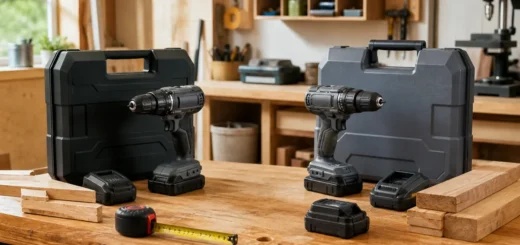
For a first purchase, compare Makita 18V drill-and-driver kits with DeWalt 20V MAX drill-and-driver kits. Check the included battery count and capacity, not just the headline price. A kit with one battery can cost less up front but leave you waiting for a charge halfway through a job.
Cost factors at a glance
| Cost factor | Makita 18V LXT | DeWalt 20V MAX | What to check |
|---|---|---|---|
| Starter kit | Often discounted in bundles | Often discounted in bundles | Compare tool count, battery count, pack capacity, and charger |
| Bare tools | Can be good value when expanding an existing set | Can be good value when expanding an existing set | Compare the same tool category and included accessories |
| Battery replacement | Depends on pack size and sale timing | Depends on pack size and sale timing | Price the capacity you need; avoid buying oversized packs by default |
| Existing equipment | Existing LXT batteries reduce the cost of adding tools | Existing 20V MAX batteries reduce the cost of adding tools | Do not count batteries from another platform as usable without an approved solution |
| Long-term flexibility | Broad cordless tool range | Broad cordless tool range | Confirm the exact battery platform for each tool before buying |
Battery costs and the common trap
Batteries are where a cheap start can turn expensive. If you buy a bare tool first, you may later pay separately for a compatible pack and charger. If you buy a large kit because the discount looks impressive, you can end up paying for tools that sit unused. Estimate the cost of your likely next two or three tools, not an imagined collection.
Battery wear is another ownership cost. A pack that loses useful runtime can make a cordless tool feel weak even when the tool itself is fine. Heavy use, heat, long storage in a discharged state, and age can all shorten pack life. Keep packs out of extreme heat and follow the manufacturer’s charging and storage guidance. Avoid suspiciously cheap third-party batteries: poor fit, unreliable protection, or inconsistent capacity can create downtime and safety risks.
Adapters are a tempting way to use one brand’s batteries on another brand’s tool, but they add another part to the system and may compromise protection or fit. They are not a sound basis for comparing platform ownership costs. Treat each battery system as separate unless you have verified that the adapter is appropriate for the exact tools and use.
Which platform makes sense for you?
If you already own several working Makita LXT batteries, Makita is usually the lower-cost choice for adding compatible tools. The same applies to an existing DeWalt 20V MAX set. Replacing a functioning battery ecosystem just to get a slightly cheaper tool rarely pays off once you include packs, charger, and the value of what you already own.
If you are starting from zero, compare current bundles in the categories you need. For a basic home kit, a discounted two-battery package may be the better value even if its bare-tool lineup looks less attractive on paper. If you need a particular specialty tool, first confirm that both platforms offer a suitable version; then compare its price, required battery size, and any accessories needed to do the job.
For frequent cutting, grinding, or other demanding work, budget for at least one higher-capacity battery if the tool and task benefit from it. A small pack may run down quickly under sustained load, causing pauses and extra charging cycles. For occasional drilling, trim work, and household repairs, compact batteries are often enough and keep the tool lighter. Spending more on capacity you rarely use is not good value.
When to buy
Tool bundles and seasonal promotions can shift the comparison more than small differences in regular bare-tool prices. Watch for sales around major holiday periods and compare the kit’s total contents with the price of buying those items separately. Be cautious with bundles that advertise a large tool count but include several tools you do not need, or batteries too small for your main workload.
Before checkout, write down the exact tools, battery capacities, charger, and accessories included. Then price the same list on both platforms. If one package saves money only because it includes a tool you would not buy, it is not a real saving. If the difference is modest, choose the platform with the tools you prefer and the batteries you are more likely to keep using.