
What's inside
As an Amazon Associate I earn from qualifying purchases. This post may contain affiliate links at no extra cost to you.
Short answer: the best camping stove depends on how you travel. A two-burner propane stove suits car camping and family meals, a small screw-on canister stove suits most backpackers, an integrated canister system suits fast boiling for one or two people, and liquid-fuel or wood stoves suit cold, remote or long trips. Choose by group size, pack weight, the cooking you actually do and the fuel you can easily buy where you are going.
A stove is the one piece of camping gear that decides whether you eat a hot meal at the end of a wet day, so it deserves more thought than a quick look at the lightest option. This guide covers stove types, fuels, features, sizing, cooking styles, safety, and the mistakes that leave campers with cold dinners. It names no brands and quotes no prices.
Our Top Picks
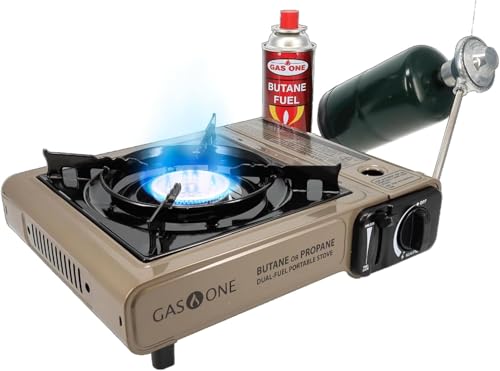 Gas One GS-3400P Propane or Butane Stove Dual8,000 BTU13.5 x 11.2 x 4.4 inches3.1 poundsCheck on Amazon


Contents
- Stove types explained
- Fuel types compared
- How to choose: trip style and group size
- Features that matter
- Wind, cold and altitude
- Cooking and cookware
- Stove safety
- Care, cleaning and storage
- Common mistakes
- Who should choose what
- Checklist
- FAQ
Stove types explained
Two-burner propane stoves
These are the camp kitchen workhorses: a suitcase-style frame with two burners, a lid that doubles as a windscreen and a fuel connection for small disposable propane cylinders or a larger refillable tank through an adapter hose. They cook the way a home stove does, and you can simmer a pot on one burner while frying on the other. They are heavy and bulky, so they belong at the campsite you drive to.
Screw-on canister stoves
A small burner threads onto the top of a sealed canister of pressurized fuel. They are very light, quick to set up and need no priming. They suit backpackers who boil water and cook simple meals. Because the burner sits on top of the canister, the setup can be tippy with a big pot, and a separate stand can help. Output drops in cold weather and as the canister empties.
Integrated canister systems
In these systems the burner, pot and heat exchanger are designed as one unit. The pot clips to the burner, and the heat exchanger captures more heat, so they boil water quickly and use fuel efficiently. They are best for one or two people eating dehydrated or boil-in-bag meals, and less suited to frying or delicate simmering.
Liquid-fuel stoves
These burn fuel from a refillable bottle, usually after pressurizing the bottle and priming the burner. They work well in cold weather and at altitude, and fuel can be bought by the amount you need. In return they are heavier, require maintenance and take practice. They are a favorite for long expeditions and for travel to places where canisters are hard to find.
Wood-burning stoves
Small stoves that burn twigs and pellets have no fuel to carry, but they are slow to start, soot the pot and depend on dry fuel being available. They can be restricted or banned where fire risk is high, so check local rules before relying on one.
Alcohol and solid-fuel stoves
Very small, simple and quiet, these are popular with minimalist hikers. They have lower heat output and are sensitive to wind. They are best for boiling small amounts of water. Always check fire rules, as some areas restrict open-flame stoves that lack a shut-off valve.
Comparison of stove types
| Type | Best for | Strengths | Drawbacks |
|---|---|---|---|
| Two-burner propane | Car camping, families | Stable, cooks like a home stove | Heavy, bulky |
| Screw-on canister | Backpacking, general use | Light, simple | Weaker in the cold, tippy with large pots |
| Integrated canister | Fast boiling, 1-2 people | Efficient, quick | Limited for real cooking |
| Liquid fuel | Cold, remote, long trips | Refillable, reliable in cold | Heavier, needs maintenance |
| Wood-burning | Light travel, no fuel purchase | No fuel to carry | Slow, sooty, fire restrictions |
| Alcohol or solid fuel | Minimalist boiling | Tiny, silent | Low output, wind sensitive |
Fuel types compared
Stove choice and fuel choice are the same decision. Think about where you will camp and what you can buy there.
| Fuel | Notes | Cold performance | Availability |
|---|---|---|---|
| Propane | Common for car camping; cylinders or tanks | Good, since it vaporizes at lower temperatures | Widely sold in many regions |
| Isobutane / butane blends | Used in backpacking canisters | Weaker in cold; blends with propane help | Common at outdoor retailers; may be scarce abroad |
| White gas / liquid fuels | Refillable bottle | Strong | Varies by country; check what your stove is rated for |
| Alcohol | Used in small stoves | Moderate | Common |
| Wood | Free if allowed | Depends on dryness | Depends on the site and local rules |
Use only the fuel your stove is designed for. Do not substitute fuels, and do not refill disposable canisters. Burn through partly used canisters first on trips where weight is not critical, and carry a spare for longer trips.
Canister stove versus liquid fuel
Canister stoves win on simplicity and weight for short trips. Liquid fuel stoves win where the fuel is cheap and easy to refill, in cold weather and on long trips where you can carry fuel by volume rather than by the canister. If you are traveling abroad, check which fuel is sold locally before choosing.
How to choose: trip style and group size
Car camping
Weight does not matter much, so prioritize stability, cooking surface and wind protection. A two-burner stove lets you cook a proper meal and make coffee at the same time. For two people on short weekends, a single-burner stove can be enough.
Backpacking
Every ounce matters, so choose the lightest stove that boils water reliably. Calculate the fuel you will need for your trip length, group size and what you cook. Most backpackers boil water for freeze-dried meals, coffee and soup, which favors integrated systems and compact canister stoves.
Bike touring and canoe trips
Packable size and fuel availability matter. Liquid fuel stoves are reliable on long routes. Canister stoves are simpler if resupply is easy.
Cold-season and high-altitude trips
Choose a liquid-fuel stove or a canister stove with a fuel blend suited to cold. Keep canisters warm before use, for example in a jacket or sleeping bag at night.
Groups and families
Cooking for several people at once calls for larger pots and more output. A two-burner stove or a stove with a large burner helps, as does a second stove so that one person can boil water while another cooks.
Features that matter
Stability
A wide base and sturdy pot supports keep a loaded pot from tipping. Stability is a safety feature, not just a convenience, because spilled boiling water causes burns.
Simmer control
A good control valve lets you reduce the flame to a low setting. Without it, rice and sauces scorch. Look for a valve that adjusts smoothly across its range.
Wind protection
Wind steals heat and wastes fuel. Two-burner stoves have built-in wind panels. For small stoves, use a windscreen but never wrap one tightly around a canister, because it can overheat the canister. Follow the manufacturer’s advice on windscreens.
Ignition
Built-in piezo igniters are convenient but can fail. Always carry a lighter or matches as a backup.
Pressure regulation
Regulated stoves keep output more consistent as the canister empties or the weather cools. This helps in cold conditions.
Pack size and weight
Think about the stove, the fuel and the pot together. A light stove that needs a big pot is no saving.
Pot compatibility
Very small burners can overheat the center of a pot and leave the edges cold. Wide pots on a small burner tip over more easily. Match pot size to burner size.
Wind, cold and altitude
Most disappointing stove performance has an outside cause. Wind can double boil times, cold lowers canister pressure and altitude changes how fuel burns.
- Wind: use a windscreen designed for your stove, or shelter the stove behind a rock or bag, and keep it away from tent fabric.
- Cold: keep canisters warm before use, use a canister blend rated for low temperatures, or choose a liquid fuel stove.
- Altitude: boiling temperature drops as you climb, so food takes longer to cook and needs more fuel.
- Rain: cook in a ventilated, covered area, never inside a closed tent.
Cooking and cookware
For boiling, nearly any stove works. For real cooking such as frying, simmering and baking, a wide, stable stove with good flame control matters. A pot with a lid saves fuel, and a heat exchanger pot improves efficiency on compatible stoves.
Keep meals simple on backpacking trips. One-pot meals, pasta cooked with a lid and soaking some foods before heating can reduce fuel use. On car camping trips, a flat griddle or pan on a two-burner stove lets you cook breakfast for a group.
When cooking meat, poultry or eggs, cook to conventional food safety temperatures and keep raw foods separate from cooked foods. A small food thermometer is a good addition to a camp kitchen. Use safe drinking water for cooking, or treat water before boiling or consuming it according to local guidance.
Stove safety
Camping stoves cause burns, fires and carbon monoxide poisoning when misused. These practices reduce the risk.
- Never use a stove inside a tent, camper or enclosed space. Burning fuel produces carbon monoxide, which is odorless and can be fatal. Cook outdoors or in a well-ventilated open area, and never use a stove to heat a tent.
- Keep flammables away. Maintain clear space around the stove from tent fabric, dry grass, fuel containers and overhanging branches.
- Place the stove on a flat, stable surface. A table, a stove stand or level ground, not a slope.
- Check connections for leaks. With the stove off and away from flames, brush soapy water on connections and look for bubbles. Do not test with a flame.
- Change cylinders away from ignition sources. Make sure the stove is off and cool, and avoid doing it near other flames or people smoking.
- Store fuel properly. Keep canisters and bottles upright where the manufacturer advises, in a cool place and away from heat sources. Do not leave canisters in a hot vehicle.
- Do not leave the stove unattended and keep children and pets away.
- Know the fire rules. In dry conditions or certain areas, only stoves with a shut-off valve may be permitted, and campfires may be restricted.
- Handle hot pots with care. Use pot grips or gloves, and place hot cookware on a heat-safe surface.
- Have water nearby and know how to shut off fuel quickly.
Always read the instructions for your specific stove and follow the manufacturer’s warnings, which take priority over general guidance.
Care, cleaning and storage
- Let the stove cool before packing.
- Wipe away food residue and grease to prevent clogging and unwanted smells.
- Check seals, o-rings and hoses for cracks before each season.
- For liquid fuel stoves, follow the cleaning and maintenance steps in the manual.
- Store canisters and fuel bottles away from heat, children and living spaces.
- Test the stove at home before every big trip to make sure it lights and holds a flame.
Common mistakes
- Not testing at home. Discovering a missing part at the campsite is avoidable.
- Underestimating fuel. Wind, cold and altitude raise consumption. Carry a margin.
- Cooking in the tent. A serious fire and carbon monoxide hazard.
- Choosing by weight alone. A stove too light to be stable or to cook your food will disappoint.
- Forgetting a windscreen or wind plan. Wind can defeat even a good stove.
- Using an unsuitable pot. A pot that is too large or unstable can tip.
- Ignoring local fuel availability. Canister types may not be sold where you travel.
- Forgetting a backup lighter.
Who should choose what
| If you are… | Consider | Why |
|---|---|---|
| A family car camper | Two-burner propane stove | Stable and cooks like a home stove |
| A weekend backpacker | Screw-on canister stove | Light, simple, widely sold |
| A solo hiker who mainly boils water | Integrated canister system | Fast and fuel efficient |
| A winter or high-altitude camper | Liquid-fuel stove or cold-rated canister setup | Better performance in cold |
| An international traveler | Stove running on locally sold fuel | Fuel availability is decisive |
| A minimalist where fires are allowed | Wood or alcohol stove | Light and simple |
Checklist
- I know my group size, trip length and meals.
- I have chosen a fuel I can buy where I am going.
- The stove is stable with my pot and has simmer control if I plan to cook.
- I have a wind plan and a backup lighter.
- I have estimated fuel with a safety margin.
- I have checked fire restrictions for my destination.
- I have tested the stove at home.
To compare options, you can browse a camping stove, a two-burner camp stove, a camping cookware set, a stove windscreen or a lighter and fire starter.
FAQ
What is the best type of camping stove?
There is no single best type. Two-burner propane suits car camping, canister stoves suit most backpackers and liquid-fuel stoves suit cold or remote trips.
Canister stove or liquid fuel: which is better?
Canister stoves are simpler and lighter for short trips. Liquid-fuel stoves perform better in the cold and offer refillable fuel, but need more maintenance.
How much fuel do I need?
It depends on the stove, group size, weather and what you cook. Check the manufacturer’s burn-time guidance, and always carry a margin, especially in wind, cold or at altitude.
Can I use a camping stove in my tent?
No. Using a stove in a closed tent risks fire and carbon monoxide poisoning. Cook outside in a ventilated space.
Why does my canister stove struggle in the cold?
Cold lowers the pressure in the canister, which reduces the flame. Keep the canister warm, use a cold-rated blend or switch to a liquid fuel stove.
Can I fly with a camping stove?
Airline and airport rules typically restrict fuel and fuel canisters, and may require a stove to be clean and free of fuel odor. Check with your airline and local authorities before traveling.
Do I need a windscreen?
Usually yes in open areas, as wind wastes fuel and slows cooking. Use one made for your stove, and do not wrap one tightly around a canister.
How do I check for fuel leaks?
With the stove off and away from flames, apply soapy water to the connections and look for bubbles. Replace any damaged parts before using the stove.
Conclusion
The best camping stove matches your trip. Think about group size, weight, fuel supply, cold and wind, then look for stability and simmer control if you want to cook rather than just boil. Test it at home, carry a fuel margin and follow safety rules, especially never using a stove inside a tent, and you will have a reliable hot meal wherever you camp.
Disclosure: As an Amazon Associate we earn from qualifying purchases. If you click a link and buy, we may earn a commission at no extra cost to you.
Related guides
More from Amazon
Programs that pair well with the guide above. Offers and eligibility are set by Amazon and may change.
A free business account with business pricing and bulk-buying tools for work, shop or home office.
Create a business accountFree shipping on eligible items, Prime Video and more. Eligible new members can start with a free trial.
Start a Prime free trialAudiobooks and podcasts to listen to on the go. Eligible new members can start with a free trial.
Try Audible freeAd-free music streaming. Eligible new subscribers can start with a free trial.
Try Music Unlimited freeAs an Amazon Associate we earn from qualifying purchases.
Write Your Review
No reviews yet. Be the first to share your experience!