Best Circular Saws Under $100
What's inside
- Best Circular Saws Under $100
- Quick comparison: corded versus cordless
- Best corded choice for overall value: SKIL 5280-01
- Best alternative for bevel work: CRAFTSMAN CMES510
- When a compact cordless saw is the better buy
- Decision matrix by situation
- Guide accuracy: what matters more than a laser
- Blade selection for plywood, lumber, and framing
- Ownership realities under $100
- Related Guides
- Best Circular Saws Under $100
- Quick comparison: corded versus cordless
- Best corded choice for overall value: SKIL 5280-01
- Best alternative for bevel work: CRAFTSMAN CMES510
- When a compact cordless saw is the better buy
- Decision matrix by situation
- Guide accuracy: what matters more than a laser
- Blade selection for plywood, lumber, and framing
- Ownership realities under $100
- Related Guides
As an Amazon Associate I earn from qualifying purchases. This post may contain affiliate links at no extra cost to you.
Best Circular Saws Under $100
The best circular saw under 100 for most DIY users is a 15-amp corded 7-1/4-inch model, while a compact cordless saw is the better choice when portability, quick setup, and occasional cutting matter more than maximum depth.
Under $100, you are mainly choosing between two designs:
As an Amazon Associate we earn from qualifying purchases at no extra cost to you.
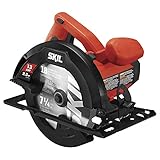
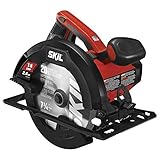
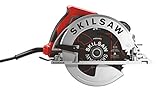

- Corded 7-1/4-inch saws: the strongest value for plywood, dimensional lumber, and repeated cuts. They usually provide full-size cutting capacity without requiring a battery.
- Compact cordless saws: easier to carry and safer to use away from an outlet, but they generally cut less deeply and may cost more once a battery and charger are included.
Quick comparison: corded versus cordless
| Type or example | Motor or system | Maximum cut at 90 degrees | Bevel range | Typical bare-tool weight | Typical market range |
|---|---|---|---|---|---|
| SKIL 5280-01 | 15-amp corded motor | Approximately 2-3/8 inches | 0 to 51 degrees | About 8.7 lb | $55–$80 |
| CRAFTSMAN CMES510 | 15-amp corded motor | Approximately 2-1/8 inches | 0 to 55 degrees | About 11 lb | $60–$90 |
| 7-1/4-inch basic corded category | 13 to 15 amps | 2-1/8 to 2-3/8 inches | 45 to 56 degrees | 8 to 12 lb | $45–$100 |
| Compact 4-1/2-inch cordless category | 18V to 20V battery system | Approximately 1-9/16 inches | 0 to 45 degrees | 5 to 7 lb with battery | $70–$100 bare tool; more in a kit |
Capacities vary slightly by blade, shoe design, and manufacturer. A 7-1/4-inch saw is normally the better long-term purchase because it can cut standard 2-by lumber in one pass, including many pressure-treated boards. A compact saw is more convenient for trim, shelving, small repairs, and sheet goods, but it is not a substitute for a full-size saw when cutting thicker lumber.
Best corded choice for overall value: SKIL 5280-01
The SKIL 5280-01 is a strong candidate for the best circular saw under 100 when cutting capacity and price matter most. Its 15-amp motor and 7-1/4-inch blade are suited to plywood, 2-by-4s, 2-by-6s, and basic framing work. The approximately 2-3/8-inch depth at 90 degrees gives it more usable capacity than compact cordless models.
Its bevel adjustment reaches about 51 degrees, which covers ordinary 45-degree crosscuts and most simple roof, trim, and furniture work. The laser guide can help with quick rough cuts, although a laser is not automatically more accurate than a properly aligned saw shoe and a straightedge.
Where it works best
- Breaking down 4-by-8-foot plywood sheets on sawhorses
- Crosscutting framing lumber and fence boards
- Occasional deck, shed, shelving, and repair projects
- Users who do not already own a compatible cordless battery system
The main limitation is the power cord. It adds setup time and can catch on the workpiece, so keep it over your shoulder or behind the cut line rather than letting it trail beside the blade.
Best alternative for bevel work: CRAFTSMAN CMES510
The CRAFTSMAN CMES510 is another full-size corded option commonly found below $100. Its 15-amp motor is appropriate for ordinary construction materials, and its bevel range of up to approximately 55 degrees offers a little more adjustment than many basic saws.
This model makes sense for a DIYer who expects to make angled cuts but still wants the low operating cost of a corded tool. It can handle plywood and dimensional lumber effectively when paired with a sharp blade. Its comparatively heavier body may feel less tiring during a single structural cut, but it can be less comfortable when making many overhead or awkward cuts.
When a compact cordless saw is the better buy
Choose a compact cordless model if you work in a finished room, a yard without convenient power, or a small workshop where storing and routing an extension cord is inconvenient. The absence of a cord also makes short, repeated cuts faster.
For plywood and thin boards, a compact saw can be very capable. A 4-1/2-inch blade typically cuts about 1-9/16 inches at 90 degrees, enough for 1-by stock, flooring underlayment, thin sheet goods, and many shelving materials. It is less suitable for 2-by framing lumber, where you may need to cut from both sides or finish the cut with a handsaw.
Battery cost changes the calculation. Suppose a bare cordless saw costs $80 and a compatible battery and charger cost another $60. At $140 total, it is no longer competing directly with a $60–$90 corded saw. The cordless purchase becomes more reasonable if you already own the battery platform or expect to use the battery with a drill, impact driver, or other tools.
Decision matrix by situation
| Your situation | Best choice | Why |
|---|---|---|
| Lowest total cost | Basic 13–15-amp corded 7-1/4-inch saw | No battery purchase and full-size cutting depth |
| First circular saw for a beginner | SKIL 5280-01 or similar corded model | Stable full-size shoe, familiar controls, and broad blade availability |
| Frequent plywood breakdown | 7-1/4-inch corded saw with a 40-tooth blade | Better depth and sustained power; a finer blade reduces splintering |
| Occasional small repairs | Compact cordless saw | Fast setup and easier handling for short cuts |
| Basic framing or deck construction | 15-amp corded 7-1/4-inch saw | More suitable for repeated cuts in 2-by lumber |
| Already invested in an 18V or 20V battery platform | Matching cordless saw | The battery and charger cost is already absorbed |
Guide accuracy: what matters more than a laser
Guide accuracy depends on the relationship between the blade, shoe, fence, and cut line. Before using a new saw, unplug it or remove its battery and check that the 0-degree mark actually produces a square cut. Place a combination square against the shoe and blade, avoiding the blade teeth, then inspect the bevel indicator at 45 degrees.
For long plywood cuts, clamp a straight board to the sheet and guide the saw shoe against it. This is usually more consistent than following a printed line by eye. Leave the blade on the waste side of the line and account for the blade’s kerf, which is commonly about 1/8 inch. A laser can show the intended path, but it cannot correct a bent shoe, loose fence, or wandering technique.
Blade selection for plywood, lumber, and framing
- Framing lumber: use a 24-tooth or similar construction blade for fast cutting. Expect a rougher edge.
- Plywood and cabinetry panels: use a 40-tooth to 60-tooth carbide-tipped blade and support the sheet on sacrificial foam or evenly spaced supports.
- General DIY work: a 24-tooth or 40-tooth combination blade is a useful compromise.
- Pressure-treated lumber: use a blade suitable for treated wood, clean it afterward, and do not allow residue to build up around the guard.
Blade quality often changes the result more than a modest difference in motor rating. A sharp carbide blade reduces burning, improves control, and puts less load on either a corded motor or a battery.
Ownership realities under $100
The first parts likely to need attention are the blade, lower guard, cord or battery contacts, and bevel-lock hardware. Keep the lower guard moving freely; sawdust and resin can make it slow or sticky. Blow dust away from the vents with clean, dry air, but do not force debris deeper into the motor. Inspect the power cord for cuts and replace damaged cords rather than wrapping them as a permanent repair.
Common mistakes include cutting without supporting the offcut, forcing the saw through a binding blade, setting the blade much deeper than the material, and starting a cut with the teeth already touching the workpiece. Set the blade so only about 1/8 to 1/4 inch of tooth extends below the material. This reduces exposure, improves control, and limits splintering.
For most homeowners, a corded 7-1/4-inch saw remains the best circular saw under 100 because it combines full cutting depth, strong sustained power, and inexpensive ownership. Select a compact cordless model instead when portability and convenience outweigh the cost of batteries and the loss of cutting capacity.