Best Cordless Reciprocating Saws for Demolition and Pruning
What's inside
As an Amazon Associate I earn from qualifying purchases. This post may contain affiliate links at no extra cost to you.
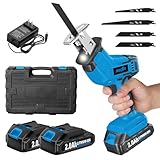
The best cordless reciprocating saw for demolition is the Milwaukee M18 FUEL SAWZALL 2821-20, with its 1-1/4 inch stroke and 3,000 strokes per minute, followed by the Makita XRJ06Z and DeWalt DCS382B as full-size alternatives. For pruning, plumbing and tight remodeling cuts, a compact one-handed saw such as the Milwaukee M12 FUEL HACKZALL 2520-20 or DeWalt DCS369B ATOMIC is easier to control and far lighter to hold overhead.
A reciprocating saw is a blunt tool that gets used for very different jobs: ripping through a nail-embedded stud wall, cutting a corroded cast-iron or copper pipe in a cramped cabinet, or trimming branches off a pear tree from a ladder. No single saw is ideal for all three. This guide compares the specs that decide how a saw behaves, explains how to match them to the work, and names eight current models that cover the range from heavy demolition to one-handed pruning.
As an Amazon Associate we earn from qualifying purchases at no extra cost to you.


Quick Picks at a Glance
- Best for demolition: Milwaukee M18 FUEL SAWZALL 2821-20
- Best full-size alternative on the Makita platform: Makita XRJ06Z
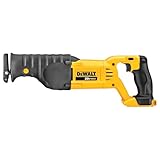
- Best full-size on the DeWalt platform: DeWalt DCS382B
- Best lighter mid-size all-rounder: DeWalt DCS367B ATOMIC
- Best budget full-size: Ryobi ONE+ PCL515B
- Best compact for plumbing and pruning: Milwaukee M12 FUEL HACKZALL 2520-20
- Best one-handed overhead saw: DeWalt DCS369B ATOMIC
- Best sub-compact for tight spaces: Makita XRJ07ZB
How We Chose
This is a research-based comparison, not a lab or field test report. We compared manufacturer specification pages and independent buying guides, kept only saws that currently appear in those sources, and used a number only when at least one source confirmed it. Where sources disagreed on a spec (for example, the Makita sub-compact stroke and speed, or the orbital setting on some models), we describe it by spec class and tell you to confirm it on the maker page before you buy. Bare-tool prices change often, so we use tier words only.
We then grouped saws by the work they do best: demolition and framing, plumbing and remodeling, and pruning and yard work. Platform matters too, because a bare tool is only a good deal if you already own the batteries.
The Specs That Actually Matter
Stroke length: the best proxy for cutting speed in thick material
Stroke length is how far the blade travels with each push and pull. A longer stroke clears more material per stroke and rips through studs, pipe and lumber faster. Full-size saws use 1 to 1-1/4 inch strokes. Compact one-handed saws use roughly 5/8 to 7/8 inch strokes. Strokes per minute (SPM) matter, but a saw with a shorter stroke at a high SPM can still be slower in thick stock than a saw with a long stroke at 3,000 SPM.
Strokes per minute: speed for thin material
Typical cordless saws run 0 to 2,800 or 3,000 SPM. High SPM helps in sheet metal, PVC and green wood, where a fast thin cut matters more than bite. A variable trigger and a speed dial let you start slowly to avoid skating on a pipe or branch, then speed up once the blade is seated.
Orbital action: aggressive in wood, off for metal
Orbital action moves the blade slightly up and forward on each stroke so the teeth bite deeper on the cutting stroke. It cuts wood faster but is rougher and wears blades quicker in metal. Not every saw has it. If rough wood and pruning are a big share of your work, confirm an orbital setting on the exact model, because several current saws do not list one.
Brushless versus brushed
Brushless motors run cooler, last longer per charge, and hold speed under load. Almost every saw recommended here is brushless. A brushed saw is only worth considering as a rare-use backup tool at the entry-level tier.
Weight and vibration
Bare-tool weight runs from about 3 pounds for a compact to about 7 pounds for a full-size demolition saw, before you add a battery. Heavier saws are steadier in demolition, but overhead pruning and plumbing under a sink favor the light end. Vibration control matters over a long job. Ask for specs about counterbalanced or vibration-reduction designs if you will be cutting for an hour at a time.
Blade-change system
Most saws use a tool-free blade clamp that accepts universal shank blades. A lever-style clamp that lets you swap a hot blade with a glove on is much faster than a hex-key system. Look for a clamp that locks positively and does not loosen under vibration.
Comparison Table
| Model | Voltage | Stroke | SPM | Bare Weight (as listed) | Motor | Size Class | Best Job |
|---|---|---|---|---|---|---|---|
| Milwaukee M18 FUEL SAWZALL 2821-20 | 18V | 1-1/4 in | 0 to 3,000 | 6.8 lb | Brushless | Full-size | Demolition |
| Makita XRJ06Z | 18V LXT | 1-1/4 in | Two-speed, up to 3,000 | Class: full-size | Brushless | Full-size | Demolition, framing |
| DeWalt DCS382B | 20V MAX | 1-1/8 in | Not published | 5.55 lb | Brushless | Full-size | Remodeling, general |
| DeWalt DCS367B ATOMIC | 20V MAX | 1-1/8 in | 2,900 | 5 lb | Brushless | Mid-size | Remodeling, pruning |
| Ryobi ONE+ PCL515B | 18V | 1 in | 3,400 | Check maker page | Check maker page | Full-size | Budget remodeling, PVC |
| Milwaukee M12 FUEL HACKZALL 2520-20 | 12V | 5/8 in | 0 to 3,000 | 3.2 lb | Brushless | Compact | Plumbing, pruning |
| DeWalt DCS369B ATOMIC | 20V MAX | Check maker page | 2,800 | About 3.5 lb | Check maker page | Compact one-handed | Overhead, tight spaces |
| Makita XRJ07ZB | 18V LXT | Sources disagree | Sources disagree | About 5.7 lb listed by one source | Brushless | Sub-compact | Tight spaces |
Weights are bare tool without a battery. Where sources disagreed, confirm the figure on the maker page.
Best Cordless Reciprocating Saws by Job
Group 1: Demolition and framing (full-size, 1 inch stroke or more)
Milwaukee M18 FUEL SAWZALL 2821-20
Spec line: 18V · 1-1/4 in stroke · 0 to 3,000 SPM · brushless · about 6.8 lb bare · tool-only
Best for: Cutting nail-embedded studs, cast-iron pipe, rebar-reinforced material with the proper blade, and any long demolition day where stroke length and sustained power count.
Skip if: Your work is mostly overhead or one-handed. At nearly 7 pounds it is a two-handed saw and tiring at arm’s length.
- Pro: The longest stroke in this guide, with the top speed of 3,000 SPM.
- Pro: Widely used on job sites, with strong platform support for batteries and accessories.
- Con: Heaviest saw here.
- Con: Premium tool-only pricing, and you need an 18V battery system.
Makita XRJ06Z
Spec line: 18V LXT · 1-1/4 in stroke · two-speed up to 3,000 SPM · brushless · tool-only
Best for: Makita owners who want a full-length stroke without switching battery platforms.
Skip if: You are not on the 18V LXT platform; a different brand’s saw will be a better value than buying a new battery system for this one.
- Pro: A 1-1/4 inch stroke, matching the Milwaukee, with two speed settings for metal versus wood.
- Pro: Well suited to framing and remodeling demolition.
- Con: Two-speed switch is less precise than a continuous dial.
- Con: Confirm the current model suffix, since Makita updates its saws.
DeWalt DCS382B
Spec line: 20V MAX · 1-1/8 in stroke · brushless · about 5.55 lb bare · SPM not published in our sources
Best for: DeWalt owners who want a full-size saw lighter than the Milwaukee and enough stroke for general remodeling.
Skip if: You need a published strokes-per-minute figure to compare against other saws, or you want the longest possible stroke for heavy demolition.
- Pro: Lighter than the full-size Milwaukee, so it is easier to hold for repeated cuts.
- Pro: Fits the large DeWalt 20V MAX battery ecosystem.
- Con: Shorter stroke than the leading demolition saws.
- Con: Not every source publishes its speed range.
Group 2: Remodeling and budget (lighter, 1 inch class)
DeWalt DCS367B ATOMIC
Spec line: 20V MAX · 1-1/8 in stroke · 2,900 SPM · brushless · about 5 lb bare
Best for: One saw for remodeling, plumbing and light yard work, where you want a full-size stroke at a weight you can hold at shoulder height.
Skip if: You will spend entire days in heavy demolition; the longer-stroke full-size saws cut thick material faster.
- Pro: A strong balance of stroke length and weight in a single tool.
- Pro: Light enough for ladder work and overhead cuts.
- Con: Not as fast in thick lumber as a 1-1/4 inch stroke saw.
- Con: Orbital action is not confirmed in our sources, so check the maker page if you cut green wood often.
Ryobi ONE+ PCL515B
Spec line: 18V ONE+ · 1 in stroke · 3,400 SPM · full-size · tool-only
Best for: Homeowners already on the ONE+ platform who need a reciprocating saw for pruning, PVC and occasional remodeling cuts at an entry-level cost.
Skip if: You plan on daily demolition. The 1 inch stroke at a high SPM favors thinner material rather than heavy cutting.
- Pro: The highest SPM in this guide, and a good fit for fast cuts through PVC and branches.
- Pro: Entry-level pricing and a huge battery ecosystem.
- Con: Shortest stroke among the full-size saws here.
- Con: Confirm motor type and weight on the maker page for your exact kit.
Group 3: Plumbing, pruning and tight spaces (compact and one-handed)
Milwaukee M12 FUEL HACKZALL 2520-20
Spec line: 12V · 5/8 in stroke · 0 to 3,000 SPM · brushless · about 3.2 lb bare
Best for: Cutting pipe, conduit, small branches and drywall hangers in tight spaces with one hand.
Skip if: You expect it to rip through a stud wall or large limbs. The short stroke is slower in thick material.
- Pro: Very light, so you can hold it overhead or inside a cabinet.
- Pro: Uses a compact 12V battery that adds little weight.
- Con: A 5/8 inch stroke means slow progress in thick wood.
- Con: Limited runtime on heavy cuts compared with an 18V saw.
DeWalt DCS369B ATOMIC
Spec line: 20V MAX · 2,800 SPM · about 3.5 lb bare · compact one-handed design · stroke length not confirmed in our sources
Best for: Overhead pruning, cutting PVC and pipe, and trimming work from a ladder.
Skip if: You need to cut thick wood or steel quickly. Compact saws are for access, not for production demolition.
- Pro: Light, with a one-handed grip suitable for work at arm’s length.
- Pro: Shares batteries with the larger 20V MAX tools.
- Con: Shorter stroke than any full-size saw.
- Con: Not the best choice for long demolition work.
Makita XRJ07ZB
Spec line: 18V LXT · sub-compact one-handed class · brushless · stroke and SPM figures differ between sources, so confirm on the maker page
Best for: Tight cuts in cabinets, between joists and around plumbing where larger saws will not fit.
Skip if: You want one saw to do both demolition and pruning. This one is built for access.
- Pro: Very short body that fits into cramped spaces.
- Pro: Uses the common 18V LXT battery.
- Con: A short stroke limits cutting speed in thick stock.
- Con: Published specs are inconsistent, so verify before buying.
Information Gain: Match the Saw to the Cut
Use this logic to choose, and to avoid buying a saw that is mismatched with its job.
- Name the worst cut you will make. Examples: a 2-by-4 with nails, a 4 inch cast-iron drain line, a 3 inch branch overhead.
- Estimate cutting distance per stroke. A 1-1/4 inch stroke travels 25 percent farther than a 1 inch stroke at the same speed, so it can clear roughly 25 percent more material per stroke. At 3,000 SPM, that is 3,000 times 1.25 inches, or about 3,750 inches of blade travel per minute, compared with 3,000 inches for a 1 inch stroke at 3,000 SPM. A 5/8 inch stroke at 3,000 SPM is only 1,875 inches of travel per minute, about half the full-size demolition saw.
- Check the weight against your reach. If you will hold the saw above shoulder height for more than a minute at a time, stay under about 4 pounds bare. If the saw sits on a surface or braced against a stud, weight helps and you can use a full-size saw.
- Match the blade to the material. Coarse wood blades with fewer teeth per inch for pruning and demolition, finer metal blades for pipe, and a pruning blade with aggressive teeth for green wood.
- Pick the platform. If you already own 18V or 20V batteries, the bare tool of your brand is usually the best value.
The pattern: stroke length times strokes per minute tells you speed in thick material, while weight and size tell you where the saw will fit and how long you can hold it.
Decision Matrix
| Job | Stroke Length Needed | Weight Target | Good Fit |
|---|---|---|---|
| Gutting walls, cutting nail-embedded studs | 1 in or longer | Heavy is fine | Milwaukee 2821-20, Makita XRJ06Z |
| Replacing pipe under a sink | 5/8 to 7/8 in | Under 4 lb | Milwaukee HACKZALL 2520-20, Makita XRJ07ZB |
| Pruning overhead from a ladder | 5/8 to 1-1/8 in | Under 4 to 5 lb | DeWalt DCS369B, DCS367B |
| Cutting PVC and green wood | 1 in with high SPM | Any | Ryobi PCL515B |
| General remodeling mix | 1-1/8 in | About 5 to 5.5 lb | DeWalt DCS382B, DCS367B |
Demolition, Plumbing and Pruning: Practical Tips
- Demolition. Use thick, wide demolition blades with 5 to 6 teeth per inch for wood with nails, and bimetal blades for mixed material. Brace the saw shoe against the work to cut vibration.
- Plumbing. Shut off and drain the line first. Use fine-tooth metal blades for copper and steel and a coarse blade for plastic. Support the pipe so it does not pinch the blade.
- Pruning. Use a dedicated pruning blade with large, widely spaced teeth. Cut limbs in stages so the weight does not pinch the blade.
- Battery size. A larger battery runs longer and cooler on long cuts. A small battery is lighter for overhead work.
Safety Guidance
- Wear eye protection, hearing protection and cut-resistant gloves. Reciprocating saws throw chips and kick back.
- Check walls for electrical wiring, plumbing and gas lines before cutting. Turn off power at the panel and confirm with a tester.
- Hold the saw with both hands when the design allows, brace the shoe against the work, and let the blade reach full speed before it touches the material.
- Remove the battery before changing a blade or accessory.
- Do not cut live or pressurized lines, and be careful of hidden fasteners that can bind or snap a blade.
- For tree work, never cut above shoulder height while standing on an unstable surface, and stay clear of power lines. Hire a professional for large limbs or work near utilities.
- Let a hot blade cool before touching it.
Frequently Asked Questions
What is the best cordless reciprocating saw for demolition?
The Milwaukee M18 FUEL SAWZALL 2821-20 is the leading choice, with a 1-1/4 inch stroke, up to 3,000 SPM and a brushless motor, though it is heavy at about 6.8 pounds bare.
The Makita XRJ06Z matches the stroke length for Makita users, and the DeWalt DCS382B suits DeWalt owners who want a lighter full-size saw.
Is stroke length or strokes per minute more important?
For thick material such as studs and pipe, stroke length is usually the better indicator of cutting speed. Strokes per minute matter more in thin metal, PVC and green wood.
Multiply the stroke length by SPM to estimate blade travel per minute, then weigh that against saw weight for the work you do.
Do I need orbital action?
Orbital action speeds up rough wood cuts and pruning, but it is rougher and wears blades faster in metal. Many compact saws do not have it.
If you cut green wood or thick lumber often, confirm an orbital setting on the exact model on the maker page before you buy.
Are brushless reciprocating saws worth it?
Yes for regular use. Brushless motors run cooler, hold speed under load and make better use of the battery than brushed motors.
Almost every saw recommended in this guide is brushless, and the cost difference at the entry-level tier is small compared with the gain in runtime.
Can a compact saw handle demolition?
For light work, yes. Compact saws with a 5/8 inch stroke cut pipe, conduit and small framing, but they are slow in thick studs and large timber.
Use a compact saw for access and overhead work, and keep a full-size saw with a 1 inch or longer stroke for sustained demolition.
What blade should I use for pruning?
Use a dedicated pruning blade with large, widely spaced teeth, typically 5 to 6 teeth per inch or fewer, which clears wet wood chips without clogging.
Avoid fine metal blades on branches, because the teeth clog and the blade heats up. Cut in stages so a heavy limb does not pinch the blade.
Which battery platform should I choose?
Choose the platform you already own. A bare tool on your existing 18V or 20V batteries is almost always a better value than a new kit.
If you are starting from scratch, compare the full tool lineup of each platform, not only the reciprocating saw, since you will keep buying from the same system.
How heavy is too heavy for overhead cutting?
As a rule, keep the bare tool under about 4 pounds for sustained overhead work, since a battery adds more weight. Full-size saws near 7 pounds are best braced against work.
A compact one-handed saw such as the Milwaukee HACKZALL 2520-20 at about 3.2 pounds bare is far easier to control in awkward positions.
Bottom Line
Pick by the worst cut you will actually make. For gutting walls and cutting pipe, the Milwaukee 2821-20 and Makita XRJ06Z lead with long strokes. For general remodeling, the DeWalt DCS382B and DCS367B give a good balance of stroke and weight. For pruning and plumbing in tight spaces, a compact saw such as the Milwaukee HACKZALL 2520-20 or DeWalt DCS369B is easier and safer to hold. Confirm any spec marked as unconfirmed on the maker page and buy on the battery platform you already own.