Best Electric Cut-Off Saws for Concrete and Masonry
What's inside
As an Amazon Associate I earn from qualifying purchases. This post may contain affiliate links at no extra cost to you.
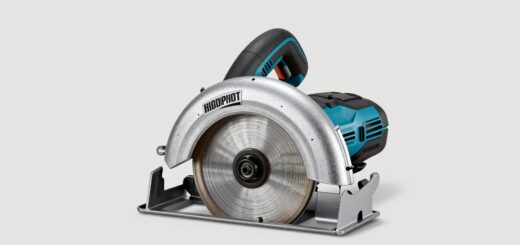
The best electric cut-off saw for concrete and masonry is a corded 14 inch model such as the Makita 4114, which cuts about 5 inches deep from a 15 amp motor, with the Husqvarna K 3000 Wet and Metabo HPT CC14SF as close alternatives; for occasional DIY patio, paver and brick work, a 9 inch angle grinder like the Makita GA9020 or a 12 inch class saw is lighter and cheaper to own. Whichever you choose, pair it with a diamond blade rated for your material and a dust control method, because silica dust is the real hazard on this job.
Electric cut-off saws, also called concrete saws or cut-off saws, are hand-held or hand-guided tools that spin a 9 to 14 inch abrasive or diamond wheel at several thousand RPM. Corded electric models are quieter than gas saws, produce no exhaust (important in basements, garages and enclosed remodeling) and start every time. Their trade-off is power: roughly 2 to 3 horsepower versus 4 to 5 for gas saws, so cuts in thick, hard concrete take longer. This guide compares blade diameter, cutting depth, dust and water options, blade compatibility and duty cycle, and tells you which tool suits a homeowner and which suits a contractor.
As an Amazon Associate we earn from qualifying purchases at no extra cost to you.


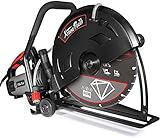
Quick Picks at a Glance
- Best overall corded 14 inch: Makita 4114
- Best for wet cutting indoors: Husqvarna K 3000 Wet
- Best alternative 14 inch corded: Metabo HPT CC14SF
- Best for the deepest published cut: Evolution R14DCT
- Best 12 inch class for lighter work: Makita 4112HS
- Best entry-level lightweight disc cutter: Evolution 12 inch disc cutter
- Best for DIY paver, brick and block cuts: Makita GA9020 9 inch angle grinder
- Best cordless option for contractors: Milwaukee MX FUEL 14 inch
How We Chose
This is a research-based comparison, not a first-hand evaluation. We compared manufacturer information and independent buying guides, then kept saws that appear consistently as current options. Where sources disagreed or published nothing (several specs on the Makita 4112HS, Metabo HPT CC14SF and Husqvarna K 3000 Wet), we describe the saw by spec class and mark the figure as something to confirm on the maker page. We did not use prices, only tier words.
We grouped saws by the work they do: contractor-grade 14 inch saws for slab and wall cutting, lighter 12 inch and 9 inch tools for DIY and masonry, and a cordless alternative for jobs without power or with frequent moves. Each group is judged on blade size, depth of cut, dust or water control, weight and blade compatibility.
What Matters in a Cut-Off Saw
Blade diameter and cutting depth
Blade diameter sets the maximum depth of cut. A 14 inch blade cuts about 5 inches deep on most saws, a 12 inch blade about 4 inches, and a 9 inch blade about 3 inches. That depth is less than half the diameter because the arbor flanges and the saw body use up the center of the blade.
Worked example:
- Take the blade diameter: 14 inches.
- Subtract the flange diameter, about 4 inches on many 14 inch saws: 14 minus 4 equals 10.
- Divide by 2 to get the usable cutting depth: about 5 inches.
- Check the job. A standard 4 inch residential slab is cut in one pass. A 6 inch slab needs two passes or a flipped cut, if you can reach both sides.
- For a 12 inch blade with about a 3.5 inch flange, the same math gives roughly 4.25 inches, so published figures near 4 inches are realistic.
Always confirm the exact depth on the maker page for your model. Published depth varies by a fraction of an inch between sources because of blade wear and flange design.
Motor power and duty cycle
Corded electric saws are generally rated around 15 amps on a standard household circuit, which is about 2 to 3 horsepower in practice. They are fine for slabs, block, brick and pavers. They bog down in heavily reinforced or very hard aggregate concrete, where a gas saw does better. Run them on a heavy gauge cord of the right length and use a dedicated circuit, because a long thin extension cord reduces power and can overheat.
Dust and water feed
Cutting concrete releases respirable crystalline silica. The two accepted controls are wet cutting, where a water feed to the blade keeps dust down, and local exhaust with a vacuum shroud connected to an extractor with an appropriate filter. Wet cutting is the better control outdoors. A vacuum port is the better one indoors where you do not want slurry. Some saws offer both. Dry cutting with no control is not acceptable for concrete or masonry.
Diamond blade compatibility
Use a diamond blade made for the material and rated for the saw. Match the arbor size (commonly 1 inch on 14 inch saws, with a 20 mm or 5/8 inch adapter on smaller ones) and check that the blade’s rated maximum RPM is at or above the saw’s no-load RPM. Segmented blades cut fast and rough, continuous rim blades cut cleaner in tile and masonry, and turbo blades are a compromise. Wet-only blades must not be used dry.
Weight and handling
Corded 14 inch saws weigh roughly 26 to 28 pounds, so a contractor can cut for hours while a homeowner will tire quickly. A 12 inch class disc cutter is lighter, about 21 pounds in one example, and a 9 inch grinder is lighter still. Heavier saws are steadier and kick back less, but you must support the weight when cutting walls overhead or vertically.
Comparison Table
| Model | Blade | Max Depth (as listed) | Power | Weight (as listed) | Dust / Water | Duty |
|---|---|---|---|---|---|---|
| Makita 4114 | 14 in | 5 in | 15 A, 3,500 RPM | About 26.5 to 28 lb | Vacuum port | Contractor |
| Husqvarna K 3000 Wet | 14 in class | Confirm on maker page | Electric, confirm | About 27 lb listed for a Husqvarna electric | Wet cutting, water feed | Contractor, indoors |
| Metabo HPT CC14SF | 14 in class | Confirm on maker page | Confirm | Confirm | Confirm | Contractor, DIY |
| Evolution R14DCT | 14 in | 5-1/8 in | 20 A listed | Confirm | Confirm | Prosumer |
| Makita 4112HS | 12 in class | Confirm (about 4 in for the class) | Confirm | Confirm | Confirm | Light contractor |
| Evolution 12 in disc cutter | 12 in | 4 in | Confirm | 21 lb | Not recommended wet, dusty | DIY |
| Makita GA9020 | 9 in | About 3 in class | 15 A class | Confirm | Needs dust shroud accessory | DIY, trim cuts |
| Milwaukee MX FUEL 14 in | 14 in | 5 in | Cordless MX FUEL | About 32 lb | Water feed, confirm | Contractor, cordless |
Entries marked confirm lacked a consistent published figure in our sources.
Best Electric Cut-Off Saws by Buyer Type
Group 1: Contractor-grade 14 inch saws (slabs, curbs, walls)
Makita 4114
Spec line: 14 in blade · about 5 in depth of cut · 15 A motor · 3,500 RPM · about 26.5 to 28 lb · vacuum port for dust
Best for: Cutting expansion joints, slab openings, block and brick on a job site with power, and any job where you want a corded saw with a dust-collection port.
Skip if: You work far from an outlet or in heavily reinforced concrete all day; a gas saw is the stronger production tool.
- Pro: A full 5 inch cut from a household-voltage motor.
- Pro: Built-in vacuum port makes indoor cutting more manageable.
- Con: Heavy for overhead or vertical work.
- Con: Weight figures differ slightly between sources.
Husqvarna K 3000 Wet
Spec line: 14 in class electric · designed around a wet-cutting water feed · about 27 lb listed for a comparable Husqvarna electric · depth and motor figures to be confirmed on the maker page
Best for: Indoor and enclosed jobs such as basement trenching and wall openings, where no exhaust fumes are allowed and water suppresses dust.
Skip if: You cannot handle slurry cleanup, or you need to cut in places with no water supply.
- Pro: Wet cutting is the strongest silica control.
- Pro: No exhaust fumes, which suits enclosed spaces.
- Con: Slurry management adds time and mess.
- Con: We could not confirm exact depth and motor specs from our sources.
Metabo HPT CC14SF
Spec line: 14 in class corded cut-off saw · depth, motor and weight figures to be confirmed on the maker page
Best for: Homeowners and small contractors who want a 14 inch corded saw at a lower tier than premium industrial lines.
Skip if: You want a published depth and weight you can compare before buying; confirm those first.
- Pro: A full-size blade at an accessible tier.
- Pro: Works with common 14 inch diamond blades.
- Con: Spec sheets were not consistent in our sources.
- Con: Check dust and water options before relying on it indoors.
Evolution R14DCT
Spec line: 14 in blade · about 5-1/8 in depth of cut · 20 A motor as listed by one source
Best for: Buyers who want the deepest published cut in a corded saw for thicker slab work.
Skip if: You are on a standard 15 amp circuit; a 20 amp rating can trip breakers and needs a suitable supply.
- Pro: Deepest published cut among the corded 14 inch saws here.
- Pro: Prosumer tier for occasional heavy jobs.
- Con: A 20 amp draw needs a proper circuit and cord.
- Con: Confirm weight and water features on the maker page.
Milwaukee MX FUEL 14 inch
Spec line: 14 in blade · about 5 in depth · cordless MX FUEL system · about 32 lb · water feed available, confirm
Best for: Contractors who work in places without power, move often between sites, or want to avoid cord runs.
Skip if: You are a homeowner with occasional needs. It sits at the premium tier and needs a dedicated battery system.
- Pro: A cordless 5 inch cut with no cord to manage.
- Pro: Built for continuous commercial use.
- Con: The heaviest saw in this guide.
- Con: Premium tier cost with proprietary batteries.
Group 2: 12 inch and 9 inch tools for DIY and masonry
Makita 4112HS
Spec line: 12 in class corded saw · about 4 in cutting depth for the class · other specs to be confirmed on the maker page
Best for: Lighter slab, block and paver work where a 14 inch saw is more than you need.
Skip if: You need to cut more than about 4 inches deep in one pass.
- Pro: Smaller and lighter than a 14 inch saw.
- Pro: Common 12 inch diamond blades are easy to find.
- Con: Limited depth for thicker concrete.
- Con: We could not confirm exact specs from our sources.
Evolution 12 inch disc cutter
Spec line: 12 in blade · about 4 in depth · about 21 lb · not recommended for wet use · produces heavy dust
Best for: Occasional DIY cuts in pavers, brick and block outdoors where you can control dust with a respirator and a vacuum shroud accessory.
Skip if: You work indoors or need wet cutting. Dust is heavy and the saw is not suited to wet use.
- Pro: The lightest 12 inch saw listed here.
- Pro: Entry-level tier for infrequent use.
- Con: Heavy dust and no wet option.
- Con: Not suited to sustained or heavy work.
Makita GA9020
Spec line: 9 in angle grinder · 15 A class · about 3 in cutting depth for a 9 in wheel · use with a diamond blade and dust shroud
Best for: Trim cuts in brick, block and pavers, cutting out a damaged mortar line, and short cuts where a large saw is awkward.
Skip if: You plan to cut long runs in slab or stay near the tool for an hour at a time; it is hard to control for long cuts, and the 9 inch size is a limit.
- Pro: Much easier to store and handle than a 14 inch saw.
- Pro: Double duty as a grinder.
- Con: Lower depth and more kickback risk than a saw with a base and guard.
- Con: Requires an accessory to control dust.
Corded Versus Gas Versus Cordless
- Corded electric: No fumes, quiet, steady power, and the lowest long-term cost. It needs an outlet and a good cord. Best for indoor and moderate-duty work.
- Gas: More power for deep or reinforced concrete and no cord. It exhausts carbon monoxide and is loud, so it is for outdoor production work only.
- Cordless: Cuts without a cord or exhaust, but costs more and is limited by battery runtime on heavy cuts.
Information Gain: Pick the Saw by Cut Depth and Duty
Use this step-by-step logic to avoid buying too much or too little saw.
- Measure the thickest material you will cut. A patio paver is 2 to 3 inches, a standard slab is 4 inches, a driveway is 4 to 6 inches.
- Add a safety margin of about half an inch. If your thickest cut is 4 inches, you need a rated depth of 4.5 inches or more, which points to a 14 inch saw. If it is 2.5 inches, a 9 or 12 inch saw is enough.
- Estimate total cutting time. If you will cut for under about 2 hours total, a lighter DIY tool is fine. If you will cut for several hours per week, step up to a contractor-grade saw built for duty cycle.
- Choose the dust control method. Indoors, pick a saw with a vacuum port or a wet feed. Outdoors, wet cutting is best.
- Check power supply. A 15 amp saw needs a dedicated circuit. A 20 amp saw needs a suitable circuit and a heavy gauge cord.
- Check blade availability. Confirm arbor size and maximum RPM before you buy blades.
For example, a 4 inch slab with a 0.5 inch margin needs 4.5 inches of depth. A 12 inch saw at about 4 inches fails that test, so a 14 inch saw at about 5 inches is the right choice.
Decision Matrix
| Job | Material Thickness | Suggested Blade | Good Fit |
|---|---|---|---|
| Cutting pavers and brick | Up to 3 in | 9 in | Makita GA9020 |
| Cutting block and patio slab edges | 3 to 4 in | 12 in | Makita 4112HS, Evolution 12 in |
| Cutting a standard slab or curb | 4 to 5 in | 14 in | Makita 4114, Metabo HPT CC14SF |
| Basement trench, indoor opening | 4 to 5 in | 14 in with water or vacuum | Husqvarna K 3000 Wet, Makita 4114 |
| No-power job site | 4 to 5 in | 14 in cordless | Milwaukee MX FUEL 14 in |
DIY Versus Contractor Duty
- DIY: Choose a 9 or 12 inch tool or rent a 14 inch saw for the weekend. Buy only the blade you need for the material.
- Contractor: Choose a 14 inch saw with a duty rating, a water feed or vacuum port, and a service network. Downtime costs more than the tool.
- Renting: If you cut concrete a few times in your life, renting a 14 inch saw is usually cheaper than buying one.
Safety Guidance
- Silica dust. Respirable crystalline silica from cutting concrete and masonry causes serious lung disease over time. Use wet cutting or a vacuum shroud with an appropriate filter and wear a properly fitted respirator rated for silica. Follow the dust control table in your local or national regulations for handheld saws.
- Eye, ear and hand protection. Wear safety glasses or a face shield, hearing protection and gloves.
- Kickback. Use both hands, stand to the side of the blade line, keep the guard in place and never cut in a way that pinches the blade. Do not force the cut.
- Blade rating. Use only blades rated for the saw’s RPM and arbor size. Inspect for cracks and missing segments before each use.
- Electrical safety with water. Use a GFCI-protected outlet, keep cords out of the water and dry, and follow the maker’s instructions for wet cutting. Never use extension cords that are damaged or too thin.
- Check what is behind the cut. Locate rebar, conduit, pipes and live lines before cutting. Shut off power or water to anything that could be hit.
- Fire. Sparks from steel reinforcement can ignite nearby material. Clear the area.
- Do not use abrasive wheels on a saw not rated for them, and never remove or defeat a guard.
Frequently Asked Questions
What is the best electric cut-off saw for concrete?
For most users, a corded 14 inch saw such as the Makita 4114 is the best choice, with about 5 inches of depth, a 15 amp motor and a vacuum port.
The Husqvarna K 3000 Wet suits indoor wet cutting, and the Evolution R14DCT offers a deeper published cut for thick slabs.
How deep can a 14 inch electric cut-off saw cut?
About 5 inches on most models, with some listing up to about 5-1/8 inches. That depth is enough for a standard 4 inch slab in a single pass.
A 12 inch saw cuts about 4 inches, and a 9 inch saw about 3 inches. For thicker concrete, make two passes or step up to a larger saw.
Can I use a cut-off saw indoors?
Yes, with a corded or cordless electric saw and strong dust control. A wet feed or a vacuum shroud connected to a filtered extractor is essential.
Never use a gas saw indoors because of carbon monoxide. Ventilate the area, wear a respirator rated for silica, and clean up slurry or dust with a vacuum, not a broom.
Wet cutting or dry cutting with a vacuum?
Wet cutting is usually the better control outdoors and extends blade life. A vacuum shroud is better indoors where you cannot tolerate slurry.
Plain dry cutting without either control is unsafe on concrete and masonry. Choose a saw that supports the method you need.
Which diamond blade should I use?
Match the blade to the material: segmented for general concrete, continuous rim for tile and masonry, and turbo for a balance. Confirm arbor size and maximum RPM.
Use wet-rated blades only with water. Use a dry-rated blade only if the saw has a vacuum shroud and you are controlling dust properly.
Is an electric saw strong enough for reinforced concrete?
For light reinforcement, yes, with a good diamond blade and patience. For heavily reinforced or very hard concrete, a gas saw with more power is faster.
Corded electric saws are around 2 to 3 horsepower. Let the blade do the work and avoid forcing the cut to prevent overheating the motor.
Is a 9 inch angle grinder enough for DIY?
For brick, block, pavers and short trim cuts, yes. A 9 inch angle grinder with a diamond blade and a dust shroud handles light work around the house.
For long cuts in a slab, a 14 inch saw with a base and guard is safer and cuts straighter. Renting one for a weekend is often the best value.
Should I rent or buy a concrete cut-off saw?
Rent if you will cut concrete only a few times. Buy if you cut regularly or want a saw available for jobs at any time.
Renting also gives you a gas or wet saw suited to the job without storage and maintenance. For frequent use, a corded 14 inch saw pays back through reliability and time saved.
Bottom Line
Match the saw to the thickest cut and the way you will control dust. For slabs and curbs on a job with power, the Makita 4114 is the clear starting point. For indoor wet work, look at the Husqvarna K 3000 Wet. For light DIY work, a 12 inch class saw or a 9 inch grinder such as the Makita GA9020 does the job, and for jobs without power the Milwaukee MX FUEL 14 inch is the cordless option. Confirm any spec marked for confirmation on the maker page, use a rated diamond blade, and never cut concrete without dust control.