Best Brick Saws for Clean Masonry Cuts in 2026
What's inside
- Quick comparison of brick saw types
- Best overall: 14-inch stand-mounted masonry wet saw
- Best budget: 10-inch wet tile saw with a masonry blade
- Best for big jobs: rail-and-cart paver saw
- Best for portability: gas power cutter
- Best for small repairs: cordless cut-off saw
- How to choose a brick saw
- Worked example: how many cuts per blade
- Blade types compared
- Common mistakes to avoid
- Ownership and durability realities
- Frequently Asked Questions
As an Amazon Associate I earn from qualifying purchases. This post may contain affiliate links at no extra cost to you.
The best brick saw for most homeowners and small contractors is a wet-cutting masonry saw with a 14-inch diamond blade, a sliding cutting table and a water pump, because it makes square, dust-controlled cuts through pavers, brick and block that a handheld grinder cannot match. For occasional paver trimming, a 10-inch wet tile saw with a masonry blade is a cheaper compromise, and for jobsite demolition-style cuts a gas or battery power cutter is the portable choice. Pick by cut depth, blade size and how often you cut, not by motor numbers alone.
As an Amazon Associate we earn from qualifying purchases at no extra cost to you.



Our Top Picks
Quick comparison of brick saw types
| Pick | Best for | Key specs | Price range |
|---|---|---|---|
| 14-inch stand-mounted masonry wet saw | Best overall: brick, block, pavers, patios | 14 in blade, about 4.5-5 in cut depth, 2-3.5 hp or 15 A, 80-130 lb | Upper mid-range |
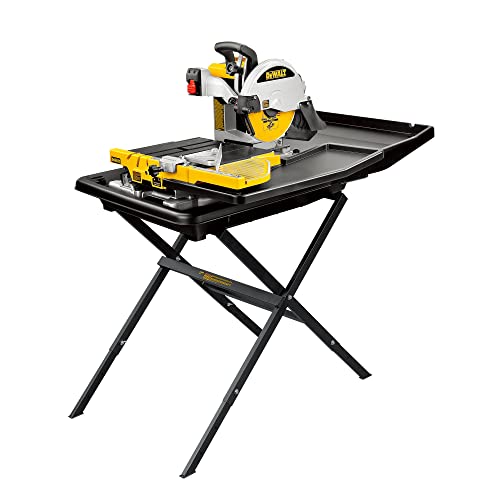
| 10-inch wet tile saw with masonry blade | Best budget: occasional pavers and thin brick | 10 in blade, about 3 in cut depth, 1.5 hp, 40-65 lb | Budget to mid-range |
| Rail-and-cart paver/brick saw | Best for repeat straight cuts on big jobs | Cart rolls on rails, 14-20 in blade, depth 5-7 in | Premium |
| 14-inch gas power cutter | Best for jobsite portability | 14 in blade, 4.5-5 in depth, 70-cc class engine, 20-25 lb | Upper mid-range to premium |
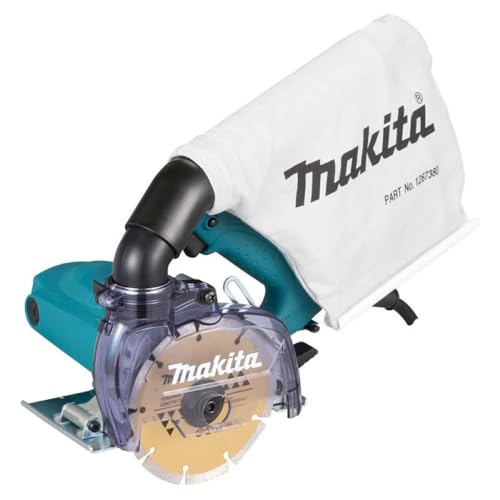
| Cordless 9-inch cut-off saw | Best for small repairs and tuckpointing prep | 9 in blade, about 3 in depth, battery, 12-16 lb | Mid-range to upper mid-range |
| 7-inch angle grinder with diamond blade | Best low-cost option for quick trims | 7 in blade, about 2 in depth, 15 A, 6-8 lb | Budget |
Best overall: 14-inch stand-mounted masonry wet saw
This class is what dedicated brick yards and paver crews use, from makers such as Husqvarna, MK Diamond and Diamond Products. A 14-inch blade gives about 4.5 to 5 inches of single-pass depth, which covers a standard 2-1/4 inch brick, a 3-1/8 inch paver and most 4-inch concrete pavers in one pass. A sliding table supports the unit so you can push it into the blade without twisting, and a pump recirculates water to suppress silica dust and cool the blade. Check the manufacturer’s spec sheet for cut capacity because blade flange size reduces nominal depth.
The trade-off is weight and setup. A stand-mounted unit often weighs 100 pounds or more, needs a water source or a clean reservoir, and takes up truck space. It is overkill if you only cut a dozen bricks for a garden edge.
Best budget: 10-inch wet tile saw with a masonry blade
Many homeowners start with a 10-inch tabletop wet saw, such as the DeWalt D24000 class, and fit a masonry or segmented-rim diamond blade. Cuts are limited to roughly 3 inches deep and about 24 inches long, which suits thin pavers, veneer brick and cultured stone. The compact table and folding stand make storage easy.
The trade-offs are real: motors heat up when pushing through dense engineering brick, and the plastic water tray can crack. Run it with a blade rated for the material and let it cool between long cutting sessions.
Best for big jobs: rail-and-cart paver saw
A rail-cart saw lets the blade move along fixed guide rails while the work stays still, which means a heavy paver or retaining-wall block does not have to be manhandled. These saws are normally rented or owned by hardscape contractors. Expect 5 to 7 inches of cut depth, a fine adjustment for angle and often a power-assisted feed.
The trade-off is cost and footprint. Unless you cut stone on a weekly basis, renting is usually more sensible than owning.
Best for portability: gas power cutter
A 14-inch gas power cutter (Stihl TS-series, Husqvarna K-series) cuts brick, block and concrete without a water table, although most come with a water-attachment kit that should always be used to keep silica dust down. Typical engines are 70 to 100 cc and the machines weigh 20 to 25 pounds. They excel at cutting installed brick, notching walls and splitting curbs.
The trade-offs are noise, fumes, and the heavier maintenance schedule of a two-stroke engine. They also demand respirators and hearing protection.
Best for small repairs: cordless cut-off saw
Cordless 9-inch cut-off saws and 7-inch battery grinders have become practical for tuckpointing prep and cutting a few bricks in place. Runtime depends on battery size; as a rule, a 9 Ah pack in a high-draw tool gives around 15 to 30 minutes of intermittent cutting. Pair the tool with a dust shroud or a wet-feed attachment.
The trade-off is limited depth and runtime. They are not designed to replace a bench saw for production work.
How to choose a brick saw
Match the cut depth to your material
Measure the thickest unit you cut. A standard modular brick is about 2-1/4 inches high, a typical concrete paver is 2-3/8 to 3-1/8 inches, and retaining-wall blocks run 4 to 8 inches. Choose a saw whose rated depth exceeds that by about a half inch so a worn blade does not leave you short.
Pick the right blade
Segmented or turbo diamond blades suit dry or wet cutting of brick and block; continuous-rim blades give cleaner edges on pavers and tile but cut slower. Blade bond hardness matters: a soft bond cuts hard materials like engineering brick, while a hard bond lasts longer in soft brick. Per blade manufacturers, running a wet blade dry for more than a few seconds can overheat the core.
Plan for water and slurry
A wet saw uses roughly 1 to 3 gallons per minute depending on design. A recirculating pump cuts consumption but the slurry will clog filters. Never let slurry run into storm drains, as many municipalities regulate concrete washout.
Think about silica
Cutting masonry creates respirable crystalline silica. OSHA requires either wet cutting or dust collection with appropriate respiratory protection on construction sites; homeowners should follow the same practice: wet cutting plus a rated respirator.
Worked example: how many cuts per blade
Suppose you are laying a 12 by 12 foot paver patio (144 square feet) with 6 by 9 inch pavers. Each paver covers 54 square inches (0.375 square foot), so you need about 384 pavers, plus roughly 10 percent extra for cuts and breakage. Perhaps 40 need to be cut at the edges. At about 8 inches of cut length per paver, that is only 320 inches of cutting, well within the life of a good blade. A budget saw or even a grinder will do the job. If you are building a 40 foot garden wall in running-bond brick, however, you may cut several hundred bricks, and a 14-inch saw earns its keep.
Blade types compared
| Blade type | Best material | Typical diameter | Cut quality | Notes |
|---|---|---|---|---|
| Segmented rim | Brick, block, cured concrete | 7-14 in | Rough edge, fastest cutting | Gaps help clear slurry and cool the rim |
| Turbo rim | Pavers, natural stone, brick | 7-14 in | Medium finish, fast | Good all-round choice for mixed jobs |
| Continuous rim | Tile, thin pavers, veneer | 7-10 in | Smoothest edge, slower | Needs water; chips more easily on thick brick |
| Abrasive (non-diamond) | Occasional brick and block | 12-14 in | Rough | Wears down in size as you cut, so cut depth shrinks |
A diamond blade with a hard bond lasts longer in soft, abrasive clay brick, while a soft bond renews its cutting diamonds faster in dense engineering brick or granite pavers. If a blade glazes and stops cutting, a few passes through an abrasive dressing stick or a soft block can re-expose the diamonds.
Common mistakes to avoid
- Forcing the cut: pushing hard overheats the blade and bends the core. Let the diamonds do the work and feed at a steady, slow pace.
- Cutting dry on a wet saw: even a short dry run can warp or crack the blade. Check the water flow before every cut.
- Ignoring blade wobble: a bent flange or a loose arbor nut wastes blade life and produces slanted cuts.
- Skipping layout marks: brick cuts are final, so mark with a pencil or a crayon, then score a shallow guide line first.
- No hearing protection: masonry cutting is loud, often 95 to 105 decibels at the operator position.
Ownership and durability realities
- What wears first: the blade, then pump seals and the water tray. Keep spare blades and a pump on hand.
- Clean daily: slurry hardens like concrete in the pump and tray. Rinse after every session.
- Anchor the saw: an unbalanced stand or soft ground causes crooked cuts and kickback.
- Use GFCI: water and electricity do not mix; plug into a GFCI outlet or use a GFCI extension cord.
Frequently Asked Questions
What is the difference between a brick saw and a tile saw?
A brick saw has a bigger blade, greater cut depth and a more robust frame built to take dense masonry. A tile saw is lighter and shallower. A tile saw can cut thin pavers or veneer brick, but pushing it through full-thickness brick will overheat the motor.
Can I cut brick with a circular saw?
Not with a standard woodworking circular saw. A masonry cut requires a diamond or abrasive blade and a saw designed for it, and the dust requires wet cutting or a vacuum shroud. Using the wrong blade is dangerous.
Do I need a wet saw or a dry saw?
Wet is safer for dust control and gives a longer blade life. Dry cutting with a diamond blade can work for short cuts if you add dust extraction and a respirator, but it creates much more silica dust.
What blade size do I need for 4-inch-thick pavers?
You need a blade that cuts at least 4.5 inches deep, which means a 14-inch blade on most saws. A 10-inch saw cuts about 3 inches, so you would have to flip the paver and cut from both sides.
Is it better to rent or buy?
If you have one project a year, rent a rail or stand saw for a day or two. If you cut masonry several times a year, a mid-range 14-inch saw typically pays for itself within a few projects.