Best Left-Handed Circular Saws for Better Visibility
What's inside
As an Amazon Associate I earn from qualifying purchases. This post may contain affiliate links at no extra cost to you.
The best left handed circular saws are the Makita 5007MG for a light corded tool, the SKILSAW SPT77WML-01 for demanding framing, and the Bosch CS5 for affordable left-side blade visibility; however, a right-blade saw can still be the better choice if you normally cut from the opposite side of the workpiece.
As an Amazon Associate we earn from qualifying purchases at no extra cost to you.
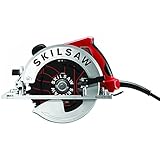

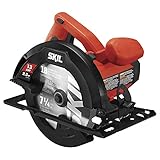

What makes a circular saw “left-handed”?
A left-blade circular saw places the blade on the left side of the motor when the saw is viewed from the handle and trigger position. For many right-handed users, this puts the cut line in clear view without leaning over the motor. That is why a “circular saw for left handed” visibility can appeal to right-handed carpenters as well as left-handed users.
The label is about blade position, not necessarily the hand used to operate the tool. A genuinely left-handed user may find a left-blade saw intuitive, but may also prefer a right-blade design if its handle, trigger, and shoe are more comfortable. Before buying, check the exact model’s blade side, because manufacturers do not use “left-handed” consistently in product names.
Best left-blade circular saws by situation
Best overall: Makita 5007MG
The Makita 5007MG is a strong all-purpose choice for remodeling, decking, cabinetry work, and occasional framing. It uses a 15-amp motor and a 7-1/4-inch blade, with a maximum cutting depth of about 2-1/2 inches at 90 degrees. Its left-side blade gives a clear sightline, while the magnesium shoe keeps the tool lighter than many similarly powerful corded saws.
Its 0-to-45-degree bevel range covers most common cuts, and built-in bevel and depth markings are easier to use than vague stamped indicators. The main limitation is that it is still a corded saw: the cord can catch on lumber or scaffolding, and outdoor work requires a suitably rated extension cord.
Best for: users who want one dependable left-blade saw for varied work. It suits both left-handed and right-handed operators, provided the handle angle feels natural.
Best for framing and heavy use: SKILSAW SPT77WML-01
The SKILSAW SPT77WML-01 is built around a 15-amp motor, a 7-1/4-inch blade, and a lightweight magnesium construction. Its cutting capacity is approximately 2-7/16 inches at 90 degrees, with bevel adjustment to 53 degrees. The left-side blade is especially useful when repeatedly ripping sheet goods or framing lumber from a standing position.
The saw’s worm-drive-style layout gives it a substantial, professional feel, though the longer body and roughly 11-to-12-pound weight can be tiring during overhead work. Its controls are designed for frequent angle and depth changes, but a compact sidewinder may feel easier for a beginner to steer.
Best for: frequent framing, production remodeling, and users who value durability and cutting authority over minimum weight. It is not the most comfortable option for small hands or occasional trim work.
Best affordable left-blade option: Bosch CS5
The Bosch CS5 is a 15-amp, 7-1/4-inch left-blade circular saw with approximately 2-7/16 inches of cutting depth at 90 degrees and bevel adjustment to about 56 degrees. Its principal advantage is visibility: the blade is exposed on the operator’s side, making it easier to track a pencil line than with many conventional right-blade saws.
It is a practical choice for homeowners and light construction work, but it does not have the same refined magnesium construction or premium balance as the Makita. The shoe and bevel scale should be checked before important angled cuts, particularly after transporting the saw or dropping it.
Best for: occasional users who prioritize a clear cut line and strong corded performance without paying for a premium framing tool.
Best lightweight alternative: a compact 6-1/2-inch cordless left-blade saw
Compact cordless saws with a left-side blade are convenient for punch-list jobs, shelving, and short cuts in plywood. A typical brushless 6-1/2-inch model weighs approximately 6 to 8 pounds with a battery and cuts around 2-1/8 inches at 90 degrees. The reduced diameter improves maneuverability, but it cannot match a 7-1/4-inch saw’s depth for doubled framing lumber.
Choose this type when portability matters more than maximum capacity. For repeated full-depth cuts, a high-output battery and a spare pack are usually more useful than choosing the smallest available battery.
Head-to-head comparison
| Model or type | Blade and power | Approx. weight | 90-degree depth | Bevel range | Visibility and best use |
|---|---|---|---|---|---|
| Makita 5007MG | 7-1/4 in.; 15 A corded | 10.6 lb | 2-1/2 in. | 0–45° | Left blade; balanced general-purpose work |
| SKILSAW SPT77WML-01 | 7-1/4 in.; 15 A corded | 11.6 lb | 2-7/16 in. | 0–53° | Left blade; frequent framing and ripping |
| Bosch CS5 | 7-1/4 in.; 15 A corded | 10.8 lb | 2-7/16 in. | 0–56° | Left blade; budget visibility |
| Typical compact cordless | 6-1/2 in.; brushless battery | 6–8 lb with battery | About 2-1/8 in. | 0–50° | Often left blade; mobile and lighter work |
| DEWALT DWE575SB | 7-1/4 in.; 15 A corded | 8.8 lb | 2-9/16 in. | 0–57° | Right blade; very light conventional layout |
Weights and capacities can vary slightly by production revision, shoe configuration, and whether a cordless model is measured with its battery. Confirm the current manual before ordering replacement parts or planning a specialized cut.
Left-blade versus right-blade ergonomics
A left-blade tool generally gives a right-handed operator a direct view of the kerf while the dominant hand controls the rear handle. It can also keep the motor farther from the user’s face during a typical crosscut. The tradeoff is that sawdust may discharge toward the operator depending on the cut direction, blade design, and dust port arrangement.
A right handed circular saw, including a conventional right handed skill saw such as the DEWALT DWE575SB, often places the blade on the far side of the motor. Some users find that layout more stable because the motor rests against the waste side or because the front handle aligns better with their wrist. Left-handed operators should not assume that a circular saw left handed is automatically safer or more comfortable: grip reach, trigger access, guard movement, and shoe support matter more than the label.
For a true circular saw left handed setup, hold the saw with the dominant hand on the rear handle, keep the other hand on the front knob, and position your body beside—not directly behind—the cut. If you must twist your wrist to see the line, the blade orientation or handle geometry is working against you.
Safety features worth paying for
- Electric brake: stops the blade faster after releasing the trigger, reducing the time an exposed blade can coast.
- Lower-guard override: useful for starting bevel cuts, but never wedge or tie the guard open.
- Positive bevel stops: make repeatable 0-degree cuts easier and reduce accidental angle drift.
- Rafter hook: helpful on a ladder or platform, provided it cannot catch the cord or clothing.
- Clear sight notch: should align with the actual kerf; verify it with a test cut rather than trusting the printed mark.
Use eye and hearing protection, allow the blade to reach full speed before entering the material, and support both sides of a sheet so the cut does not pinch the blade. Set the depth only slightly deeper than the material—about 1/8 inch beyond the workpiece is a useful starting point.
Ownership costs and maintenance
For a corded saw used 30 times per year, a $150 tool costs about $5 per use in its first year before blades and electricity. A $300 cordless setup used 100 times per year costs about $3 per use over three years, assuming the battery survives the period and no second battery is purchased. This is why frequent mobile users can justify cordless equipment, while occasional workshop users often get better value from a corded left-blade saw.
Blades usually wear before the motor. A dull blade makes the saw wander, raises the required force, burns wood, and increases the chance of kickback. Clean resin from the blade and shoe, blow dust away from ventilation openings with dry air, inspect the lower guard for smooth movement, and check that the bevel and depth locks clamp firmly. Do not use a general-purpose framing blade for fine plywood when a higher-tooth-count finish blade will reduce splintering.
Bottom line
Choose the Makita 5007MG for the best balance of visibility, weight, and control; the SKILSAW SPT77WML-01 for demanding framing; and the Bosch CS5 for economical left-side visibility. Choose a right-blade saw instead when its handle geometry matches your grip, when you routinely cut from the opposite side of the work, or when its lower weight matters more than seeing the blade directly.