Best Corded Circular Saws: Power, Cut Depth, and Value
What's inside
- How to Choose a Corded Circular Saw for Repeated Cuts
- Corded Circular Saw Comparison: Specs That Affect Daily Use
- Decision Matrix: Which Corded Saw Fits Your Situation
- Ownership Realities: What Wears First and How to Avoid It
- Cost Per Cut Calculation: Why Corded Still Wins for Repetition
- Final Picks by Value
- FAQ
- Related Guides
- How to Choose a Corded Circular Saw for Repeated Cuts
- Corded Circular Saw Comparison: Specs That Affect Daily Use
- Decision Matrix: Which Corded Saw Fits Your Situation
- Ownership Realities: What Wears First and How to Avoid It
- Cost Per Cut Calculation: Why Corded Still Wins for Repetition
- Final Picks by Value
- FAQ
- Related Guides
As an Amazon Associate I earn from qualifying purchases. This post may contain affiliate links at no extra cost to you.
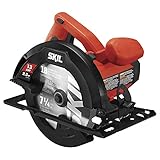
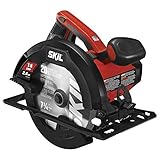
The best corded circular saw for repeated cuts in 2026 is a 7-1/4-inch, 15-amp sidewinder like the DEWALT DWE575SB or Makita 5007F for most DIYers and pros who want light weight and deep cut capacity, while a worm-drive like the SKILSAW SPT67M8-01 is the better pick if you prioritize torque and straight-line control for framing.
A corded circular saw removes battery runtime from the equation, so your decision comes down to blade size, bevel range, true cut depth, weight, and how the cord behaves on a long day of ripping sheets or breaking down lumber. Below is how those specs translate to real work and which type fits your situation.
As an Amazon Associate we earn from qualifying purchases at no extra cost to you.


How to Choose a Corded Circular Saw for Repeated Cuts
1. Blade Size and Motor Power
Almost every full-size corded circular saw uses a 7-1/4-inch blade driven by a 15-amp motor. That combination cuts 2x material at 90 degrees and still severs a 2x at 45 degrees in a single pass. Smaller 6-1/2-inch corded saws exist for lighter trim work, but they reduce cut depth to around 2-1/8 inches at 90 degrees and force you to flip sheets. For repeated crosscuts and rips, stay with 7-1/4 inch unless weight is your primary constraint.
Amperage is not the whole story. Look at no-load RPM and gearing. Sidewinders run 5,200 to 5,800 RPM for fast, clean cuts in plywood and SPF lumber. Worm drives run slightly slower (around 5,300 RPM) but deliver higher torque, which helps maintain blade speed when ripping wet Doug fir or stacked OSB without bogging.
2. Cut Depth and Bevel Range
Published cut depth varies by just 1/8 to 1/4 inch between models, but that difference determines whether you cut a 2×4 at 45 degrees without a second pass or whether your saw can notch a 4×4 in two passes. Bevel range matters more than most listings suggest. A saw that stops at 45 degrees is fine for framing, while 51 to 57 degrees lets you cut steep bevels for scarf joints, stair stringers, and compound miters without switching to a miter saw.
Also check bevel detents and depth lock. Positive stops at 22.5 and 45 degrees speed repeated bevels, and a lever-action depth lock holds better under vibration than a wing-nut style.
3. Weight and Balance
For repeated cuts, 2 pounds feels like 20 by the end of the day. Magnesium-footed sidewinders weigh 8.8 to 10.5 pounds and balance over the blade, making one-handed placement on sawhorses easier. Worm drives and hypoid saws weigh 11 to 13 pounds with the motor behind the blade. They track straighter over long rips because the weight sits low and inline with the cut, but they fatigue your wrist faster on overhead or vertical cuts.
4. Cord Handling and Safety Features
Corded saws avoid battery swaps, but cord management affects workflow. Check cord length (8 to 10 feet is typical), exit angle, and whether the cord has a flexible strain relief that prevents kinking near the handle. A rear-exit cord snags less when ripping 8-foot sheets if you route it over your shoulder. Look for a functional cord clip on the handle and a lower guard that retracts smoothly without catching.
Electric brake, bevel lock accessibility, and spindle lock placement all matter for repeated cuts. An electric brake that stops the blade in under 2 seconds reduces wait time between cuts and improves safety when setting the saw down. A front-mounted spindle lock is faster for blade changes than a recessed rear one.
Corded Circular Saw Comparison: Specs That Affect Daily Use
This table compares common full-size corded models sold in 2026. Specs are manufacturer-published for standard 7-1/4-inch blades. Actual cut depth shifts slightly with blade kerf and flange size.
| Model | Drive Type | Motor / RPM | Bevel Range | Max Cut at 90° | Max Cut at 45° | Weight | Cord |
|---|---|---|---|---|---|---|---|
| DEWALT DWE575SB | Sidewinder | 15A / 5,200 RPM | 0° – 57° | 2-9/16 in (65mm) | 1-15/16 in (49mm) | 8.8 lbs (4.0 kg) | 10 ft, rear exit |
| Makita 5007F | Sidewinder | 15A / 5,800 RPM | 0° – 56° | 2-3/8 in (60mm) | 1-3/4 in (44mm) | 10.1 lbs (4.6 kg) | 8.2 ft, side exit |
| Makita 5007MG Magnesium | Sidewinder | 15A / 5,800 RPM | 0° – 56° | 2-3/8 in (60mm) | 1-3/4 in (44mm) | 11.0 lbs (5.0 kg) | 8.2 ft, side exit |
| SKILSAW SPT67M8-01 | Worm Drive | 15A / 5,300 RPM | 0° – 53° | 2-7/16 in (62mm) | 1-15/16 in (49mm) | 11.5 lbs (5.2 kg) | 10 ft, rear exit |
| Bosch CS10 | Sidewinder | 15A / 5,600 RPM | 0° – 56° | 2-7/16 in (62mm) | 1-15/16 in (49mm) | 10.3 lbs (4.7 kg) | 10 ft, pivoting exit |
| Milwaukee 6390-21 | Sidewinder | 15A / 5,800 RPM | 0° – 51.5° | 2-1/2 in (63.5mm) | 1-7/8 in (48mm) | 10.4 lbs (4.7 kg) | 10 ft, rear exit |
Takeaway: If you need the deepest 90-degree cut in an 8 to 10 pound package, the DEWALT DWE575SB and Milwaukee 6390-21 lead. If you want maximum speed for plywood and trim, the Makita 5007 series at 5,800 RPM leaves a cleaner edge with a sharp 24-tooth framing blade. For long, heavy rips where the saw does the steering, the SKILSAW worm drive trades weight for line-holding stability.
Decision Matrix: Which Corded Saw Fits Your Situation
Use this to map your workflow to the right configuration. Prices for full-size corded circular saws in 2026 generally run $99 to $179 for sidewinders and $189 to $249 for magnesium or worm-drive models, not including blades.
| Your Situation | Recommended Type | Why It Fits | Trade-off to Accept |
|---|---|---|---|
| Breaking down sheet goods in a small shop or garage, frequent setup/teardown | Light sidewinder, 8.8-10.3 lbs, electric brake, 57° bevel | Easy to lift on/off horses, brake lets you move stock faster, steep bevel covers trim | Less inertia in heavy rips; keep blade sharp to prevent wandering |
| Framing walls, decks, or fences; cutting construction lumber all day | Worm drive or hypoid, 11+ lbs, 10 ft cord | High torque holds speed in wet lumber, inline handle tracks straight on long rips | Heavier and longer body; awkward overhead |
| Occasional DIY, budget-focused, need one reliable saw | Standard 15A sidewinder (Bosch CS10 / Craftsman CMES510 class) | Full 7-1/4-inch capacity at lowest cost, widely available blades | Fewer magnesium parts, slightly more vibration than premium models |
| Remodeling with mixed cuts: rip, crosscut, bevel, plunge | Magnesium sidewinder with 56°+ bevel and depth lever | Rigid shoe stays flat for bevels, lighter than worm drive for varied positions | Higher price; magnesium shoe can dent if dropped on concrete |
| Long outdoor runs where cord snag is an issue | Sidewinder with rear cord exit + cord clip | Route cord over shoulder, fewer hang-ups on sawhorses | Check extension cord gauge; 12 AWG for 50 ft+ at 15A |
Ownership Realities: What Wears First and How to Avoid It
Corded circular saws are durable, but a few parts determine how long they feel new:
- Lower guard and spring: Sawdust packs behind the guard and slows retraction. Blow out dust after each session and add a single drop of dry lubricant to the pivot, not oil that attracts grit. A slow guard is the most common cause of binding on angled cuts.
- Shoe flatness: Stamped steel shoes bend if the saw falls. Magnesium and aluminum cast shoes stay flatter but crack on hard impact. Check flatness with a straightedge before critical bevel work. A warped shoe never cuts square.
- Brushes and cord: On brushed 15A motors, brushes typically last 300 to 500 hours of cutting time. Hard starting or sparking at the vents signals wear. The cord fails first at the handle exit; avoid yanking the cord to unplug and use a strain-relief loop on your extension cord.
- Blade and flange: A dull blade makes any saw feel underpowered. Replace or sharpen when you need to push hard to maintain feed rate, or when plywood top veneer tears. Clean pitch buildup with blade cleaner and keep the inner flange free of burrs so the blade seats without wobble.
Common Mistakes With Corded Saws
- Using a 16 AWG household extension cord on a 15A saw. At 50 feet, voltage drop causes overheating and slower cuts. Use 12 AWG for 25 to 50 feet, 10 AWG for 50 to 100 feet.
- Setting depth to maximum for thin material. Expose only 1/4 inch of blade below the work. Less exposed tooth reduces kickback risk and tear-out.
- Relying on the guard for safety. Unplug (not just switch off) before blade changes and when clearing jams.
- Cutting with the cord under the workpiece. Position the cord so the saw moves away from it, not over it.
Cost Per Cut Calculation: Why Corded Still Wins for Repetition
If you make 80 cuts per weekend building a deck or shed, consumable cost matters more than the saw price. Here is a simple worked example to estimate cost per cut:
Example: A quality 7-1/4-inch carbide blade costs $35 to $55 and typically holds an edge for 800 to 1,200 linear feet in clean SPF lumber before it needs replacement. Assume $45 per blade and 1,000 feet of life.
- Each 8-foot rip = 8 linear feet. 1,000 / 8 = 125 rips per blade. $45 / 125 = $0.36 per rip.
- Each 3.5-inch crosscut on a 2×4 = 0.29 linear feet. 1,000 / 0.29 = ~3,448 crosscuts per blade. $45 / 3,448 = $0.013 per crosscut.
- Electricity for a 15A saw at 120V is roughly 1,800 watts under load. At $0.15 per kWh and 2 minutes of trigger time per cut average, each cut costs about $0.009 in power.
Total per crosscut is under $0.03 in consumables and power. A corded saw eliminates battery replacement cost ($80 to $150 per pack every 2 to 4 years) which often exceeds blade cost for high-volume users. If you cut daily, the corded platform pays back within the first year of heavy use.
Quick Setup for Straight Repeated Cuts
- Install a clean 24-tooth framing blade for construction lumber or a 40-tooth for plywood. Tighten the arbor nut against the flats, not over-torqued.
- Set depth: unplug, place saw on workpiece, loosen depth lever, lower until 1/4 inch of gullet shows below the board, lock.
- Set bevel: loosen front bevel lock, swing to detent, verify with a digital angle gauge if you need better than +/- 0.5 degrees.
- Clamp a straightedge or use the saw’s sight notch. For sidewinders, the left-side blade aligns with the inner notch; worm drives use the outer notch. Test on scrap.
- Route the cord: extension cord behind you, saw cord over your shoulder, so neither crosses the cut line.
Final Picks by Value
Best overall for repeated cuts: DEWALT DWE575SB or Milwaukee 6390-21. Both deliver full depth in under 10.5 pounds, have an electric brake, and accept widely available 7-1/4-inch blades.
Best for speed and finish: Makita 5007F or 5007MG. The 5,800 RPM motor and well-balanced magnesium base produce cleaner edges on sheet goods when paired with a sharp thin-kerf blade.
Best for framing torque: SKILSAW SPT67M8-01 worm drive. Heavier, but it holds line and speed on long rips where control matters more than weight.
If you can only own one corded circular saw in 2026, choose the lightest 15A sidewinder with a 56 to 57 degree bevel and a true 2-1/2-inch cut depth. It handles 90 percent of tasks without fatigue, and you can add a premium worm drive later if you frame regularly.
FAQ
Do I need a worm drive as a homeowner?
No, unless you regularly rip long, heavy lumber. A sidewinder is lighter, easier to control one-handed, and cuts the same depth. Worm drives excel on jobsite framing where momentum helps keep a straight line.
Can a 6-1/2-inch corded saw replace a 7-1/4-inch?
Only for trim and breaking down thin stock. You lose about 3/8 inch of cut depth and the blade selection is smaller. For 2x material at a bevel, the 7-1/4-inch is the practical minimum.
What extension cord should I use?
Match gauge to length and load. For a 15A corded circular saw, use 12 AWG up to 50 feet and 10 AWG for 50 to 100 feet. Keep connections dry and off the ground when possible.
Why does my corded saw bog down?
Usually a dull blade, excessive depth, or low voltage from a long light-gauge cord. Sharpen or replace the blade, set depth correctly, and check cord gauge before assuming motor issues.