Best Skill Saws: Compare Models, Blade Sizes, and Cutting Power
What's inside
As an Amazon Associate I earn from qualifying purchases. This post may contain affiliate links at no extra cost to you.
Best Skill Saws: Compare Models, Blade Sizes, and Cutting Power
The best skill saw for most homeowners is a 7-1/4-inch corded circular saw; choose a cordless model for frequent work away from an outlet, a 6-1/2-inch saw for lighter cuts and less weight, or a compact 4-1/2-inch saw for sheet goods and trim. Match the blade size and cutting depth to your thickest material, then consider weight, power source, and how often you’ll use it.
Skill saw choices at a glance
“Skill saw” is often used to mean any handheld circular saw, though Skilsaw is also a specific brand. The models below are established options with different strengths. Weights are approximate tool-only figures; battery models get heavier with a battery attached. Specs can vary by exact version, so check the manufacturer’s current listing before buying.
As an Amazon Associate we earn from qualifying purchases at no extra cost to you.
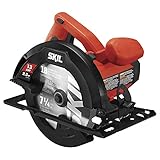

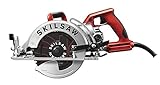

| Model | Blade | Power | Approx. weight | Cutting capacity and best fit |
|---|---|---|---|---|
| Skilsaw SPT67WL-01 | 7-1/4 in. | 15-amp corded | About 8.6 lb | Up to 2-7/16 in. at 90°; general framing and jobsite work |
| Makita 5007F | 7-1/4 in. | 15-amp corded | About 10.6 lb | Up to 2-3/8 in. at 90°; versatile cuts in dimensional lumber and sheet goods |
| DeWalt DCS570 | 7-1/4 in. | 20V cordless | About 7.5 lb without battery | Up to 2-9/16 in. at 90°; cordless framing and renovation work |
| Milwaukee M18 2630-20 | 6-1/2 in. | 18V cordless | About 6.5 lb without battery | Up to 2-1/8 in. at 90°; lighter-duty cuts and mobile use |
| Worx WX429L | 4-1/2 in. | 4-amp corded | About 4.4 lb | Up to 1-11/16 in. at 90°; thin stock, trim, and sheet materials |
Blade diameter is not the same as cutting depth: the guard and saw design determine how much blade extends below the shoe. A 7-1/4-inch saw typically handles a 2-by-4 in one pass at 90°, while a 6-1/2-inch model may not. For bevel cuts, capacity drops; confirm the depth at your intended angle.
Choose by the work, not just the spec sheet
For framing, decks, and regular construction
A 7-1/4-inch saw is the practical standard. It offers enough depth for common framing lumber and has the broadest choice of replacement blades. The Skilsaw SPT67WL-01 is a comparatively light corded pick for users who want consistent power without battery planning. The Makita 5007F is another established corded option, though its higher listed weight may matter during long overhead or ladder work.
For work spread across a site, consider the DeWalt DCS570 or another 7-1/4-inch cordless saw in a battery platform you already own. Cordless saves setup time and avoids managing an extension cord, but battery size and charge state affect both weight and sustained cutting. A high-capacity battery can help on repeated cuts; keep a charged spare for longer sessions.
For remodeling, occasional projects, or tight spaces
A 6-1/2-inch cordless saw is easier to carry and can be a good fit for plywood, thinner boards, and routine household repairs. The Milwaukee M18 2630-20 is a lighter, shallower alternative to a full-size framing saw. Before choosing one as your only saw, check whether its depth covers the lumber you expect to cut—and remember that angled cuts require more depth than square cuts.
A 4-1/2-inch compact saw such as the Worx WX429L is useful when low weight and maneuverability matter more than deep cuts. It is not a substitute for a full-size saw when cutting thick framing lumber. Its smaller blade also means fewer blade choices than the 7-1/4-inch standard.
For steady cutting on a budget
A corded saw is often the value choice if your work is near an outlet and you cut for long stretches. You avoid battery replacement costs and can work continuously, but you’ll need a suitable extension cord and a plan to keep it clear of the blade and workpiece. General market prices vary by sales, kit contents, and region: compact corded saws are often in the lower price range, while professional cordless tools and battery kits typically cost more.
A quick decision matrix
| Your situation | Good starting point | Why |
|---|---|---|
| First saw; occasional home repairs | 7-1/4-inch corded | Broad blade availability, useful depth, no battery platform required |
| Already own compatible batteries; work outdoors | 7-1/4-inch cordless | Freedom from outlets while retaining full-size blade capacity |
| Mostly plywood and thinner stock; prioritize carry weight | 6-1/2-inch cordless | More portable, with enough depth for many lighter cuts |
| Small storage area or occasional trim and panel cuts | 4-1/2-inch compact saw | Compact and light, provided its shallower capacity suits the material |
| Daily framing or repeated cuts through thick stock | 7-1/4-inch professional corded or cordless | Better suited to sustained workload; choose corded for continuous power or cordless for mobility |
Blade choice and setup affect cut quality
The blade supplied with a saw may be a general-purpose blade, but the right tooth count and design depend on the material. A framing blade with fewer teeth cuts lumber quickly; a higher-tooth-count blade generally leaves a cleaner edge in plywood and finish materials, though it may cut more slowly. Use a blade rated for the saw’s diameter and arbor, and make sure it is intended for the material. Never use a blade that exceeds the saw’s rated speed.
Set the blade depth so its teeth extend only slightly below the workpiece—roughly a quarter inch is a useful starting point for a square cut. This limits exposed blade and can reduce tear-out. Support the offcut so it cannot pinch the blade, and secure the material before cutting. For a straight long cut, clamp a guide or use a compatible track rather than steering by eye.
Ownership details that matter
Blades are the main consumable. Dull or resin-coated teeth make the saw work harder, produce rougher cuts, and can encourage forceful feeding. Clean buildup with a blade cleaner appropriate to the blade, inspect for damaged teeth, and replace a blade that is cracked or otherwise compromised. Disconnect the cord or remove the battery before changing blades or cleaning near the guard.
Dust and offcuts can interfere with a blade guard or block visibility. Keep the saw’s vents clear, check that the lower guard moves freely, and don’t tie it back or force it open. Common mistakes include using a blade with the wrong rotation or arbor, cutting unsupported material that closes on the blade, and choosing a compact saw without checking bevel capacity. A saw that feels lighter in the shop can still become tiring with a large battery or repeated overhead cuts, so account for the complete working weight.
Bottom line
For the broadest usefulness, start with a 7-1/4-inch saw and choose corded or cordless based on access to power and the length of your cutting sessions. Pick a 6-1/2-inch model if portability matters and its capacity covers your stock; choose a compact 4-1/2-inch saw only for shallower work. This skill saw guide comes down to three checks before purchase: maximum cut depth at 90° and bevel, total working weight, and the cost or convenience of the power source and blades.