Best Battery-Powered Miter Saws for Cord-Free Cutting
What's inside
As an Amazon Associate I earn from qualifying purchases. This post may contain affiliate links at no extra cost to you.
Best Battery-Powered Miter Saws for Cord-Free Cutting
If you already own compatible batteries, the best battery powered miter saw is usually the one that shares your platform: choose an 18V model for light trim work, a 36V saw for a more capable cordless all-rounder, or a FlexVolt model when you need larger cuts and can accept the battery’s added weight. Match the saw to your typical stock size, the number of cuts you make between charging opportunities, and how far you carry it.
Battery-powered miter saws make the most sense for punch-list work, remote jobsites, and occasional cuts where running an extension cord is inconvenient. They’re less compelling for stationary, high-volume cutting if you’d need to buy several batteries and a charger from scratch. The figures below are representative manufacturer specifications for selected models; configurations and weights can vary, so check the exact kit or bare-tool listing before buying.
As an Amazon Associate we earn from qualifying purchases at no extra cost to you.


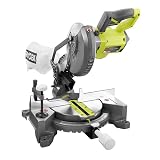

Three cordless platforms, three different trade-offs
| Platform and example | Blade | Approx. bare-tool weight | Typical use | Battery reality |
|---|---|---|---|---|
| 18V: Makita XSL06Z | 7-1/4 in. | About 30 lb | Trim, flooring, casing, and moderate crosscuts | A single 18V pack keeps the system compact; runtime depends heavily on stock and blade condition |
| 36V: Makita XSL08Z (18V X2) | 12 in. | About 69 lb | Wide boards and a stationary or vehicle-based jobsite setup | Uses two compatible 18V batteries together, so plan for two charged packs |
| FlexVolt: DEWALT DCS781 | 12 in. | About 54 lb | Large-capacity cuts with the option to use compatible FlexVolt batteries across tools | Battery capacity and weight vary by pack; a larger pack can extend work time but adds carry weight |
| 18V: Bosch GCM18V-08N | 8-1/2 in. | About 31 lb | Portable framing and finish work where a modest blade size is enough | Requires a compatible Bosch 18V battery; check the recommended capacity for your workload |
Weights are approximate tool-only figures, not carry weights with a battery, blade, stand, or workpiece. A 36V saw made from two 18V packs is still an attractive way to use batteries you own, but those batteries are occupied in pairs while cutting. FlexVolt is DEWALT’s battery platform, not a universal battery standard; batteries are only interchangeable within compatible tools and systems.
Choose by the cuts you actually make
Pick 18V for trim, repairs, and frequent carrying
A 7-1/4- or 8-1/2-inch saw is easier to move and store than a 12-inch model. It is a good fit for baseboard, door casing, flooring, and many framing cuts. The smaller blade can limit cut capacity, though, and may require flipping some wider stock to finish a cut. Check the saw’s published crosscut capacity at 90 and 45 degrees against the dimensions you use—not just the blade diameter.
Pick 36V when you need 12-inch capacity and already own the packs
A dual-battery 36V saw can be a sensible choice if you own a pair of compatible 18V batteries and regularly cut wider material. The trade-off is substantial: 12-inch sliding saws are bulky and often weigh considerably more than compact models. They suit a van, bench, or rolling stand better than repeated trips up stairs. Also account for the cost of a second battery if you currently own only one.
Pick FlexVolt for a large-cut system you can build around
A FlexVolt 12-inch saw is aimed at users who want substantial capacity without relying on an outlet. It may be a better fit than a compact 18V saw for deck boards, trim packages, or repeated work with wider stock. But the saw alone does not solve runtime: budget for enough compatible battery capacity to finish the day, and include that pack’s weight when judging portability.
Estimate cuts per charge before you buy
Manufacturers do not provide a directly comparable cuts-per-charge figure for every saw. Runtime varies with material, cut depth, blade sharpness, temperature, and battery size, so an advertised figure from one test setup may not predict your work. A useful planning method is to count your own daily cuts and add a buffer.
- Count the cuts in a typical work session, including test cuts and offcuts.
- Note the material and thickness. A clean crosscut through thin trim demands less than repeated cuts through dense, thick stock.
- For a cordless-only day, plan a charged spare pack or a charging window rather than assuming one battery will last.
- When comparing batteries, compare watt-hours where available: volts × amp-hours = watt-hours. For example, a nominal 18V, 5Ah pack is about 90Wh; two such packs hold about 180Wh combined, before practical losses.
This calculation compares stored energy, not guaranteed cuts. A saw’s motor, blade, and workpiece determine how efficiently it uses that energy. If a project has many repetitive cuts, keeping a sharp, appropriate blade and letting it reach speed before feeding the material can help avoid unnecessary strain and rough cuts.
Decision matrix: match the saw to your setup
| Your situation | Best starting point | Why |
|---|---|---|
| One battery platform already owned; occasional trim jobs | Compact 18V saw in that platform | Lowest cost to get cutting and easiest to carry; verify capacity first |
| Regular cuts in wider stock; two compatible 18V packs available | 36V dual-battery 12-inch saw | Uses existing batteries while offering larger blade capacity |
| Frequent large cuts away from outlets; DEWALT FlexVolt batteries already owned | FlexVolt 12-inch saw | Builds on the existing system; plan for battery weight and a spare pack |
| Very limited storage or stairs between work areas | 7-1/4- or 8-1/2-inch 18V saw | Smaller footprint and generally easier handling than a 12-inch slider |
| High-volume work at a fixed bench with an outlet nearby | Compare cordless cost with a corded saw | Extra batteries and charging downtime may outweigh the value of cord-free setup |
Ownership details that affect the real cost
Battery compatibility can matter more than a small difference in saw features. Confirm the exact battery family, voltage configuration, and charger before buying. A bare tool may look inexpensive, but the total cost can change considerably if you need multiple batteries, a fast charger, a stand, or a blade suited to finish work. Cordless saws commonly range from a few hundred dollars for a bare tool to substantially more for a kit; large-capacity saw-and-battery combinations generally cost more.
Blades are consumables. A dull, dirty, or inappropriate blade can increase cutting effort, worsen the finish, and reduce runtime. Keep resin and pitch off the blade, inspect it for damaged teeth, and use a tooth count appropriate to the material and finish. Support long stock level with the saw table, clamp short or awkward pieces where the manual allows, and keep hands clear of the blade path. Poor support can bind a blade and spoil an otherwise accurate cut.
Before transporting a saw, secure the head and sliding rails as directed by the manufacturer. Dust buildup around the blade guard, rails, and adjustment points can affect movement and accuracy. Clean the saw with it powered off and the battery removed; don’t use cleaning methods that can force dust into the motor or damage electrical parts.
Bottom line
For light work and frequent carrying, start with a compact 18V saw that matches batteries you already own. Choose a 36V dual-battery or FlexVolt 12-inch model when its capacity solves a real cutting need—not simply because the larger blade sounds more capable. Check cut capacity, tool-only and battery-on weight, and your likely cuts per session together; that combination gives a more useful answer than voltage or blade size alone.