Chop Saw Machine Buying Guide: Wheel Sizes, Motors and Vises
What's inside
- 14-Inch vs. 15-Inch Wheels: What the Extra Inch Buys You
- Motor Amps: The Spec That Determines Cut Speed and Wheel Life
- The Vise Is Where Cheap Saws Fail First
- Capacity Chart: Common Stock vs. Wheel Size
- Decision Matrix: Which Saw Fits Your Situation
- Ownership Realities Listings Don’t Mention
- FAQ
- Related Guides
- 14-Inch vs. 15-Inch Wheels: What the Extra Inch Buys You
- Motor Amps: The Spec That Determines Cut Speed and Wheel Life
- The Vise Is Where Cheap Saws Fail First
- Capacity Chart: Common Stock vs. Wheel Size
- Decision Matrix: Which Saw Fits Your Situation
- Ownership Realities Listings Don’t Mention
- FAQ
- Related Guides
As an Amazon Associate I earn from qualifying purchases. This post may contain affiliate links at no extra cost to you.
The best chop saw machine for most metal fabrication work is a 14-inch dry-cut or abrasive model with a 15-amp motor and a cast-iron quick-release vise — that combination covers 90% of common stock sizes without paying for capacity you’ll never use. The real buying decision comes down to three variables: wheel diameter, motor output, and vise quality, and each one matters more than brand reputation.
As an Amazon Associate we earn from qualifying purchases at no extra cost to you.


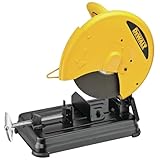

14-Inch vs. 15-Inch Wheels: What the Extra Inch Buys You
Wheel diameter directly determines maximum cutting capacity. A 14-inch abrasive chop saw — the industry standard — handles square tube up to roughly 4-3/4 inches and round stock to about 5 inches. Stepping up to a 15-inch wheel adds around half an inch of capacity in each dimension, which sounds minor until you’re cutting 5-inch schedule 40 pipe or wide-flange material.
The tradeoffs are real, though:
- Wheel cost: 15-inch abrasive wheels cost roughly 30–50% more per wheel, and fewer manufacturers make them, which limits your options at local suppliers.
- Speed: Most 15-inch machines spin slower (around 1,300–1,800 RPM vs. 3,800 RPM on 14-inch abrasive saws) to keep surface feet per minute in a safe range. Cuts are slightly slower but cooler.
- Footprint and weight: Expect 55–85 lbs for a 15-inch saw versus 35–55 lbs for a 14-inch — relevant if the saw moves between job sites.
The practical rule: buy 14-inch unless you regularly cut stock over 4-1/2 inches. If you cut large pipe weekly, the 15-inch pays for itself in avoided workaround cuts.
Motor Amps: The Spec That Determines Cut Speed and Wheel Life
Motor amperage tells you how well the saw holds RPM under load. Here’s what the numbers mean in practice:
| Motor Rating | Typical Wheel | Best For | Reality |
|---|---|---|---|
| 14 amps | 14″ abrasive | Occasional cuts, thin-wall tube, hobby work | Bogs down on solid bar over 1-1/2″; expect to feed slowly |
| 15 amps | 14″ abrasive or dry-cut | General fabrication, angle iron, 4″ tube | The sweet spot; holds speed through 2″ solid stock |
| 15–16 amps (dry-cut) | 14″ carbide blade | Repeated cuts, cleaner edges, minimal burr | Lower RPM (~1,300) but carbide teeth cut 3–4x faster than abrasive |
| 4–5 HP (industrial) | 15″ abrasive | Production work, large pipe, all-day cutting | Often requires 220V; check your shop power first |
One worked example on cost per use: an abrasive wheel costs roughly $4–8 and lasts 50–100 cuts in mild steel. A 14-inch carbide dry-cut blade runs $70–120 but delivers 1,000+ cuts before resharpening. If you make 20 cuts a week, abrasive wheels cost you about $200–400 per year; the carbide blade amortizes to under $150 over two years. For anyone cutting daily, a dry-cut saw like an Evolution or Makita-style cold saw pays back the higher purchase price within a year.
The Vise Is Where Cheap Saws Fail First
The vise is the most under-evaluated spec on any chop saw machine listing, and it’s the first thing to wear out. On budget saws, the vise jaw is stamped steel that flexes under clamping pressure, letting stock shift mid-cut — the cause of most shattered abrasive wheels and crooked cuts.
What separates a good vise:
- Cast iron or machined steel jaws that don’t deflect. Press a thumbnail against the jaw face; if it flexes visibly, walk away.
- Quick-release mechanism: A lever or cam action that opens the jaw instantly versus winding a screw thread. On a 50-cut day, a screw vise costs you 15+ minutes of winding.
- Miter capacity: Look for 0–45° adjustment with a positive lock. Cheap miter fences drift a degree or two under clamping pressure — enough to ruin a weldment corner.
- Fence height: A taller fence supports vertical stock like angle iron on edge. Many budget fences are only 2 inches tall.
Test to run in-store or on delivery: clamp a piece of tube, cut a 45° miter, flip the offcut against the mating face, and check the joint with a square. Any gap wider than a business card means the vise or fence is out of true.
Capacity Chart: Common Stock vs. Wheel Size
| Stock Type | 14″ Abrasive | 14″ Dry-Cut | 15″ Abrasive |
|---|---|---|---|
| Square tube (90°) | 4-3/4″ | 4-1/2″ | 5-1/8″ |
| Round pipe/tube (90°) | 5″ | 4-1/4″ | 5-1/2″ |
| Solid round bar | 2-1/2″ | 2-3/8″ | 2-3/4″ |
| Angle iron | 5″ x 5″ | 4-3/4″ x 4-3/4″ | 5-1/2″ x 5-1/2″ |
| Rectangular tube (90°) | 4″ x 7-5/8″ | 3-1/2″ x 7″ | 4-1/2″ x 8″ |
| Capacity at 45° miter | ~65–70% of 90° figures | ~65–70% | ~65–70% |
Figures are representative; check the specific model’s capacity chart since vise geometry varies. Note the miter penalty — a saw that “cuts 5-inch pipe” may only miter 3-1/2-inch pipe.
Decision Matrix: Which Saw Fits Your Situation
| Your Situation | Recommended Type | Typical Price Range |
|---|---|---|
| Weekend fabricator, angle iron and 2″ tube, tight budget | 14″ abrasive, 15 amp, screw vise acceptable | $120–200 |
| Side business, 20+ cuts/day, want clean edges for welding | 14″ dry-cut carbide, quick-release vise | $350–600 |
| Fab shop, large pipe, production cutting | 15″ abrasive or 14″ industrial dry-cut | $500–1,200 |
| Multi-material (aluminum, stainless, steel studs) | 14″ multi-material dry-cut with rated blade | $300–550 |
Ownership Realities Listings Don’t Mention
- What wears first: The vise screw threads and the blade guard return spring. Keep threads wire-brushed and lightly oiled; a seized vise screw is the most common repair on saws past year three.
- Abrasive wheels expire. They have a shelf life printed on the blotter — typically 2–3 years. Old wheels shatter more readily. Don’t stockpile.
- Dry-cut chips are hot. Carbide saws throw sharp, hot chips forward. A chip tray is not optional, and cut near flammables at your own risk.
- Common mistake: Feeding too fast. Letting the wheel establish the cut and applying steady moderate pressure extends wheel life dramatically versus forcing the cut — a wheel buried under pressure sheds grit instead of cutting.
- Brush motors need brushes. Check carbon brushes every 100 hours; a $8 brush set beats a dead motor on a job.
FAQ
Can I cut aluminum on a chop saw machine?
Yes, but only on a dry-cut saw with a blade rated for non-ferrous metal, or with an abrasive wheel rated for aluminum. Standard steel-rated abrasive wheels load up and can grab. Clamp firmly — aluminum is lighter and shifts more easily.
Is a chop saw the same as a miter saw?
Functionally similar but built differently. A chop saw is tuned for metal — slower, more torque, spark-deflecting guards. Running wood on a metal chop saw is safe in most cases; running steel on a wood miter saw is not.
Do I need 220V?
No for anything 14-inch and under — all run on standard 110–120V circuits. Some 15-inch industrial models want 220V, so verify before ordering if your shop isn’t wired for it.