Best Metal Chop Saws: Cold-Cut vs Abrasive Compared
What's inside
As an Amazon Associate I earn from qualifying purchases. This post may contain affiliate links at no extra cost to you.
If you cut mild steel more than occasionally, a cold-cut carbide metal chop saw beats an abrasive saw on nearly every metric that matters—edge quality, blade life, spark output, and cost per cut—while abrasive saws still win on upfront price and versatility across masonry. Below is the head-to-head breakdown on tube, rebar, and angle iron so you can match the saw to your actual workload.
As an Amazon Associate we earn from qualifying purchases at no extra cost to you.
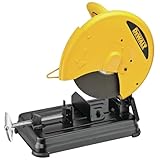
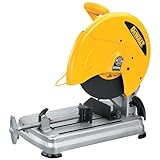

Cold-Cut vs Abrasive: How They Actually Work
An abrasive chop saw uses a 14-inch bonded abrasive wheel spinning around 3,800 RPM that grinds through metal, consuming the wheel as it cuts. A cold-cut (dry-cut) saw runs a carbide-tipped cermet or tungsten carbide blade at roughly half that speed—typically 1,300–1,500 RPM—and shears chips off like a milling operation. That lower RPM is why cold-cut blades don’t throw showers of sparks and why the workpiece comes out warm, not scorching.
Head-to-Head on the Four Criteria That Matter
| Criteria | Cold-Cut Carbide Blade | 14″ Abrasive Wheel |
|---|---|---|
| Blade cost (2026 market) | $60–$110 | $4–$8 |
| Typical cuts in mild steel before replacement | 800–1,200 | 50–100 |
| Approx. cost per cut | $0.06–$0.12 | $0.06–$0.14 |
| Cut finish on 2x2x1/8″ angle | Burr-free, ready to weld | Heavy burr, needs grinding |
| Sparks / debris | Large cool chips, minimal sparks | Shower of hot sparks |
| Workpiece temp after cut | Warm, touchable in seconds | Hot—can discolor thin tube |
| Cut time, 2″ mild steel angle | ~4–6 sec | ~8–15 sec |
On pure dollars per cut the two are closer than people assume, but the calculation ignores the real savings: no deburring pass. If deburring 50 angle cuts costs you even one minute each with a flap disc, that’s nearly an hour of labor plus consumables the cold-cut saw never generates.
The Cost-Per-Cut Math, Worked Out
Take a fab shop cutting 30 pieces of 1.5″ square tube per day:
- Abrasive: one $6 wheel per ~2 days = $3/day, plus ~30 minutes of deburring labor and flap discs.
- Cold-cut: a $90 blade lasting ~1,000 cuts = ~33 days of work, or $2.70/day, with zero deburring.
- Net: consumables are a wash, but you recover ~2.5 hours of labor per week. The $150–$250 price premium on the saw pays back in roughly one busy month.
Where abrasive still wins: cutting rebar bundles, hardened steel, masonry with a wheel swap, and any jobsite where blade theft or abuse is a real risk—throwing away a $5 wheel hurts less than a $90 carbide blade.
Top Picks by Situation
Best overall cold-cut: Evolution S380CPS / S355CPS
Evolution’s 14-inch cold-cut saws have been the category benchmark for years, with 1,450 RPM blade speed, around 4-3/4″ square tube capacity, and a cast base. Street prices run $250–$350. The S380CPS handles larger stock; the S355CPS fits tighter budgets and benches.
Heavy-duty production: DeWalt D28730 or Makita LW1401
Both are 14-inch cold-cut/dry-cut saws built for daily fab-shop duty, typically $350–$450. The Makita’s tool-less fence adjustment and the DeWalt’s clamping system are the reasons shops pick one over the other.
Budget cold-cut: Evolution R355CPS
A smaller 14-inch class saw that usually lands under $250—right for hobbyists and weekend welders who still want burr-free cuts without the production-saw price.
Abrasive pick: DeWalt D28715 or Makita 2414NB
Both are ~15-amp, 3,800–4,000 RPM abrasive saws in the $130–$220 range. Choose abrasive if you cut mixed materials, occasional rebar, or need a saw that can live in the back of a truck.
Decision Matrix
| Your situation | Pick | Why |
|---|---|---|
| Daily fab work on tube and angle | Cold-cut, 14″ | Labor saved on deburring dwarfs blade cost |
| Weekend welding projects, mild steel only | Budget cold-cut | Clean joints weld easier; blade lasts years |
| Jobsite rebar, hardened rod, occasional masonry | Abrasive 14″ | Wheels tolerate abuse; cheap to replace |
| Tight budget, low cut volume | Abrasive | $130 entry vs $250+ |
| Indoor shop where sparks are a hazard | Cold-cut | Near-spark-free operation, no fire-watch hassle |
Ownership Realities: What Wears and What Breaks Blades
- Cold-cut blades die from user error: cutting too fast (forcing the feed), spinning the blade down on the material instead of easing in, or cutting hardened stock. Let the blade do the work—a chattering, forced cut chips carbide teeth permanently.
- Abrasive wheels wear even when idle: they shed diameter as they cut, and old wheels can crack. Check dates and never exceed the wheel’s rated RPM.
- Chip buildup matters: cold-cut saws throw heavy chips that pack into the base. Clear them regularly—packed chips tilt the fence and ruin square cuts.
- Clamp everything: round tube especially. A workpiece that spins mid-cut is the fastest way to destroy a $90 blade and the least safe failure mode either saw has.
- Brushes and belts: universal motors eat brushes after a few hundred hours; check them yearly. Cheap saws flex at the pivot arm—if your cuts drift out of square, arm play, not the blade, is usually the cause.
FAQ
Can a cold-cut saw cut stainless or aluminum?
Yes with the correct blade—use a stainless-rated or non-ferrous-rated carbide blade respectively. Using a mild-steel blade on stainless works but roughly halves blade life.
Is a cold-cut blade really burr-free?
On mild steel tube and angle under ~1/4″ wall, yes—the edge is weld-ready. Heavier solid stock may leave a small lip, but nothing like the ragged edge an abrasive wheel produces.
Can I convert my abrasive saw to cold-cut by swapping the blade?
No. Abrasive saws spin ~2.5x too fast for carbide blades, which creates a serious hazard and destroys the blade. The gearbox and RPM are different machines, not just different blades.
Bottom line: buy abrasive if you cut a few pieces a month or mixed materials; buy cold-cut if mild steel is your regular diet. Once you stop deburring every cut, you won’t go back.