Best Egg Candlers for Checking Egg Development
What's inside
As an Amazon Associate I earn from qualifying purchases. This post may contain affiliate links at no extra cost to you.
The best egg candlers for most home incubators are a focused, cool-running LED candler with interchangeable or well-sized rubber cups: choose a high-intensity handheld model for dark or thick-shelled eggs, a multi-egg candler for frequent batches, or a simple LED flashlight for occasional checking.
As an Amazon Associate we earn from qualifying purchases at no extra cost to you.


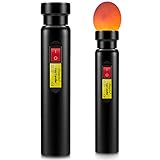
Best egg candlers by situation
| Situation | Best choice | Why it fits | Typical budget |
|---|---|---|---|
| First-time keeper, 6–12 eggs | Focused rechargeable LED candler | Simple one-handed use, low heat, and enough brightness for most white and brown chicken eggs | $15–$35 |
| Dark-shelled or unusually thick eggs | High-intensity candler with a tight rubber cup | Concentrates light through a small area and reduces light leakage around the shell | $35–$80 |
| Weekly hatching or 20+ eggs | Multi-egg candler or commercial high-intensity unit | Reduces repeated handling and makes batch comparison faster | $60–$180 |
| Occasional use or emergency replacement | Bright, narrow-beam LED flashlight with an egg adapter | Useful beyond incubation and inexpensive to replace | $10–$30 |
| Quail eggs | Small-aperture LED candler | Prevents the egg from wobbling and keeps the beam concentrated on the small shell | $15–$50 |
| Goose, turkey, or other large eggs | Large-cup handheld candler | Provides a stable seal without forcing the egg onto a narrow opening | $25–$80 |
What separates the best egg candlers
Brightness and beam control
Brightness is not just a lumen number. Candling works best when the light is concentrated into the egg rather than scattered across the outside of the shell. A narrow, deep beam usually performs better than a wide flood beam, especially on dark brown, blue, green, or heavily speckled eggs.
For ordinary white chicken eggs, a 100–300-lumen LED light with a close-fitting cup is often adequate. Darker shells may need approximately 300–800 lumens, preferably with a focused reflector. A very bright light is not automatically better: excessive spill makes it harder to see the air cell, blood vessels, or developing shadow.
Look for a candler with a defined central beam, a matte or rubber light seal, and at least two brightness settings. A lower setting helps with pale shells and reduces glare; the higher setting is useful for thick or pigmented shells.
Shell coverage and egg-size fit
The light should cover a manageable section of shell while the cup keeps ambient light out. A cup that is too large leaks light. One that is too small touches the egg unevenly and can make handling awkward.
| Egg type | Approximate length | Useful cup opening | Practical design |
|---|---|---|---|
| Japanese quail | 30–35 mm | 15–22 mm | Small rubber cone or narrow adapter |
| Chicken | 53–65 mm | 25–35 mm | Medium flexible cup |
| Duck | 58–70 mm | 30–40 mm | Medium-to-large cup with a soft rim |
| Turkey | 65–75 mm | 35–45 mm | Large cup and a wide grip |
| Goose | 75–95 mm | 40–55 mm | Large opening or adjustable cone |
These are working dimensions rather than universal standards; egg shape varies substantially. If one candler will serve several species, an interchangeable cone system is usually more useful than a single fixed opening.
Heat is a bigger concern than headline brightness
LEDs produce far less heat than older incandescent candlers, but a powerful LED can still warm the shell when held against it for several minutes. Heat is especially undesirable when checking a large batch or repeatedly inspecting the same egg.
Prefer an LED unit with an aluminum heat sink, ventilation around the lamp body, and an automatic shutoff or timer. A cool-touch housing is helpful, but the important test is whether the shell-facing cup becomes noticeably warm during a 30–60 second inspection. Do not leave a high-output candler pressed against an egg while distracted.
Briefly removing an egg from the incubator for inspection is normally more manageable than holding a hot light against it. Keep the room comfortably warm, work efficiently, and return the egg to the same orientation and position unless you have a specific reason to turn it.
Head-to-head: the main candler designs
Focused handheld LED candlers
These are the best all-rounders for small and medium batches. They are light enough to hold in one hand while the other hand rotates the egg, and their rubber cup improves visibility in a normally lit room. Rechargeable models avoid disposable batteries, but check charging time and whether the unit can operate while plugged in.
Their limitations are speed and consistency. You must inspect each egg individually, and a short handle can become tiring when checking several dozen eggs. Choose a model weighing roughly 100–250 grams with a grip at least 100 mm long if you expect frequent use.
Multi-egg candlers
A tray-style or cabinet-style candler is preferable for regular hatching operations. It can illuminate several eggs at once, helping you compare development and identify clear eggs without repeatedly picking them up. Some designs are made for specific egg trays, so confirm the tray spacing before buying.
These units occupy more storage space and may be less useful for unusual egg sizes. They also tend to cost more and can make it harder to inspect a single egg from different angles. They are most valuable when the time saved per batch matters more than portability.
LED flashlights with egg adapters
A flashlight is a practical low-cost option, particularly if it already has a focused beam and multiple output levels. A purpose-made egg adapter is much better than pressing a bare flashlight against the shell because it blocks side light and steadies the egg.
Do not select solely by maximum lumens. Tactical flashlights with very high output may produce excess heat, have an oversized head, or use a beam pattern that creates a bright central spot without useful shell coverage.
Features worth paying for
- Flexible rubber or silicone cup: protects the shell and limits distracting light leakage.
- Two or more output levels: useful when moving from pale chicken eggs to darker duck or turkey eggs.
- Replaceable cup or adapter: extends usefulness across quail, chicken, and large eggs.
- Rechargeable battery: convenient for incubators located away from outlets; aim for at least 2 hours of intermittent use per charge.
- Low-battery warning: prevents a dim beam from being mistaken for poor egg development.
- Textured, non-slip grip: particularly important when handling warm or slightly damp eggs.
- Easy-clean exterior: smooth sealed plastic or metal is preferable to deep grooves around the cup.
A simple runtime calculation
Suppose a rechargeable candler has a 2,000 mAh battery at 3.7 volts. Its nominal stored energy is approximately:
2,000 mAh × 3.7 V ÷ 1,000 = 7.4 watt-hours.
If the lamp and electronics draw about 3 watts, the theoretical continuous runtime is 7.4 ÷ 3, or roughly 2.5 hours. Allowing for voltage conversion and battery reserve, around 1.75–2 hours is a more realistic expectation. At 20 seconds per egg, that equals roughly 315–360 inspections, although frequent use of the highest brightness setting will reduce the total.
How to candle without making the tool the problem
- Dim the room if possible. A darker room improves contrast and lets you use less output.
- Start with the lowest brightness. Increase it only when shell pigmentation or thickness hides detail.
- Seat the egg on the cup gently. Do not force a large egg onto a small opening.
- Rotate the egg slowly. Keep the beam steady while viewing the air cell and the interior from several angles.
- Limit each inspection. A short, organized check is preferable to prolonged exposure to a warm lamp.
- Record observations by date. Notes prevent confusion when several eggs look similar.
Candling shows visible changes inside the shell, but it is not a guarantee of viability. Follow the incubation guidance for the species and your incubator, and avoid repeatedly opening the incubator just to recheck the same egg.
Ownership, cleaning, and common mistakes
The first parts likely to wear are the rubber cup, charging cable, switch, and battery. Silicone or rubber can harden, split, or become tacky after repeated cleaning. A removable cup is valuable because it can be replaced without discarding the light body.
Clean the exterior with a lightly damp cloth and a mild detergent, then dry it fully. Avoid immersing a rechargeable candler unless the manufacturer specifically rates it as waterproof. Disinfectants can damage rubber and some plastics, so use the product’s stated compatibility guidance and never spray liquid into the charging port.
Common errors include using a wide flood beam, judging a dark egg with the same brightness used for a white egg, pressing too hard on the shell, and confusing a dim battery with an opaque shell. Keep the lens and cup free of dust, charge the unit before a scheduled check, and store it away from high heat.
Final buying recommendation
For most backyard keepers, choose a focused rechargeable LED candler with a 100–300-lumen low setting, a higher setting around 300–800 lumens, a flexible medium cup, and at least two hours of intermittent battery life. Add a small adapter if you candle quail eggs. Move to a high-intensity, tightly sealed model for dark shells, and choose a multi-egg unit only when batch size makes individual handling the main inconvenience.