
What's inside
As an Amazon Associate I earn from qualifying purchases. This post may contain affiliate links at no extra cost to you.
Short answer: the best oscillating multi tool is one that feels comfortable for the length of time you will hold it, has variable speed, changes blades without a separate wrench, and accepts accessories from many makers. Choose corded if you work long stretches near an outlet, cordless if you move around or work in tight spots, and treat the accessories as half of the purchase. A good tool with the wrong blade performs worse than a modest tool with the right one.
This guide explains what the tool does, the main types, the features that matter, how accessory fit works, which jobs suit it and which do not, and how to use it safely. It names no brands and quotes no prices.
Our Top Picks
 G & F Products Two-Strap Disposable Dust Masks1 Count (Pack of 50)4 x 12 x 5 Inches0 poundsCheck on Amazon



Contents
- What an oscillating multi tool does
- Types of oscillating tool
- Corded or cordless
- Features that matter
- Accessories and blade fit
- Common uses
- Technique and safety
- Care and storage
- Common mistakes
- Who should choose what
- Buying checklist
- FAQ
What an oscillating multi tool does
Instead of spinning like a drill or moving back and forth like a jigsaw, the head of an oscillating tool vibrates through a very small arc, many thousands of times a minute. The accessory is flat and sits at the end of the head, so it can work flush against a surface. Change the accessory and the same body can cut, sand, scrape or grind.
The tiny motion is the reason for its two strengths. First, it can start a cut in the middle of a surface, because a plunge blade needs no starting hole. Second, the movement is small enough that it is easier to control in tight places than a saw. It is not a production tool: cuts are slow compared with a dedicated saw, and it is best treated as the tool for jobs that nothing else can reach.
Types of oscillating tool
The category looks uniform, but the construction varies. Here are the types you will see described.
Corded standard models
These plug into mains power and tend to run steadily regardless of how long you work. They are well suited to sanding and scraping sessions that would drain a battery.
Cordless models
Battery tools run without a cord, which is a major advantage when you are on a ladder, under a sink or working through a crawlspace. Performance and run time depend on the battery and how hard the tool is pushed.
Compact or lightweight models
Smaller bodies are easier to hold overhead and in confined spaces. They may have less power or a smaller battery, so they suit lighter tasks such as trimming, sanding and cutting soft materials.
Heavy-duty models
Larger bodies with stronger motors are designed for more frequent use and tougher materials such as nails in wood. They tend to weigh more and vibrate more, so comfort deserves close attention.
Comparison of tool types
| Type | Strengths | Drawbacks | Good fit |
|---|---|---|---|
| Corded | Steady power, no battery to charge | Cord limits reach, can snag | Workshop use, long sanding or scraping |
| Cordless | Free movement, quick setup | Run time varies; battery cost | Ladders, crawlspaces, repair visits |
| Compact | Light, easy overhead | Less capacity for dense materials | Trim, light carpentry, small repairs |
| Heavy-duty | Handles tougher cuts for longer | Heavier, more vibration | Frequent renovation work |
Corded or cordless
A cordless tool is attractive for the sort of job where an oscillating tool shines: the awkward corner, the underside of a cabinet, the door frame you need to undercut. You can keep a battery tool in a toolbox and be cutting in seconds. If you already own batteries from one platform, buying a tool that shares them is usually the most economical route.
Corded tools win on sustained work. Sanding with a detail sanding pad or scraping flooring adhesive can use a lot of energy, and a battery can run down in the middle of a task. They also tend to maintain speed under load. If you are likely to run long sessions, a corded model is simpler and more dependable. Use an extension cord rated for the tool and keep the cord clear of the blade.
Features that matter
Variable speed
Lower speeds suit sanding, plastics and delicate materials that melt or burn at high speed. Higher speeds suit wood and metal. A speed dial or trigger that lets you change speed without stopping is more useful than it sounds.
Tool-free blade change
Changing accessories can be done with a lever, a clamp or a hex key. Tool-free systems save time and are convenient when you swap between blades often. Whatever the system, make sure the accessory clamps firmly, because a loose blade damages the tool and the work.
Vibration and ergonomics
Because the tool vibrates by design, vibration damping and grip shape affect comfort. A soft rubber overmold, a balanced body and a trigger that suits your hand all help. If you plan long sessions, comfort should rank near the top of your list.
Lighting and dust control
An LED near the head helps in dark corners. A dust port lets you connect a vacuum when sanding, which is important for health and cleanliness.
Weight and balance
A heavy tool is tiring overhead; a light tool can feel unstable if the head is heavy. Hold it in the position you will most often use before deciding.
Cord, battery and storage
Look at cord length, cord flexibility and whether the tool comes with a case for blades. A case keeps accessories organized and protects the cutting edges.
Accessories and blade fit
Accessories are where many buyers get caught out. Every tool has a mounting interface: a pattern of holes, a star-shaped opening or a shaped slot that locates the blade on the tool’s head. Some interfaces are proprietary to one maker; others are designed to accept accessories from many.
What to check
- Does the tool state that it accepts universal or multi-brand accessories?
- Does the interface use a shape that is common among accessory makers, or a unique one?
- Are replacement blades easy to buy from more than one source?
- If you buy a multi-fit accessory set, does it list your tool’s mount as compatible?
Do not rely on a blade looking right. A blade that is not locked correctly can slip, wear the mount or fly off. Compare the mount shape against the packaging or manual, and follow the installation instructions.
Common accessory types
| Accessory | Used for | Notes |
|---|---|---|
| Plunge-cut wood blade | Cutting into wood without a starter hole, trimming door jambs | Choose a blade rated for wood; nails need a different blade |
| Flush-cut blade | Cutting dowels, pegs and trim level with a surface | Keep the blade flat to the surface to avoid scratching |
| Bi-metal blade | Wood with nails, soft metal, plastic | Longer life than basic steel in mixed materials |
| Carbide or grit blade | Grout, tile edges, abrasive materials | Slower and dusty; wear protection |
| Scraper | Removing adhesive, caulk, paint | Rigid or flexible forms |
| Sanding pad | Corners and edges | Use pads of the right grit; they wear quickly |
Blade materials
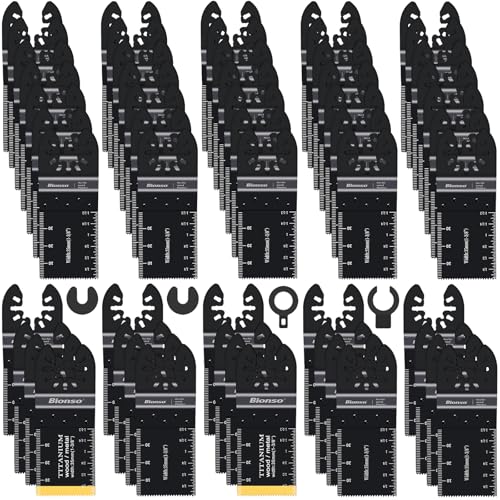
Plain high-carbon steel blades are inexpensive and suit soft wood. Bi-metal blades combine a flexible body with hard teeth and tend to last longer in wood containing nails. Carbide-grit blades cut abrasive materials but are slower and wear differently. Match the blade to the material, and replace it when it is dull rather than pushing harder.
Common uses
Flush cuts and trimming
Cutting a door casing to slide new flooring underneath, trimming a dowel level with a surface or removing the protruding end of a screw are classic jobs. A flush-cut blade lets you work with the blade lying against the surface.
Plunge cuts
Cutting an opening in drywall or paneling for an electrical box or a vent is easy with a plunge blade. Before cutting into walls, check what is behind them: wires, pipes and cables. Turn off power at the circuit breaker where wiring might be present, and use a detector where appropriate.
Cutting off fasteners
A suitable bi-metal blade can cut through nails and bolts in places where a hacksaw cannot reach. Expect sparks or heat; wear eye protection and keep flammable materials away.
Sanding in tight places
Detail sanding pads reach corners and edges a larger sander cannot. They are not meant for covering large areas.
Scraping and removing adhesive
Scraper blades can lift old adhesive, caulk or paint. If you suspect old paint or flooring materials contain lead or asbestos, do not sand or scrape them. Follow local guidance and consider testing and professional help.
Grout removal
A grout blade can remove old grout lines in tile. It creates fine, hazardous dust, so use a vacuum connection, eye protection and a suitable respirator.
When to use another tool
- Long straight cuts in boards: use a saw.
- Large sanding areas: use a sander made for the task.
- Cutting thick metal: use a tool designed for that job.
- Making many identical cuts: use a miter saw or similar.
Technique and safety
Let the tool do the work
Pressing hard slows the cut and overheats the blade. Use light, steady pressure, hold the tool firmly with both hands when possible and move the blade slightly as it cuts so that dust can clear.
Secure the work
Clamp small pieces. A blade can grab and move a loose piece. Keep your free hand clear of the cutting path.
Protective equipment
Wear safety glasses, hearing protection and a dust mask or respirator suited to the material. Gloves can help but should not be loose enough to catch. Tie back long hair and avoid loose clothing.
Mind the heat
Blades and cut surfaces can become hot. Let the blade cool before touching it, and be careful with plastics, which can melt and gum up the blade. Use a lower speed on plastics.
Check before you cut
Know what is behind the surface. Do not cut into walls where wiring or pipes may be hidden without checking and isolating. Unplug a corded tool or remove the battery before changing accessories.
Hand-arm vibration
Prolonged use of vibrating tools can contribute to discomfort or injury in the hands and arms. Take breaks, keep your hands warm, use dampened grips, and stop if you feel numbness or tingling.
Care and storage
- Brush dust from vents and the head after use.
- Inspect the mount and clamp for wear or cracks, and replace damaged parts.
- Store blades in a case so teeth do not get damaged.
- Store batteries as the manual directs, away from extreme heat or cold.
- Check cords for damage and do not use a tool with a damaged cord.
Common mistakes
- Buying the tool and ignoring the accessory system. Confirm the mount and the availability of blades before purchase.
- Choosing the wrong blade for the material. A wood blade will not last in metal, and a metal blade may not cut wood quickly.
- Forcing the cut. Pushing hard generates heat and wears the blade fast.
- Using a worn blade. A dull blade is slow and burns the work. Replace it.
- Ignoring vibration. A tool that feels harsh in the shop will feel worse after an hour.
- Cutting blind. Always check behind walls and floors.
- Skipping dust protection. Sanding and grout removal create dust that should not be breathed.
Who should choose what
| If you are… | Consider | Reason |
|---|---|---|
| A homeowner with occasional repairs | Cordless or corded mid-range tool with universal mount | Versatile; easy to find blades |
| A renovator doing flooring and trim | Corded or high-capacity cordless with variable speed | Sustained use and a range of blades |
| A plumber or electrician working in tight spaces | Compact cordless tool | Portability and reach |
| A woodworker finishing details | Variable speed model with quality flush-cut blades | Control and clean flush cuts |
| Someone sanding or scraping for hours | Corded tool with good vibration damping and a dust port | Endurance and cleaner air |
Buying checklist
- I know the jobs I will do first, such as flush cuts, plunge cuts or scraping.
- I have decided between corded and cordless.
- The tool has variable speed and a secure blade-change system.
- I have confirmed which accessories fit the mount and where to buy more.
- The grip feels comfortable and the weight is manageable.
- I have eye, ear and dust protection ready.
- I have a way to store blades safely.
When you are ready to compare options, consider browsing an oscillating multi tool, an oscillating blade set, a dust mask or respirator, safety glasses and work clamps.
FAQ
What is an oscillating multi tool used for?
It makes flush cuts, plunge cuts, sanding in corners, scraping adhesive, grout removal and cutting off fasteners, depending on the accessory fitted. It excels in tight spaces but is slow for large cuts.
Corded or cordless: which should I buy?
Cordless suits mobile, short tasks; corded suits long sanding or scraping. Choose by where and how long you work, and by whether you already own compatible batteries.
Do blades from one brand fit another brand’s tool?
Sometimes. Fit depends on the mounting interface. Check that the accessory states compatibility with your tool’s mount, and do not assume.
Can an oscillating tool cut metal?
Suitable bi-metal or carbide blades can cut nails, bolts and thin metal, slowly. It is not the right tool for thick metal. Wear eye protection and watch for heat and sparks.
How do I make a flush cut?
Use a flush-cut blade, lay it flat against the surface and use light pressure at moderate speed. Support the piece being removed so that it does not pinch or fall.
Why does my blade burn the wood?
A dull blade, too much pressure or too little movement are the usual causes. Replace the blade, ease pressure and move the tool slightly through the cut.
Is the vibration harmful?
Prolonged exposure to vibrating tools can cause discomfort or injury in hands and arms. Take breaks, choose a tool with good damping, and stop if you feel numbness or tingling.
Can I use it to remove old paint or tile?
It can scrape and cut grout, but old paint and some older flooring or tile adhesives may contain hazardous materials. If in doubt, test before disturbing them and follow local guidance.
Conclusion
An oscillating multi tool earns its place by reaching jobs that other tools cannot. Choose by comfort, variable speed, a secure blade-change system and, above all, accessory availability. Pair it with the right blades, protective gear and a steady technique, and it can handle a wide range of repairs and renovations.
Disclosure: As an Amazon Associate we earn from qualifying purchases. If you click a link and buy, we may earn a commission at no extra cost to you.
Related guides
More from Amazon
Programs that pair well with the guide above. Offers and eligibility are set by Amazon and may change.
A free business account with business pricing and bulk-buying tools for work, shop or home office.
Create a business accountFree shipping on eligible items, Prime Video and more. Eligible new members can start with a free trial.
Start a Prime free trialAudiobooks and podcasts to listen to on the go. Eligible new members can start with a free trial.
Try Audible freeAd-free music streaming. Eligible new subscribers can start with a free trial.
Try Music Unlimited freeAs an Amazon Associate we earn from qualifying purchases.
Write Your Review
No reviews yet. Be the first to share your experience!