Best Pin Nailers for Trim, Cabinets, and Delicate Projects
What's inside
- What Makes a Pin Nailer Different From a Brad Nailer
- Key Decision Criteria Before You Buy
- Pin Nailer Spec Comparison
- Decision Matrix: Which Pin Nailer Fits Your Situation
- Durability and Ownership Realities
- Which Model Should You Choose for Trim, Cabinets, and Delicate Work
- Setup Tips for Invisible Pin Holes
- Frequently Asked Questions
- What Makes a Pin Nailer Different From a Brad Nailer
- Key Decision Criteria Before You Buy
- Pin Nailer Spec Comparison
- Decision Matrix: Which Pin Nailer Fits Your Situation
- Durability and Ownership Realities
- Which Model Should You Choose for Trim, Cabinets, and Delicate Work
- Setup Tips for Invisible Pin Holes
- Frequently Asked Questions
As an Amazon Associate I earn from qualifying purchases. This post may contain affiliate links at no extra cost to you.
The best pin nailer for trim, cabinets, and delicate projects is a 23-gauge pneumatic model that drives 3/8-inch to 1-3/8-inch headless pins with a narrow nose and reliable jam clearing, because it holds small moldings without splitting and leaves a hole small enough to fill with putty alone. For cordless convenience, 18V or 12V battery pin nailers trade some nose visibility and weight for freedom from a hose.
As an Amazon Associate we earn from qualifying purchases at no extra cost to you.

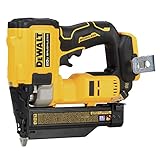

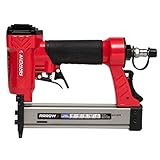
What Makes a Pin Nailer Different From a Brad Nailer
A pin nailer drives 23-gauge steel pins, roughly 0.64mm in diameter, with no T-head. A brad nailer drives thicker 18-gauge brads. That size difference matters for delicate work:
- Pins leave a pinhole about 0.6mm wide that often does not need putty on prefinished or dark woods. Brad holes are larger and always require filling.
- Pins have minimal holding power on their own. They are clamps that hold glue joints, small crown profiles, veneer edges, and fretwork while adhesive cures. Brads provide mechanical holding strength.
- Pins almost never split thin stock, even within 1/4 inch of an edge. Brads will split cherry, maple, and prefinished plywood if placed too close to the edge.
If you need to attach baseboard, door casing, or build cabinets without glue, you want an 18-gauge brad nailer or 16-gauge finish nailer. If you need to tack 1/4-inch trim, small crown returns, inlay, or hold miters tight for gluing, a pin nailer is the right tool.
Key Decision Criteria Before You Buy
1. Pin Length Range
Most 23-gauge pin nailers cover 3/8-inch to 1 inch, 1-3/16 inch, or 1-3/8 inch. Choose based on your material thickness:
- 3/8-inch to 3/4-inch range: sufficient for veneer, small appliques, and 1/4-inch overlay trim.
- 3/8-inch to 1-3/16-inch range: the versatile standard for 3/4-inch cabinet trim, crown, and light lattice.
- 3/8-inch to 1-3/8-inch range: useful if you pin through 3/4-inch stock into substrate, such as pinning a 3/4-inch crown build-up to a cabinet carcass.
Longer pins need higher air pressure and increase the risk of deflection in hardwoods. For hard maple or white oak at 1-3/8 inches, 90-100 PSI and a straight, firm nose placement are required to prevent bending.
2. Magazine Capacity and Reloading
23-gauge magazines typically hold 100 to 200 pins. A 130-pin magazine is standard and means more frequent reloads than a brad nailer, but pins are collated in strips of 10-20 that load quickly. Look for a magazine with a clear view window or open slot so you can see when you are low. Running a pin nailer dry can dent the work surface with the driver blade.
3. Nose Visibility and Size
This is the single biggest usability difference. A slim, angled nose with minimal tip housing lets you see exactly where the pin will exit. Wide safety tips designed for anti-marring obscure the point of contact, which is a problem when you are pinning a 1/2-inch wide trim return. Models like the Grex P650 series and Cadex CPB23.50 use a very narrow nose for this reason. Dual-trigger or double-trigger safeties also affect visibility and speed.
4. Jam Clearing and Dry-Fire Lockout
23-gauge pins jam less than 18-gauge brads, but when they do, it is almost always because of a too-long pin at low pressure, an angled shot into dense grain, or debris in the nose. Prioritize:
- Tool-free jam release or a nose that opens with one Allen screw rather than full disassembly.
- Dry-fire lockout that stops the tool when 5 to 10 pins remain. Without it, you will leave driver marks on finished trim.
- Rear exhaust that can be rotated away from the workpiece to avoid blowing dust into fresh glue.
Pin Nailer Spec Comparison
The table below compares common pneumatic and cordless pin nailers you will find in 2026. Weights are without hose or battery unless noted.
| Model | Gauge / Length | Magazine Capacity | Weight | Operating Pressure / Power | Key Nose / Jam Feature |
|---|---|---|---|---|---|
| Grex P650L | 23 ga / 3/8 – 1-3/8 in (10-35mm) | 100 pins | 2.05 lbs (0.93 kg) | 60-100 PSI | Ultra-narrow nose, self-lubricating, single-screw jam access |
| Metabo HPT NP35A | 23 ga / 3/8 – 1-3/8 in (10-35mm) | 100 pins | 2.20 lbs (1.0 kg) | 65-100 PSI | Dual-trigger, narrow nose, tool-free depth adjustment |
| Makita AF353 | 23 ga / 3/8 – 1-3/8 in (10-35mm) | 120 pins | 2.00 lbs (0.91 kg) | 65-100 PSI | Double trigger, slim contact tip, rear exhaust |
| BOSTITCH HP118K / BT23B | 23 ga / 1/2 – 1-3/16 in (12-30mm) | 130 pins | 2.10 lbs (0.95 kg) | 70-100 PSI | Low-profile nose, dial depth adjust, dry-fire lockout |
| Cadex CPB23.50 | 23 ga / 3/8 – 2 in (10-50mm) | 100 pins | 2.40 lbs (1.09 kg) | 60-100 PSI | Extra-long pin capability, narrow nose, magazine window |
| SENCO FinishPro 23LXP | 23 ga / 3/8 – 1-3/8 in (10-35mm) | 130 pins | 2.15 lbs (0.98 kg) | 70-105 PSI | Angled nose, visual reload indicator |
| Makita XTP02Z 18V LXT (Cordless) | 23 ga / 5/8 – 1-3/8 in (15-35mm) | 120 pins | 4.90 lbs with 3.0Ah battery | 18V battery | LED nose light, anti-dry-fire, tool-free jam clear |
Pneumatic models typically cost in the $180 to $330 range for the tool alone, with oil-free budget options around $120 to $170. Cordless 23-gauge models generally run $250 to $400 as a bare tool, plus batteries if you are not already on the platform. An air compressor capable of 90 PSI at 1-2 SCFM is required for pneumatic models, which adds cost if you do not already own one.
Decision Matrix: Which Pin Nailer Fits Your Situation
| Your Situation | Best Fit | Why |
|---|---|---|
| Building cabinets and pinning 3/4-inch hardwood trim in a shop with a compressor | Pneumatic 1-3/8-inch capacity, narrow nose (Grex P650L, Makita AF353, Metabo HPT NP35A) | Maximum length for through-pinning, best visibility for tight returns, lightest weight for all-day use |
| Installing prefinished crown, small base shoe, or delicate returns on site without a compressor | Cordless 23-gauge (Makita XTP02Z or similar Ryobi/Craftsman 18V/12V platform) | No hose to drag through a finished home, acceptable pins for touch-up work, heavier but portable |
| Budget-conscious hobbyist doing occasional craft, scroll work, or picture frames | Value pneumatic 1-3/16-inch model (BOSTITCH HP118K class) | Lower cost, sufficient length for thin stock, dry-fire lockout prevents surface damage while you learn |
| Need to pin through thick build-ups or 2-inch blocks for jigs and layering | Cadex CPB23.50 | Only 23-gauge option that reliably drives to 2 inches, useful for specialty trim layering |
| High-volume shop needing fastest reloads and dial-in depth | 130-capacity models (BOSTITCH, SENCO, Makita cordless) | Larger magazine reduces reload stops, dial depth control speeds switching between hardwoods and softwoods |
Durability and Ownership Realities
Product listings rarely explain what actually wears on a pin nailer. The most common failure points are not the housing but the consumables:
- Driver blade: The thin 23-gauge driver bends if you dry-fire repeatedly or fire into metal or knots. A bent driver causes misfires and curved pins. Replacement blades are available for most pro brands and take 10 to 15 minutes to swap with basic tools.
- Nose and contact tip: The nose bushing wears and can develop a groove that catches pins. Cleaning with a dry cotton swab and a drop of pneumatic tool oil after every 2,000 to 3,000 pins prevents buildup.
- O-rings and seals: On oiled pneumatic models, seals last longer if you add 2 to 3 drops of tool oil at the air inlet before each session and again after 2 hours of continuous use. Oil-free models need no oil but rely on an inline air filter and dry, clean air. Moisture from an un-drained compressor tank is the fastest way to pit cylinders and swell O-rings.
- Magazine spring: Weak feeding on the last 10 pins usually means a fatigued spring or a pin strip that has been deformed in storage. Store pin strips in their box, not loose in a drawer.
Common mistakes that cause jams and surface marks:
- Running pressure too low for the pin length. Use 70-80 PSI for 3/4-inch pins in pine, 85-95 PSI for 1-3/8-inch pins in maple. If pins do not set flush, increase pressure by 5 PSI increments, not depth.
- Reusing pins that fell on the floor. Dust and slight bends will jam the narrow channel.
- Angling the nose more than about 15 degrees off perpendicular. The pin follows the grain and will exit the side of thin trim or bend inside the wood.
- Not cleaning glue squeeze-out before pinning. Wet glue in the driver channel hardens and blocks the next pin.
Maintenance that extends life is simple: drain your compressor tank daily, blow out the nose with dry compressed air after each project, and keep pins in a sealed container. For cordless models, keep the battery contacts clean and run the tool through a full magazine every month if stored, which keeps the driver return spring from taking a set.
Which Model Should You Choose for Trim, Cabinets, and Delicate Work
Best Overall for Trim and Cabinets: Grex P650L or Metabo HPT NP35A Class
For cabinet trim, light crown, and hardwood edge banding, a pneumatic 1-3/8-inch narrow-nose pin nailer gives you the longest usable range with the least surface damage. The Grex designs are known for a very small nose that lets you place pins within 1/8 inch of a miter tip, while the Metabo HPT and Makita AF353 offer similar specs at a slightly lower market price and with easier parts availability.
Best Cordless for On-Site Trim: 18V Brushless Pin Nailer
If you work in finished homes and do not want to bring a compressor, a battery pin nailer saves setup time. Expect about 800 to 1,100 pins per 3.0Ah charge on hardwoods, more in softwoods, and a tool that is roughly twice the weight of a pneumatic. Nose visibility is slightly worse due to the larger head that houses the driving mechanism, so test placement on scrap first.
Best Value for Delicate and Craft Projects: BOSTITCH HP118K / BT23B Class
For picture frames, small boxes, and hobby fretwork where you rarely exceed 1 inch, a 1-3/16-inch pneumatic with dry-fire lockout covers 90 percent of needs at a lower cost. The dry-fire lockout is especially valuable for beginners who have not yet learned to watch pin count.
Setup Tips for Invisible Pin Holes
Pin holes are already small, but you can make them nearly invisible:
- Set depth so the pin head sits 1/64 inch below the surface. Too deep and the driver dimples the wood, too shallow and you will need to tap the pin with a nail set and risk denting.
- Pin with the grain direction, not across it. Cross-grain pins in prefinished birch ply can telegraph as a tiny raised line around the hole.
- For miters, pin at a slight opposing angle, about 10 degrees each side of center, to act as a clamp. One pin per joint is not enough for a crown return that will be caulked, use two spaced 3/8 inch apart.
- Use colored wax filler matched to the finish for prefinished cabinets, not wood filler that needs sanding. The pin hole is too small to sand without scuffing the factory finish.
Frequently Asked Questions
Can a pin nailer replace a brad nailer for baseboard?
No. Pins lack the shear strength to hold baseboard against a wall, especially if the wall is uneven. Use pins only to hold small shoe molding or to tack baseboard while construction adhesive sets. For primary attachment, use 16 or 18 gauge.
What compressor do I need for a pin nailer?
Any small hot-dog or pancake compressor that delivers 90 PSI is sufficient. Pin nailers consume very little air, about 0.02 to 0.05 SCFM per shot, so even a 1-gallon compressor with a 0.7 CFM pump keeps up. The more important factor is a regulator that holds steady pressure and a moisture trap or drained tank.
Why are my 1-3/8-inch pins bending?
Three common causes: pressure too low, firing into very hard wood at an angle, or using low-quality pins with inconsistent diameter. Increase pressure to 90-95 PSI, hold the nose firmly perpendicular, and try a different brand of pins. Driving through glue lines also deflects long pins.
Do cordless pin nailers perform as well as pneumatic?
For pins up to 1 inch in softwood and MDF, performance is comparable. In hard maple, white oak, or when driving 1-3/8-inch pins, pneumatic models set more consistently with fewer incomplete drives. Cordless models are chosen for portability, not maximum driving power.
