Best Value Portable Jump Starter for Emergency Garage Use
What's inside
As an Amazon Associate I earn from qualifying purchases. This post may contain affiliate links at no extra cost to you.
What Makes a Good-Value Jump Starter?
For emergency garage use, the best value is not the unit with the highest advertised peak-amperage number. It is a jump starter that starts your usual vehicles reliably, holds a charge between emergencies, and has clamps and cables that are long enough to use without balancing the box on a fender.
Most gasoline cars and light trucks need far less than the headline rating suggests. A healthy four-cylinder may start with a 500- to 800-amp portable pack, while a larger V6, V8, diesel, or vehicle with a deeply discharged battery benefits from a 1,000- to 2,000-amp unit. Peak amperage is a short burst rating, not a standardized measure of starting performance. Compare battery capacity, cable quality, warranty, and cold-weather instructions as well.
As an Amazon Associate we earn from qualifying purchases at no extra cost to you.

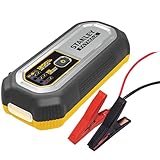
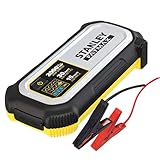

For a typical household garage, a 1,000-amp portable car jump starter is usually the value sweet spot. It normally costs about $50 to $100, depending on brand and sales. Cheaper 600- to 800-amp packs can be perfectly adequate for a small gasoline car, especially when the battery is only weak rather than completely dead.
Portable Jump Starter Value Comparison
| Type | Typical price | Best use | Main compromise |
|---|---|---|---|
| 600–800 amps | $35–$70 | Small cars, occasional garage backup | Less margin for cold weather, larger engines, or severely discharged batteries |
| 1,000–1,500 amps | $50–$110 | Most cars, crossovers, and light trucks | More expensive and often physically larger |
| 1,500–2,000 amps | $80–$160 | Large engines, diesels, frequent roadside use | Extra rating may not help if the clamps or battery are poor |
| Heavy-duty lithium or commercial pack | $150–$300+ | Multiple vehicles, shop use, repeated starts | Cost, weight, and more involved maintenance |
The Features Worth Paying For
Choose a lithium-ion pack with a real battery percentage display rather than four vague indicator lights. A display that shows 75%, 50%, and so on makes maintenance easier. The unit should have reverse-polarity protection, short-circuit protection, and an audible warning when the clamps are connected incorrectly. These safeguards do not make incorrect connections harmless, but they reduce the chance of damaging a vehicle or the jump starter.
Look for cable leads of at least 8 to 12 inches from the pack, with insulated clamps and reasonably thick wire. Very short, thin leads make it difficult to reach a battery mounted behind a headlight or in a trunk. Some newer vehicles have remote positive terminals under the hood; check your owner’s manual before assuming the battery itself is accessible.
A built-in flashlight is useful in a dark garage, but USB charging ports and an air compressor should not drive the purchase. A compressor-equipped pack is convenient for topping up a tire, yet it is heavier and usually costs more. If you already own a compact inflator, buying a simpler jump starter is better value.
For a diesel pickup or a vehicle with a large engine, shop among 1,500-amp diesel jump starters and up. Even then, verify the manufacturer’s engine-size guidance. A big rating cannot compensate for a frozen, damaged, or internally shorted battery.
Brand Value and Buying Trade-Offs
Budget brands often offer impressive specifications for $40 to $60, and that can be a sensible choice for a small gasoline car used in a mild climate. The risk is inconsistent quality control, a weaker warranty, or a battery that loses capacity after sitting for several months. Reviews are most useful when they mention how the pack performed after storage, not just whether it started a car immediately after unboxing.
Mid-priced brands generally provide better instructions, more consistent clamps, and easier warranty support. Paying $20 or $30 more is justified when the jump starter will remain in a work truck, support multiple family vehicles, or be used during winter. Premium shop-oriented packs make more sense for repeated starts or professional service work than for a single household emergency.
A high price is not automatically evidence of longer shelf life. Lithium packs slowly discharge even when unused, and heat accelerates aging. Avoid leaving one in a hot vehicle all summer. For garage storage, keep it dry and cool, then check its charge every two to three months. Recharge it before storage if the display falls below about 50%.
How to Use a Jump Starter Safely
Turn off the vehicle, accessories, and ignition before connecting the pack. Clamp red to the battery’s positive terminal and black to the negative terminal or a clean, unpainted engine ground if the vehicle manual specifies that method. Keep the clamps separated, start the vehicle within the time limit in the instructions, and remove the clamps in reverse order after the engine is running.
If it does not start after two or three attempts of about five seconds each, stop and investigate. Repeated cranking can overheat the starter and drain the jump pack. Common failure modes include corroded terminals, a battery that is too far gone, incorrect connection, a pack below its minimum charge, and a vehicle problem unrelated to the battery.
Some packs have a manual “boost” or override mode for batteries the electronics cannot detect. Use it only as directed. Override mode may disable reverse-polarity protection, so double-check every connection before activating it.
When to Buy and What to Choose
Prices commonly drop before winter, during major holiday sales, and around spring automotive promotions. A 1,000-amp pack at $60 to $80 is generally a stronger value than a heavily discounted 2,000-amp pack from an unknown brand. Check the return policy and warranty length before buying; battery packs are a poor bargain if support lasts only a few months.
For a second household vehicle, a compact compact 800-amp car jump starter is fine when the vehicle has a small gasoline engine and is stored in a garage. For a truck, cold climate, or older battery, spend more on a 1,000- to 1,500-amp pack with a clear charge display and sturdy clamps. That is where the additional cost buys useful starting margin rather than just a larger number on the box.
A Practical Buying Rule
Match the pack to the largest engine you actually own, then buy one size above the minimum if winter temperatures regularly fall below freezing. Prioritize safety circuitry, charge reporting, clamp quality, and warranty over USB extras. The cheapest suitable pack is fine for occasional garage use, but a dependable midrange unit is usually the better value when an emergency could leave you waiting for help.