
What's inside
- Top Picks at a Glance
- Quick Comparison of the Washers
- 1. Westinghouse ePX3100: Best Overall for Mixed Jobs
- 2. Westinghouse ePX3100s: Best Value for Car Washing
- 3. Greenworks 2200 PSI Electric Pressure Washer: Best Gentle Budget Option
- 4. Sun Joe SPX3000: Best Corded Step Up
- 5. Westinghouse WPX3000e: Best Electric for Bigger Jobs
- 6. Simpson Clean Machine 3200 PSI: Best Gas Pick for Driveways and Fences
- 7. DeWalt DXPW3300: Best Gas Pick for Frequent Heavy Use
- Also Consider
- What You Can and Cannot Pressure Wash: Surface Questions Answered
- How to Pick Safe Settings for Any Surface
- More Surfaces People Ask About
- Safety Basics Before You Start
- How We Chose
- Buying Guide
- Common Mistakes
- Frequently Asked Questions
- Which One Should You Buy?
- Sources
As an Amazon Associate I earn from qualifying purchases. This post may contain affiliate links at no extra cost to you.
You can pressure wash a car, a vinyl-sided house, a deck and a lawn mower deck, but only with the right pressure, nozzle and distance, and some things (rugs, windows, stucco, many composite boards) call for extra caution or a different tool. A mid-range electric washer such as the Westinghouse ePX3100s, which the listing describes with a foam cannon and turbo nozzle, is the easiest all-rounder for cars and light jobs, while a gas model such as the Simpson Clean Machine 3200 PSI suits driveways and fences. This guide answers the questions people actually ask, one surface at a time, with a direct answer first and a safer-settings explanation after it.
We did not personally use these products. This guide is research-based and draws on manufacturer listings, decking and siding care guidance and general pressure-washing practice. There is no universal safe setting. Sources disagree on exact PSI limits, so the numbers here are cautious starting ranges, not guarantees. Always check your surface maker’s current care guide, begin with the widest tip and the lowest pressure, and try a hidden spot first.
As an Amazon Associate we earn from qualifying purchases at no extra cost to you.


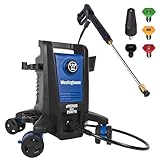
Our Top Picks
 Westinghouse ePX3500 Electric Pressure Washer2500 Max PSI13.5 x 14 x 16.5 inches19 poundsCheck on Amazon


Top Picks at a Glance
- Best Overall for Mixed Jobs: Westinghouse ePX3100 Electric Pressure Washer, 2300 max PSI and 1.76 max GPM, per the listing.
- Best Value for Cars: Westinghouse ePX3100s, 2100 max PSI with a foam cannon and turbo nozzle, per the listing.
- Best Budget Gentle Option: Greenworks 2200 PSI (1.2 GPM max) Electric Pressure Washer.
- Best Corded Step Up: Sun Joe SPX3000, 2500 max PSI, listed as 2030 PSI PWMA rated.
- Best Electric for Bigger Jobs: Westinghouse WPX3000e, 3000 max PSI with an induction motor.
- Best Gas for Driveways and Fences: Simpson Clean Machine 3200 PSI, 2.5 GPM.
- Best Gas for Heavy Use: DeWalt DXPW3300, 3300 PSI at 2.4 GPM.
Quick Comparison of the Washers
| Product | Best for | Key specs from the listing | Watch for | Price tier |
|---|---|---|---|---|
| Greenworks 2200 PSI Electric | Cars, patio furniture, light cleaning | 2200 PSI, 1.2 GPM max | Low flow means slower on big areas | Mid-range |
| Westinghouse ePX3100s | Car washing, bikes, fences | 2100 max PSI, 1.76 max GPM, foam cannon, turbo nozzle | Turbo nozzle is too harsh for delicate surfaces | Budget |
| Westinghouse ePX3100 | All-round homeowner use | 2300 max PSI, 1.76 max GPM, anti-tipping, onboard soap tank | Corded, so reach depends on the cord and hose | Budget |
| Sun Joe SPX3000 | Decks, patios, siding with care | 2500 max PSI (2030 PWMA rated) | Compare max PSI and rated PSI carefully | Mid-range |
| Westinghouse WPX3000e | Larger electric jobs | 3000 max PSI, 1.76 max GPM, induction motor | High pressure is easy to misuse on soft materials | Premium |
| Simpson Clean Machine 3200 | Driveways, fences, concrete | 3200 PSI, 2.5 GPM, turbo nozzle, axial cam pump | Gas engine needs fuel and upkeep | Mid-range |
| DeWalt DXPW3300 | Frequent heavy cleaning | 3300 PSI, 2.4 GPM, residential model | Too strong for many home surfaces without care | Premium |
1. Westinghouse ePX3100: Best Overall for Mixed Jobs
- Max pressure: 2300 PSI.
- Max flow: 1.76 GPM.
- Features: anti-tipping design and onboard soap tank, per the listing.
- Power: electric, so no fuel or engine maintenance.
Best for: households that want one machine for car washing, patio furniture, fence panels and a siding rinse. Skip if: you mainly clean large concrete areas, where a higher-flow gas unit saves time.
A lower-pressure electric washer is the practical choice for most of the questions in this article, because most of the things people ask about (cars, siding, windows, decking) are surfaces where less pressure is safer. Pressure is only half the story. Flow in gallons per minute (GPM) decides how fast you rinse, and the nozzle angle decides how hard the water hits. A 40 degree fan tip from a larger distance can be gentler than a 25 degree tip on the same machine.
Pros: approachable pressure; soap tank; no fuel. Cons: corded; modest flow; max PSI is a ceiling, not a working number.
2. Westinghouse ePX3100s: Best Value for Car Washing
- Max pressure: 2100 PSI.
- Max flow: 1.76 GPM.
- Included: foam cannon and turbo nozzle, per the listing.
Best for: washing a car, bike or boat with foam. Skip if: you intend to use the turbo nozzle on paint or soft surfaces; it concentrates the stream.
Use a wide fan tip or the foam cannon on cars, and stay away from the turbo nozzle. A car’s paint, trim, rubber seals and loose badges are not designed for a concentrated jet. Keep the wand back from the paint, avoid directing spray into door seals, mirrors and panel gaps, and stop spraying peeling or chipped paint, where water can lift the edges.
Pros: foam cannon included; low price; easy to store. Cons: turbo nozzle is overkill for most cleaning; small tank limits long sessions.
3. Greenworks 2200 PSI Electric Pressure Washer: Best Gentle Budget Option
- Pressure: 2200 PSI.
- Flow: 1.2 GPM max.
Best for: lighter jobs such as patio chairs, grills, bikes and a lawn mower deck. Skip if: you need to clean a big driveway quickly.
Low flow means the water moves less dirt per second, but it also means gentler cleaning. For a lawn mower, that is useful, because engine areas have electrical components you do not want blasted.
Pros: modest and manageable; light; good for small tasks. Cons: slow on big areas; limited headroom for stubborn stains.
4. Sun Joe SPX3000: Best Corded Step Up
- Max pressure: 2500 PSI, listed as 2030 PSI PWMA rated.
- Type: electric corded power washer.
Best for: decks, patios, siding and fence cleaning where you want extra pressure in reserve. Skip if: you want the highest flow rate; electric models in this class have modest GPM.
The two PSI numbers on the listing are worth understanding. Max PSI is a peak figure, and PWMA rated PSI is a standardized working figure that is lower. When comparing washers, compare rated numbers where they are given, and do not assume the biggest number is the best number.
Pros: a rated spec is given; solid mid-power; electric simplicity. Cons: cord limits reach; flow is moderate.
5. Westinghouse WPX3000e: Best Electric for Bigger Jobs
- Max pressure: 3000 PSI.
- Max flow: 1.76 GPM.
- Motor: induction, with an onboard soap tank, per the listing.
Best for: people who want gas-level pressure without an engine. Skip if: your jobs are mostly delicate surfaces.
More available pressure is not more useful pressure for most home chores. Used on soft siding, wood or composite decking at close range, it can damage the material. Used on concrete with a wide tip or a surface cleaner, it saves time.
Pros: high pressure from an electric unit; induction motor; soap tank. Cons: easy to damage soft surfaces; premium price.
6. Simpson Clean Machine 3200 PSI: Best Gas Pick for Driveways and Fences
- Pressure: 3200 PSI.
- Flow: 2.5 GPM.
- Pump: axial cam, with a turbo nozzle, per the listing.
Best for: concrete, fences and heavy mud or algae. Skip if: you mostly wash cars, siding and windows.
A gas engine gives you cord-free reach and more flow, but needs fuel, oil and winter storage. For the many surfaces in this guide that need gentle handling, a gas machine is overkill unless you use a wide tip and stay back. Keep gas machines outdoors only, never run them in a garage or enclosed space because of carbon monoxide.
Pros: strong flow; handles tough jobs; no cord. Cons: maintenance; noise; too strong for many surfaces.
7. DeWalt DXPW3300: Best Gas Pick for Frequent Heavy Use
- Pressure: 3300 PSI.
- Flow: 2.4 GPM.
- Marketing: residential gas washer for homeowners, per the listing.
Best for: people who clean big areas often. Skip if: you only wash a car or a deck twice a year.
Pros: brand reputation for tools; strong spec; suited to large jobs. Cons: premium price; too strong for delicate work; needs engine care.
Also Consider
- Westinghouse PWSC12 12 inch Surface Cleaner: an attachment for flat concrete, listed at 3000 max PSI; gives even results and reduces splatter.
- Chemical Guys Mr. Pink Car Wash Soap: a foaming soap for foam cannons; use a soap made for the surface, not household detergent.
- Tool Daily Foam Cannon with quick connector: a separate cannon for washers that lack one.
- Krud Kutter Vehicle and Boat Pressure Washer Concentrate: a vehicle and boat cleaner for pressure washer or manual use.
What You Can and Cannot Pressure Wash: Surface Questions Answered
| Surface | Short answer | Starting approach |
|---|---|---|
| Car | Yes, with care | Wide fan tip or foam cannon, stay back, avoid seals and damaged paint |
| Rug | Only outdoor rugs, cautiously | Lowest pressure, wide tip, check the care label |
| Lawn mower engine | Not directly | Use a garden hose and brush; avoid spraying the engine and electrics |
| Stucco | Risky | Low pressure, wide tip, or a soft wash; ask a pro for damaged stucco |
| Trex and composite decking | Depends on the brand and line | Check the maker’s care guide; start low with a fan tip |
| Windows | Rinse only | Lowest pressure from a distance, or use a hose |
| Vinyl siding | Yes, gently | Low pressure, downward angle, wide tip |
Can you pressure wash a car?
Yes, if you use low pressure, a wide fan tip or foam cannon and keep a safe distance. Avoid the turbo nozzle, keep spray away from door seals, trim and chipped paint, and rinse soap before it dries. Many car-care guides prefer a foam cannon for the soap stage and a hand wash mitt for the contact stage.
Can you wash a car with a pressure washer?
Yes. Use a pressure washer to rinse and to apply foam, then wash by hand with a mitt, rinse again and dry. A washer that delivers about 1.2 to 2 GPM at moderate pressure is the usual choice for cars, and the wand should stay well back from the paint.
Can you pressure wash a rug?
Only if the rug is outdoor-rated, and then only on low pressure with a wide tip. Pressure can drive dirt deeper into the pile, fray edges and damage backings. Wool, silk and antique rugs should not be pressure washed. Check the care label, or send valuable rugs to a cleaner.
Can you pressure wash a lawn mower engine? How do you pressure wash a lawn mower?
Avoid spraying the engine directly. Water can be forced into the air filter, spark plug area, carburettor and wiring. Instead, disconnect the spark plug as the owner’s manual directs, tip the mower the way the manual says, and clean the underside deck with a garden hose and a scraper. A low-pressure washer on the deck underside is fine with a wide tip; keep it off the engine and let the mower dry before starting. Follow your mower’s manual.
Can you pressure wash stucco?
It is risky. Stucco can crack or lose its surface under a narrow, high-pressure stream, and water can get behind it. Some guides say to keep stucco and similar finishes under about 500 PSI or use a soft wash, which uses low pressure and a cleaning solution. Check a hidden area first, and have a professional look at stucco that is cracked or flaking.
Can you pressure wash Trex decking?
Possibly, but sources disagree on the limit. Secondary guides quote anything from about 1,200 PSI to 3,100 PSI for Trex depending on the product line, with a fan tip held 8 or more inches away, while Trex says some early-generation decking should not be pressure washed. Other brands set their own limits; one maker recommends rinsing only. Look up the current care guide for your exact decking line and begin with the lowest pressure and a wide tip.
Can you pressure wash windows?
Only as a rinse. High pressure can break seals, push water behind frames and crack old glass. Use low pressure from a distance, or clean windows with a hose and soft brush or a dedicated window cleaner.
Can you pressure wash vinyl siding? How do you pressure wash vinyl siding?
Yes, with care. Work from the bottom up when applying detergent so it does not streak, and from the top down when rinsing. Hold the wand at a slight downward angle so water does not get behind the panels, use a wide fan tip and keep the washer on its low setting. Siding makers generally warn against high pressure and a close nozzle; guides vary on the number, with some quoting under 500 PSI for soft washing and others up to about 1,300 to 2,000 PSI for sturdy panels. Stay on the low side.
How to Pick Safe Settings for Any Surface
- Start with the widest tip (40 degrees) and the lowest pressure setting.
- Begin at a distance of 2 feet or more and work closer only if needed.
- Try a hidden spot first and let it dry before judging.
- Keep the wand moving and overlap passes by a third.
- Angle downward and never spray upward under lap siding or flashing.
- Stop if you see lifted paint, gouged wood or water entering a seam.
More Surfaces People Ask About
Can you pressure wash wood decks and fences?
Yes, but wood is soft and easy to scar. Use a wide fan tip, work with the grain, keep the wand moving and stay back until you see how the board responds. Raised fibres and lighter “tiger stripes” show you are too close or too strong. Let the wood dry fully before staining or sealing, and follow the stain maker’s drying guidance.
Can you pressure wash brick and pavers?
Often yes, but mortar joints and the sand between pavers can wash out. Use a wide tip, keep the nozzle moving and re-sand paver joints afterward if the sand has been blown away. Old or soft brick can spall under strong pressure, so start low.
Can you pressure wash a roof?
Most roofing makers advise against it. Pressure can strip granules from asphalt shingles and force water under tiles. Roof moss and algae are usually handled by a low-pressure soft wash or a labelled roof cleaner, and the work is risky on a ladder, so consider a professional.
Can you pressure wash electrical equipment, outlets or light fittings?
Avoid spraying water at outlets, meters, light fixtures and air conditioning units. Water entering electrical parts is a shock and damage risk. Cover outdoor outlets and keep the spray well away from them.
Can you pressure wash yourself or other people and pets?
No. A pressure washer jet can cut skin and cause serious injury even at modest pressure, so never point it at people or animals, and never use it to clean your shoes while wearing them. Wear eye protection and closed footwear, and keep children and pets away from the work area.
Safety Basics Before You Start
- Read the manual and use the trigger lock whenever you set the wand down.
- Use only extension cords that the maker approves, and plug electric washers into a GFCI outlet, as the manual directs.
- Run gas machines outdoors only, well away from windows and doors, because the exhaust contains carbon monoxide.
- Expect recoil when you squeeze the trigger and keep a firm stance.
- Do not use a pressure washer from a ladder; the recoil can throw you off balance.
- Rinse soap thoroughly and keep runoff away from storm drains, lawns and garden beds where possible.
How We Chose
This guide is research-based. We compared the specs stated in listings for the washers named, and we read general surface-care guidance from decking and siding makers and cleaning guides. We did not personally use these products and do not claim lab figures. Because secondary sources conflict on PSI limits, we present ranges and tell you to confirm with the maker of your surface. Where a spec is not stated, it is not listed.
Buying Guide
PSI is only part of it
Pressure (PSI) measures force; flow (GPM) measures volume. Multiplying them gives cleaning units, which is a common way to compare machines. A 1.2 GPM washer at 2200 PSI cleans more slowly than a 2.5 GPM washer at 3200 PSI, but it is also less likely to damage delicate surfaces.
Match pressure to your most delicate surface
If most of your jobs are cars, siding and furniture, choose an electric machine in the 1,500 to 2,300 PSI class. If most of your jobs are concrete and fences, a 3,000 PSI gas or high-end electric machine fits.
Check the nozzles
You need at least a wide fan tip and a soap nozzle. A turbo nozzle is useful on concrete but not on paint or wood. A surface cleaner attachment gives the most even flat-area finish.
Consider noise, storage and upkeep
Electric machines are quieter and need no fuel, while gas machines need oil, fuel stabilizer and winterizing. Check the cord and hose length before buying.
Use the right soap
Choose soaps made for the surface: car soap for vehicles, deck cleaner for decking, house wash for siding. Household detergents and bleach can damage finishes and plants.
Common Mistakes
- Using the turbo or zero degree tip on anything but hard surfaces.
- Holding the nozzle too close to wood, composite and siding.
- Spraying upward under siding laps.
- Assuming the maximum PSI on the box is a safe working number.
- Skipping the manual on a lawn mower and soaking the engine.
Frequently Asked Questions
What PSI is safe for most home surfaces?
There is no single safe number. Delicate surfaces such as windows, stucco and vinyl siding are generally washed at low pressure with a wide tip, while concrete tolerates much more. Check the maker’s guidance for each surface.
Is a higher PSI always better?
No. Higher PSI cleans faster on hard surfaces but increases the risk of gouging wood, cracking siding and forcing water into seams.
Can I pressure wash painted surfaces?
Be careful. Water can lift loose or chipped paint, and old paint may contain lead, so if your home is old and the paint is flaking, ask a professional before washing.
Should I use soap with a pressure washer?
Yes for greasy or algae-covered surfaces, using soaps designed for pressure washers and for your surface, and rinse before it dries.
Can I use hot water in a pressure washer?
Most consumer washers are for cold water only. Check the manual, because hot water can damage seals and pumps.
Is electric or gas better for cars?
Electric is usually better. It is quieter, easier to control and has gentler pressure than a large gas unit.
Where can I find the maker’s PSI limit for my surface?
Look in the care and maintenance section of your decking, siding or window maker’s website. If you cannot find a figure, use the lowest pressure that cleans.
Which One Should You Buy?
For cars, siding and light cleaning, the Westinghouse ePX3100s or ePX3100 gives the most control for the least money. If you want a bit more reserve for decks and fences, step up to the Sun Joe SPX3000. For driveways and concrete, the Simpson Clean Machine 3200 PSI is the practical gas option, and the DeWalt DXPW3300 suits frequent heavy use. Pair any of them with a wide fan tip and follow the surface maker’s advice.
Sources
- Manufacturer listings for Westinghouse, Greenworks, Sun Joe, Simpson and DeWalt pressure washers
- Trex and TimberTech composite decking care guidance
- Vinyl siding and stucco cleaning guidance from siding makers and trade guides
- Pressure washing PSI guides from cleaning-industry publications
Last updated: October 2026
Related guides
More from Amazon
Programs that pair well with the guide above. Offers and eligibility are set by Amazon and may change.
A free business account with business pricing and bulk-buying tools for work, shop or home office.
Create a business accountFree shipping on eligible items, Prime Video and more. Eligible new members can start with a free trial.
Start a Prime free trialAudiobooks and podcasts to listen to on the go. Eligible new members can start with a free trial.
Try Audible freeAd-free music streaming. Eligible new subscribers can start with a free trial.
Try Music Unlimited freeAs an Amazon Associate we earn from qualifying purchases.
Write Your Review
No reviews yet. Be the first to share your experience!