Tool Gifts That Actually Get Used: A Buyer’s Guide for Non-Tool-People
Our Top Picks




What's inside
As an Amazon Associate I earn from qualifying purchases. This post may contain affiliate links at no extra cost to you.
Buying a power tool for someone who owns tools is risky — they have opinions, and they are usually locked into a battery platform. The good news is that the best tool gifts are not tools at all.
Look at it from their side. Anyone who uses tools regularly has already bought the tools they wanted, in the brand they chose, and every cordless purchase from here is constrained by the charger on their shelf. What they have not bought is the boring stuff that wears out, the safety gear that never feels urgent enough to order, and the storage that would make the whole bench work better. That is your opening, and it is a wide one.
As an Amazon Associate we earn from qualifying purchases at no extra cost to you.




Two questions that decide the whole gift
Before price, ask two things about whatever you are considering.
Does it have to be compatible with something they already own? That single question rules out cordless tools, spare batteries, chargers, modular boxes that need to stack with theirs, and even sanding discs, which have to match a disc size and hole pattern.
Would they ever want a second one? Nobody needs two stud finders or two levels; the spare just occupies a drawer. But no one has ever had too many driver bits, too much abrasive or too many clamps. Aim at that second group and you can barely go wrong.
Under $30: consumables always win
Impact-rated driver bits, quality drill bit sets, sanding disc packs, saw blades, pencils and markers, a good tape measure. Nobody buys themselves enough of these and everybody uses them constantly.
What separates a good pick from a bad one here is spec, not brand. On driver bits, look for the words impact rated — those have a torsion zone that flexes under an impact driver instead of snapping, and a broken tip welded into a screw head is a genuinely bad afternoon. On drill bits, geometry beats coating: split points start without wandering, brad points cut clean holes in wood, cobalt is what you want if they drill steel. A set that covers useful sizes in small increments beats a big case padded with duplicates.
Abrasives and blades are where compatibility bites even down here, so check the disc size and hole pattern of their sander, and the diameter and arbor of their saw. If you cannot check either, buy bits, pencils, a chalk line or a tape. On tapes, look for a wide blade, printing on both edges and a lock that does not creep — that is the difference between a tape that lives on a belt and one that lives in a drawer.
This band suits everyone, from the one-drill household to the professional with a van. Its only weakness is that a box of bits does not feel like an occasion, which you fix by stacking three or four small things together rather than buying one.
Bit sets and consumables
Impossible to get wrong, always needed, no compatibility risk. The reliable answer under $30.
$30–75: comfort and safety
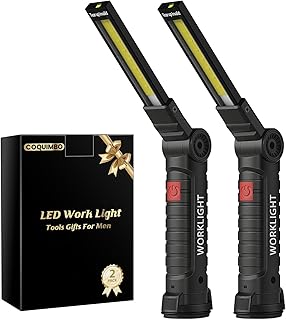
Good knee pads, quality safety glasses, a proper respirator, work gloves, a headlamp, anti-fatigue matting. People rarely buy these for themselves and appreciate them immediately.
Safety glasses should carry an ANSI Z87.1 marking, and an anti-fog coating decides whether they get worn or pushed up onto a forehead. Buy two or three pairs, because they get scratched and lost. If they wear prescription glasses, get the over-the-glasses style rather than a slim wraparound.
A half-mask respirator with replaceable cartridges beats a box of disposable masks, with one caveat: it only works if it seals, and facial hair breaks the seal, so include a gift receipt. Knee pads want a hard outer cap and a strap layout that stays put — anything that slides down the shin gets abandoned, however thick the padding. Hearing protection is the most under-owned item in most workshops, and muffs get worn more than plugs simply because they go on in one motion.
Skip gloves unless you know their size, and be careful with anything that touches the face or hands of a professional who has already formed opinions. For them, go back to consumables.
Safety and comfort gear
Nobody upgrades their own knee pads. Everybody is glad when someone else does.
$75–150: storage and organisation
A modular tool box, a rolling organiser, a good tool bag, a magnetic parts tray set, a clamp rack. Storage is universally useful and platform-agnostic.
One warning: modular storage has its own version of battery lock-in. Boxes from different systems do not latch together, so a great box from the wrong family becomes a lonely box. If you cannot confirm what they own, buy something that stands alone — an open-top bag with a rigid base, small-parts organisers, magnetic trays, or clamps.
Judge storage on the parts that fail: latches, hinges, lid seals, and on rolling units the wheels and telescoping handle. Removable bins with individual lids beat fixed dividers, because one bin can travel to the job instead of the whole case. Clamps are the safest capital gift there is — nobody owns enough, and two long ones that hold square are worth more than a bag of small ones.
Skip this band for anyone mid-move, anyone working out of a shared or very small space, and anyone already committed to a wall-mounted system. For them, another box is just clutter.
Tool storage and organisers
Check which modular system they already own if you go this route — boxes should stack with what they have.
$150+: only if you know the platform
If you are buying a cordless tool, you must know their battery platform. A bare tool on the right platform is a fantastic gift; the same tool on the wrong platform is a returned item.
Safe alternatives at this price: a good miter saw blade, a quality clamp set, a track saw guide rail, or a gift card so they buy the right thing.
If you do know the platform, buy the bare tool rather than another kit — they already have batteries and a charger, and paying twice for both is how people overspend here. Check what capacity packs they actually own, because a saw or a blower running on nothing but small compact batteries is a frustrating present. Brushless is worth the premium on anything that runs for long stretches. And note that promo-season kits often ship with the smallest packs in the lineup: the tools are identical, the runtime is not, so compare amp-hour ratings before you compare prices.
Two footnotes on the alternatives. Guide rails are not universal, so check the saw first. And a gift card for the store where they already shop beats one with the better headline offer, because the goal is a card that gets spent.
What not to buy
Everything below fails for the same underlying reason: it hands the recipient a job, whether that is a return, a compatibility problem, or a drawer to find space in.
- ✘ A cordless tool without knowing their battery platform
- ✘ 200-piece bargain sets full of filler
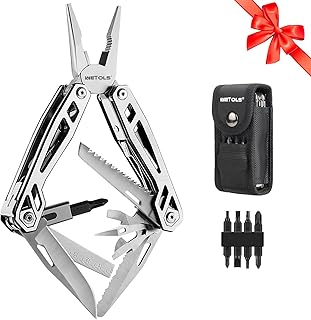
- ✘ Novelty tools and gimmick multi-tools
- ✘ Anything that duplicates a tool they clearly already own
- ✘ Very cheap versions of tools they use professionally
The bargain mega-set fools the most people. The piece count does the persuading, but the sockets are soft and the bits are not impact rated, and anyone who uses tools can tell inside thirty seconds. A dozen good bits beat two hundred bad ones.
How to find out their platform without spoiling it
You do not need to ask a direct question. Ten seconds of looking usually settles it.
- ✔ Look at the colour of the batteries in their garage — yellow DeWalt, red Milwaukee, teal Makita, green Ryobi
- ✔ Ask what charger they use
- ✔ Ask a family member who has borrowed a tool
- ✔ When in doubt, buy consumables or storage
If all four draw a blank, treat that as your answer rather than a setback. The first three price bands are built to work with no inside knowledge at all.
Who each option suits
- Renter or apartment dweller: hand tools, a compact bag, consumables. Skip anything that assumes a garage.
- First-year homeowner: the widest open field — safety gear, storage, practical basics, and a combo kit if nobody has bought one yet.
- Weekend woodworker: clamps, abrasives, blades, marking and measuring tools. Skip general-purpose items; they have them.
- Working tradesperson: consumables in quantity, plus comfort items they would never buy for themselves. Skip tools unless they named one.
- Someone who has everything: a gift card, or the good version of something cheap they use daily.
FAQ
Is a gift card a cop-out? For tools, no. Platform lock-in makes it genuinely the sensible option, and they end up with the right thing on the right battery.
Best gift under $20? A quality tape measure or an impact bit set. Both get used weekly and neither can clash with anything they own.
Best gift for a beginner? A drill and impact driver combo kit — they have no platform to conflict with yet. Pick the brand on the strength of its wider lineup, since that is the family they will keep buying into.
They said they do not want anything. Now what? Buy what gets used up. Abrasives, bits, blades and a spare pair of safety glasses do not read as clutter, so they slip past the “I do not need anything” reflex entirely.
The pattern behind all of it is simple: spend on the things that wear out, protect them, or hold what they already own, and leave the cordless decisions to the person holding the charger. Do that and the gift gets used inside a week, which is the only measure that counts.
See tool gift ideas →