Prime Day Tool Deals: What Is Worth Buying and What Is Noise
Our Top Picks
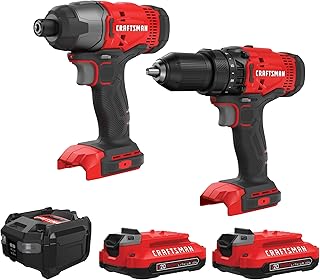
 DEWALT 20V MAX Cordless Drill and Impact DriverOne Size15.06 x 6.4 x 9.88 inches3.6 PoundsCheck on Amazon


What's inside
As an Amazon Associate I earn from qualifying purchases. This post may contain affiliate links at no extra cost to you.
Prime Day is a genuinely good moment to buy some tool categories and a mediocre one for others. Knowing which is which stops you buying a tool in July that will be 20% cheaper in November.
That is most of the strategy, but it needs unpacking, because the event is built to blur the line. Prime Day tool deals arrive as one undifferentiated wall of discount badges, and the badge on a blade pack looks identical to the badge on a flagship combo kit even though one is a real low and the other is a mid-season price with a countdown timer attached. The categories behave differently because they are discounted for different reasons. Cheap consumables are a traffic driver. Big cordless kits are where manufacturers spend their own promotional money, and most of that budget lands in the fourth quarter.
As an Amazon Associate we earn from qualifying purchases at no extra cost to you.




So treat the event as a list you wrote in advance rather than an afternoon of browsing. Two rules before anything else. Ignore the crossed-out “was” price on every listing and judge the deal against what that item has actually been selling for over the previous few weeks. And never let a two-day price decide which battery platform you join, because the platform is a multi-year commitment and the discount is not.
What drops meaningfully
| Category | Typical Prime Day | vs Black Friday |
|---|---|---|
| Hand tool sets | 30–40% | Similar |
| Consumables (bits, blades) | 25–35% | Similar |
| Cordless combo kits | 15–25% | Black Friday better |
| Batteries | 15–25% | Black Friday better |
| Storage systems | 20–30% | Similar |
| Stationary machines | 10–15% | Black Friday better |
Read the right-hand column before the middle one. Where the two events are similar, patience earns you nothing, so buy at whichever sale arrives first and get on with your projects. Where Black Friday is better, the July number is a convenience price: you are paying a premium to have the tool in your hands in summer. Sometimes that is worth paying, and the rest of this article is about telling those cases apart.
Keep in mind what a percentage cannot tell you. Discount depth measures a seller’s confidence in their own list price, not value. Forty percent off a padded bit set with a fantasy list price is easily worse than fifteen percent off a small set whose bits survive hardwood and steel.
Buy now: consumables and hand tools
Drill bits, driver bits, saw blades, sanding discs, socket sets, clamps. These see deep discounts and never go out of date, so stocking up is genuinely sensible.
Consumables also fail in a way that rewards buying ahead. A dull blade or a rounded bit does not stop you working, it quietly makes everything worse — more tear-out, more burning, more pressure, more stripped screw heads — and you keep using it because replacing it means an errand. A year of spares on a shelf is the cheapest quality upgrade most workshops can make, and a sale event is the right time to buy that year.
What separates a good consumables deal from a bad one
- Usable count, not total count. Score a set by how many pieces fall in the sizes you reach for weekly, then ignore the rest of the case.
- Construction over piece count. For twist bits, the steel and whether the coating is a hardening treatment or a colour. For saw blades, carbide teeth on a plate that stays flat rather than stamped steel.
- Grit spread on abrasives. You burn through the middle grits fastest, so a pack weighted toward the extremes leaves you short where you actually work.
- Fit with what you own. Arbor size, shank type, disc diameter and hole pattern. A cheap pack that does not fit your sander is not a deal.
- Replaceability. Prefer lines stocked year-round so you can top up single sizes instead of rebuying the whole case.
Bit and blade deals
Consumables discount hard and never expire. This is the category where buying ahead actually makes sense.
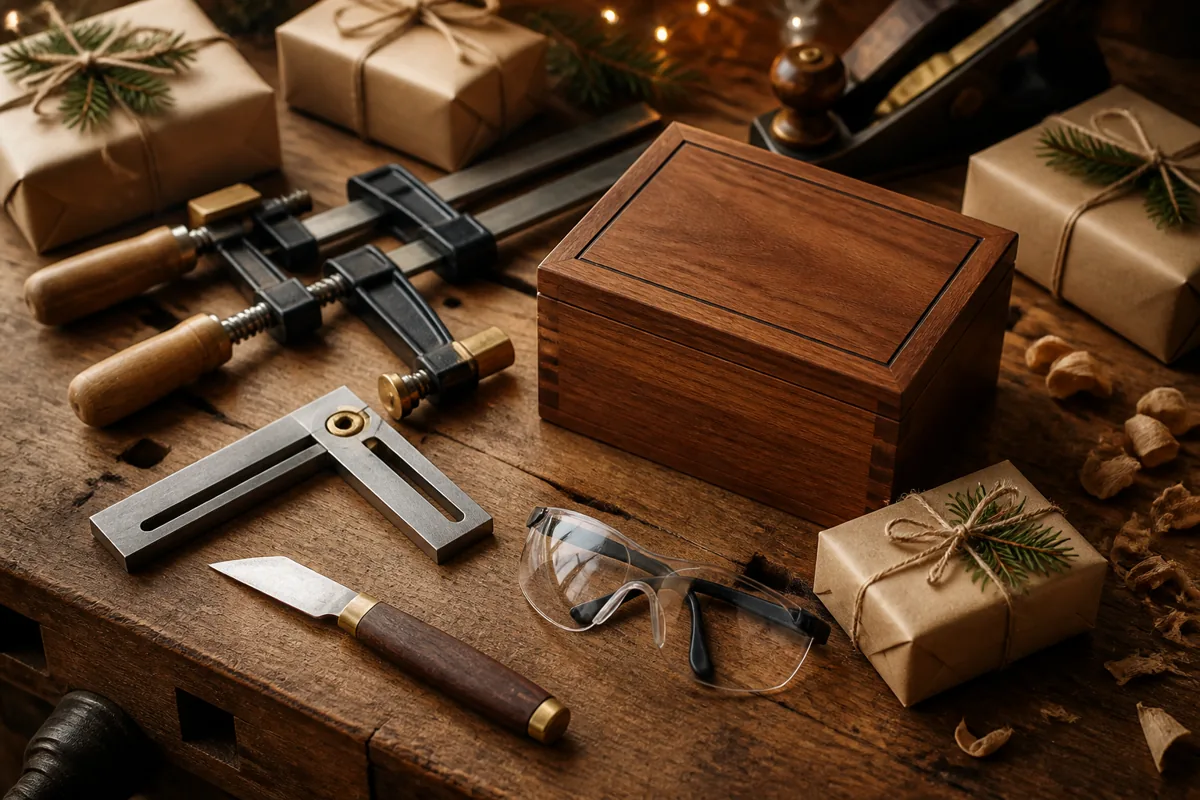
Hand tools qualify for the same treatment for a different reason: they are finished technology. A clamp, a combination square, a socket set or a decent screwdriver will not be superseded next year, so buying early carries no version risk. The one trap is buying a large set of a tool you have never used, to find out whether you like it. Buy one good one first, learn what irritates you about it, then buy the set.
Clamp and accessory deals
Clamps rarely get cheaper than in a sale event, and no woodworker has ever regretted having more.
Wait: big cordless kits
Combo kits and batteries reliably see deeper cuts around Black Friday. If your purchase can wait from July to November, it usually should.
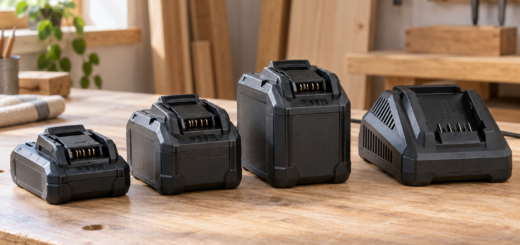
The mechanism tells you what to watch for. Late-year promotions are often structured as added value rather than a lower number: a free bare tool with a battery pack, a second battery in the box, a higher-capacity pack for the price of the compact. That is usually worth more than the equivalent percentage off, because batteries and chargers are the real cost of cordless ownership and they never discount as steeply as the tools they power.
Who should buy in July anyway
Waiting is a default, not a rule. Buy now if there is a job in front of you and no tool for it, because four months of not doing the work costs more than the discount you are chasing. Buy now if you are replacing something you use weekly and it has died. Buy now if the price is an outlier you can verify against recent history rather than against the list price. Wait if the purchase is an upgrade rather than a need, or if it would drag you into a second battery platform you do not want to own.
What good looks like at each price band
Discounts push tools down into bands where they sit beside tools that are fundamentally different. Knowing what each band should deliver keeps you honest.
- Entry band, brushed tools and single-battery kits. Good means a brand whose batteries are stocked at ordinary retailers, a real warranty, and not the slowest charger in the lineup. Suits renters and occasional fixers. Skip it if you use the tool weekly.
- Middle band, mainstream brushless kits with two packs. Where most home workshops belong, and where sale-only compromises hide. Good means brushless, two packs with at least one higher-capacity, and a model number that also exists outside the event. Skip it if you only need one tool.
- Upper band, professional lines. Worth it if you are on the tool daily, driving long fasteners, or already inside a dust-extraction and storage ecosystem. The premium buys duty cycle and service, neither of which pays back on hobby hours.
- Stationary machines. The discount is the least interesting part. Freight damage, missing hardware and a return that has to be crated back matter more. If a local seller is close on price and lets you inspect the machine, take that instead.
The bundle trap
- ✘ Sale-only kits sometimes ship smaller batteries — check amp-hours in the specs
- ✘ ”Was” prices inflated shortly before the event
- ✘ Brushed motor versions of familiar model families
- ✘ Piece counts padded with bits you will never use
All four have the same fix: compare specifications, not names. A kit assembled for an event can share a family name with the tool you researched and still be a different machine underneath — brushed instead of brushless, compact packs instead of full-size, a trickle charger, fewer clutch settings. Find the full model number in the specification table and read the amp-hour rating on each included pack. If the listing will not give you a model number, that is your answer.
The padded piece count is the gentler version of the same trick. A two-hundred-piece case is usually thirty pieces you wanted wrapped in specialty sizes nobody uses. Price the thirty and see whether the deal still holds up.
A working method
- ✔ Write your list in advance and buy only from it
- ✔ Track baseline prices for two weeks before
- ✔ Verify battery capacity, motor type and model number, not the family name
- ✔ Check the return window — event returns are often extended
- ✔ Buy consumables freely, big kits selectively
The list is the step people skip and the one that saves the most. Write it before the event opens with a ceiling price beside each line, and buy nothing that is not on it. Two weeks of watching baseline prices is enough to recognise a genuine low, and it also shows you which sellers quietly raise list prices as the event approaches.
Keep the list ordered as well as short. Consumables first, since you cannot really overbuy them. Hand tools next, because they never expire. Additions to a platform you already own after that, and anything that would start a new platform at the very bottom. Check the return window on marginal buys too �� an extended return turns a maybe into a low-risk trial, which is a discount that never shows up as a percentage.
FAQ
Is Prime Day better than Black Friday for tools? Generally no, except on consumables and hand tools where they are comparable. For batteries and big kits, the later event usually wins on both price and bundled extras.
Do other retailers match it? Frequently, yes — it is worth a quick check before buying. Competing sellers tend to run their own promotions the same week, and some will price match if you ask.
Are the deals real? Mostly, but verify against the price history rather than the listed “was” price. Treat any listing that has been sitting at the “sale” price for weeks as normal pricing with a badge on it.
Should I pick a battery platform during the event? No. Choose the platform first, on tool range, battery availability and what you can buy locally, then let a sale decide the timing rather than the brand.
See current tool deals →