Best Affordable Paint Sprayer for Cabinets and Interior Doors
What's inside
As an Amazon Associate I earn from qualifying purchases. This post may contain affiliate links at no extra cost to you.
What to Look for in an Affordable Cabinet Sprayer
For cabinets and interior doors, an HVLP sprayer is usually the best value. It puts down a controlled, relatively slow spray that is easier to manage indoors than an airless sprayer. The trade-off is speed: you will make more passes, and inexpensive HVLP units need frequent cleaning.
Look for a sprayer with adjustable material flow, at least two spray patterns, and a nozzle around 1.3 to 1.8 mm. A 1.3 or 1.4 mm tip suits thin cabinet enamel, while a 1.8 mm tip is more forgiving with thicker primers and paints. A 20-ounce cup is workable for doors and drawer fronts, but a larger 32-ounce cup reduces refills on a full kitchen.
As an Amazon Associate we earn from qualifying purchases at no extra cost to you.


Do not choose by advertised watts alone. A high wattage number does not guarantee a fine finish. More useful specifications are the included nozzle sizes, replacement parts, hose length, and whether the manufacturer provides a practical cleaning method. An inexpensive sprayer that cannot get replacement seals or needles is a poor bargain after one season.
The Best Affordable Sprayer Types
| Sprayer type | Typical street price | Best use | Main drawback |
|---|---|---|---|
| Entry-level electric HVLP | $40–$80 | Occasional cabinets, doors, furniture | Small cup, more overspray, inconsistent flow |
| Midrange turbine HVLP | $100–$200 | Several rooms or a kitchen remodel | Higher upfront cost and bulkier storage |
| Airless handheld | $100–$250 | Large doors, walls, fences, fast coverage | More overspray and harder control on small parts |
| Compressor spray gun | $30–$100, excluding compressor | Users who already own a capable compressor | Requires compatible air volume and extra setup |
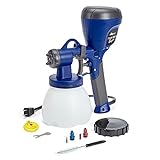
For one bathroom vanity or a few interior doors, an affordable HVLP paint sprayer is often enough. These units commonly cost $40 to $80. The cheaper option is fine when you accept slower work, test carefully, and are willing to thin the paint according to the coating manufacturer’s instructions.
A midrange turbine HVLP is a better investment for a full kitchen. It generally delivers steadier airflow and better atomization than the smallest handheld units. The finish is not automatically perfect, but the sprayer is less likely to pulse as the cup empties. Expect to spend roughly $100 to $200, depending on included tips and accessories.
An airless sprayer is usually excessive for cabinet doors. It is fast and can handle thicker coatings, but the spray fan wastes more material and makes it easier to create runs. Choose an handheld airless paint sprayer when speed matters more than fine control, or when you are also painting walls and large flat surfaces.
Which Budget Choice Makes Sense?
Buy the least expensive HVLP unit if you have fewer than 10 doors or about 20 cabinet fronts. It can produce a good finish, but plan on spraying one or two pieces at a time and cleaning the nozzle immediately after each session.
Step up to a turbine HVLP if you are spraying a complete kitchen, using primer and enamel, or expect to use the tool more than once a year. Better airflow and larger accessory kits are worth paying for. A tool in the $120 to $180 range is often a better value than replacing a $50 sprayer after a single project.
If you already own a 5- to 6-gallon compressor, a 1.4 mm HVLP spray gun can be economical. Check the gun’s required cubic feet per minute against the compressor’s delivered airflow, not just its peak rating. A small compressor that cannot keep up will cause pulsing, dry spray, and uneven gloss.
Paint Preparation Matters More Than the Sprayer
Remove doors, drawers, hinges, and hardware. Label each piece and spray horizontally when possible. Wash off grease with a suitable degreaser, rinse, let the surface dry, and scuff glossy finishes with 180- or 220-grit abrasive. Vacuum the dust and wipe with a clean, lint-free cloth.
Use a bonding primer when the existing finish is slick, stained, or unknown. Allow it to dry fully before sanding lightly with 320 grit. A smooth sprayed finish cannot hide dents, deep scratches, or raised wood grain. Fill defects before priming, then sand them flat.
Strain paint through a paint filter before it enters the cup. Small lumps can block a budget nozzle and leave random spatters. Thin only as much as required. Over-thinning can reduce hiding power, cause sagging, and alter the final sheen. Follow the paint maker’s data sheet rather than using a fixed water-to-paint ratio.
How to Spray Without Runs
Set up in a clean, ventilated area and protect everything beyond the workpiece. Wear a suitable respirator, eye protection, and gloves. Spray a test panel made from cardboard or scrap wood. Adjust the material flow until the fan is wet and even but not flooding the surface.
Hold the gun 6 to 10 inches from the work and keep it perpendicular. Start moving before pulling the trigger, then release the trigger before stopping. Overlap each pass by about 50 percent. Two or three light coats are safer than one heavy coat; many cabinet enamels need roughly 4 to 8 hours between coats, though the label controls the schedule.
Common failures are easy to diagnose. Runs usually mean the gun is too close, the pass is too slow, or the material flow is too high. A rough, sandy finish means the paint is drying before it reaches the surface; increase flow slightly, reduce airflow if adjustable, or work in less heat and moving air. Spitting usually indicates a loose nozzle, clogged tip, low material, or paint that was not strained.
Cleaning and Seasonal Buying Advice
Flush the cup, pickup tube, nozzle, and air cap immediately after spraying. Dried enamel in the air cap can distort the fan on the next use. Keep seals lightly lubricated only where the manual permits. Before storage, confirm that replacement nozzles and seals are available at a reasonable price.
Prices often soften around major holiday sales, late spring project promotions, and November shopping events. Those discounts are most useful on midrange turbine kits, where a sale can save $20 to $50. Cheap handheld HVLP units fluctuate less, so buy one when needed rather than waiting months for a small discount. Compare the complete kit: an extra nozzle, metal cup, longer hose, or replacement parts can be worth more than a nominal $10 price cut.
For most homeowners, the practical pick is a budget HVLP sprayer for a small project and a midrange turbine HVLP for a full kitchen. Spend less only when you can tolerate slower application and more cleanup; spend more when consistent airflow and repeat use will save time.