How to Time Tool Purchases Around Holiday Bundle Promotions
What's inside
As an Amazon Associate I earn from qualifying purchases. This post may contain affiliate links at no extra cost to you.
Holiday tool bundles can be a good way to build out a cordless system, but a large box and a “limited-time” price do not automatically make a deal. The useful comparison is the price of the tools and batteries you would actually use, against buying those items separately. Timing matters, too: promotions often return, while the best bundle for your work may not be the one with the biggest discount.
Start with the job, not the bundle
List the work you expect to do over the next year. A homeowner who occasionally assembles furniture, hangs shelves, or repairs a fence may need a drill-driver and a small set of bits. Someone building a deck or framing a shed is more likely to benefit from a drill, impact driver, and at least two batteries. Buying extra tools before you have a job for them ties up money and storage space.
Check what the bundle includes: tool type, battery capacity, charger, and case. A kit with a drill, impact driver, two 2.0Ah batteries, and a charger is not directly comparable to one with the same tools and two 5.0Ah batteries. Larger batteries generally run longer and are more useful for demanding work, but they add weight and cost. For overhead fastening or a quick household repair, a compact battery can be easier to handle.
Compare the cost of the tools you will keep
Give each item a realistic value based on what you would pay for it separately—not the manufacturer’s claimed retail value. If you would not buy the included work light, bag, or extra tool on its own, count it as a bonus, not as savings. Then compare the bundle price with the current prices of the useful tools, batteries, and charger.
| Bundle type | Often good value when | Check before buying |
|---|---|---|
| Drill and impact driver kit | You regularly drill holes and drive screws | Battery capacity, charger speed, and whether both tools are brushless |
| Single tool with batteries | You already own compatible tools but need another battery | Whether the battery and charger justify the price over a bare tool |
| Large multi-tool kit | You can name a use for most included tools | Unused tools, small batteries, and inflated “regular” prices |
For a first cordless kit, a cordless drill and impact driver combo kit is often a practical starting point. It covers common drilling and fastening tasks without making you pay for a saw or grinder you may rarely use.
Track prices before the holiday rush
Start watching prices four to eight weeks before a major sale. Save the exact bundle and note its price, included batteries, and seller. A simple spreadsheet or price-tracking service makes it easier to spot whether the holiday offer is genuinely lower. Compare like with like: a bundle that appears cheaper may have fewer or smaller batteries than the one you checked earlier.
Retailers commonly promote tools around Black Friday, the weeks before Christmas, Father’s Day, and spring home-improvement periods. Promotions can begin early and change during the event. If the price is solid and the kit fits your needs, waiting for one exact sale day may not pay off. If your current tool still works and the deal is only modest, waiting is reasonable—but decide in advance what price would make you buy.
Include the cost of joining a battery platform
A cordless tool’s purchase price is only part of its cost. If you are starting from scratch, include batteries and a charger in the comparison. If you already own batteries from a brand, a bare tool can be the better buy, provided it is compatible with your existing platform. Do not assume batteries work across every product line from the same brand; check the exact system and voltage.
For occasional DIY use, a less expensive kit can be perfectly adequate. A brushed drill may be heavier or less efficient than a comparable brushless tool, but that difference may not matter for a few shelves and small repairs each year. Frequent users, or anyone driving long fasteners and drilling large holes, may value brushless performance and longer runtime enough to justify the extra cost. Consider a brushless drill-driver kit if those tougher jobs are routine rather than occasional.
Look for the deal’s weak points
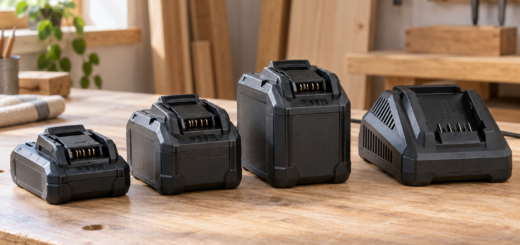
Small batteries are a common catch in attractive kits. A 2.0Ah pack can be light and fine for brief tasks, but it may run down quickly when driving many screws or cutting continuously. One battery also means stopping work to charge unless you buy another. Check whether the charger is included and how quickly it charges the batteries supplied.
Also inspect the tool mix. An oscillating tool, light, or compact saw can be useful, but not if it duplicates gear you own. A bundle is poor value when the included tools sit unused while you still need a suitable battery, blade, or accessory. For someone already on a battery system, a compatible battery-and-charger kit may be more valuable than a box of extra tools.
Finally, check return terms, warranty coverage, and who is selling the kit. Keep the receipt and packaging until you have tested each tool and battery. A low price is less attractive if the listing is unclear about the warranty or the item arrives incomplete. Buy from a seller whose return policy gives you time to check the kit, and verify that the battery labels and charger match the product description.
Set a buying rule and stick to it
Before the promotion starts, write down the tools you need, the battery capacity you can accept, and your maximum price. For a useful comparison, calculate the price per item you would actually keep, then subtract only the realistic value of items you would otherwise buy. If the bundle meets your requirements and comes in under your limit, buy it. If the discount depends on counting unwanted accessories as savings, pass.
That rule prevents two common mistakes: paying extra for tools you do not need, and delaying a sensible purchase in pursuit of a headline discount. The best holiday deal is the one that lowers the cost of work you already expect to do—not the one that leaves you with the largest box.