How to Evaluate a Tool Brand’s Parts Availability Before Buying
What's inside
As an Amazon Associate I earn from qualifying purchases. This post may contain affiliate links at no extra cost to you.
Why parts availability matters
A tool’s purchase price is only part of its long-term cost. A broken switch, worn chuck, failed battery, or cracked gear housing can turn a good deal into a disposable tool if replacement parts are hard to find. Before buying, check whether the brand sells the parts you’re most likely to need, whether they’re in stock, and whether you can install them without specialist equipment.
This matters most for tools you depend on every week, expensive cordless platforms, and equipment with wear parts. It matters less for an inexpensive drill used a few times a year: if a repair would cost nearly as much as replacement, buying a new one may be perfectly sensible.
As an Amazon Associate we earn from qualifying purchases at no extra cost to you.

Check the parts catalog before checkout
Search the brand’s official site for the exact tool, then look for a parts diagram, exploded view, or service manual. A useful catalog identifies components with part numbers, rather than listing only broad assemblies such as “motor unit.” Check for common service items: brushes on brushed motors, switches, cords, chucks, guards, belts, blades, and battery chargers.
Parts diagrams are also a practical test of repairability. If the tool is clearly documented and individual components are listed, you have a better chance of identifying the fault and ordering the right replacement. If the only available item is a complete motor assembly, a small failure could become an expensive repair.
Catalogs can be incomplete or outdated. Search the part number on the brand’s store and at independent parts sellers, and confirm the listing matches the tool’s full model and type number. Similar-looking versions can use different switches, housings, or gear sets.
Check stock, prices, and lead times
A listed part is not necessarily an available part. Check whether it is in stock, backordered, or discontinued, and look at the shipping estimate. A low-cost switch that takes six weeks to arrive may be a poor fit if the tool is needed for a job next week.
Compare the part cost with the price of a replacement tool. As a rough decision rule, a repair costing more than half the price of a comparable new bare tool deserves scrutiny—especially if diagnosis, shipping, and labor are extra. For a quality saw or tool on a large battery platform, spending more can still make sense if the repair restores a tool you already own and trust.
What to check by tool type
| Tool or system | Parts worth checking | Common availability risk |
|---|---|---|
| Cordless drill or impact driver | Battery, charger, switch, chuck, belt clip | Older batteries may be discontinued even when the tool remains serviceable. |
| Circular saw or miter saw | Blade guard, lower guard spring, fence, brushes, switch | Model-specific guards and adjustment parts can be harder to source than blades. |
| Air compressor | Pressure switch, regulator, drain valve, hose fittings | Proprietary fittings or assemblies may limit repair options. |
| Outdoor power equipment | Blades, belts, filters, cables, carburetor or fuel components | Seasonal demand can create delays just when the equipment is needed. |
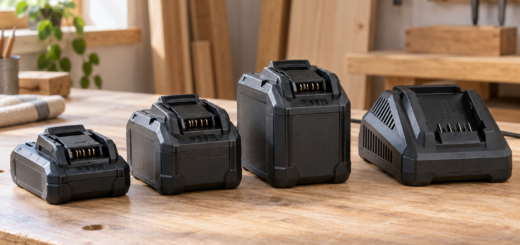
For cordless tools, treat batteries as a system part, not an accessory. Check current battery prices and whether the brand still sells compatible packs. A cheap bare tool is less of a bargain if replacing one battery costs close to the price of a new starter kit.
Read the warranty and service terms
Find out how long the warranty lasts, what proof of purchase is required, and whether the tool must be registered. Check whether warranty service goes through a local repair center or requires mailing the tool away. A warranty that covers defects but takes several weeks to process may not protect a contractor who needs the tool every day.
Separate warranty coverage from ordinary wear. Batteries, blades, belts, brushes, and consumables may have shorter coverage or be excluded. Also check whether opening the tool affects coverage. If the brand requires authorized service for warranty repairs, that can change the value of a do-it-yourself repair.
When a budget tool is fine
For occasional home repairs, a low-priced tool can be the right choice even if its parts catalog is thin. If you use a drill a few times per year, the cost of keeping a spare switch on hand is hard to justify. Buy the budget option when replacement is affordable, downtime is not important, and the tool does not rely on an expensive battery ecosystem.
For frequent use, compare the full cost of ownership: tool, batteries, wear parts, likely repairs, and time out of service. A mid-priced tool with readily available parts may be better value than a cheaper one that has to be replaced after a minor failure. If you are choosing a platform, compare replacement batteries and chargers alongside the tools themselves.
Time seasonal purchases around parts demand
Outdoor tools often see their heaviest use in spring and summer, while snow equipment peaks in winter. Before the season starts, check availability for basic wear parts and any tool-specific components likely to stop work, such as a mower belt or snowblower shear pin. Ordering a small maintenance item during the off-season can be easier than searching after a breakdown.
Seasonal sales can make a tool cheaper, but they do not prove that parts will remain available. Before buying a discounted clearance model, look up its model number and search for a few likely service parts. If the tool is being phased out, confirm that compatible batteries, guards, or attachments are shared with current models rather than assuming they are.
Make a practical parts check
Before you buy, spend ten minutes checking the model��s parts diagram, the price and stock status of two or three likely replacement parts, battery compatibility if applicable, and the warranty process. Save the model and type numbers from the listing; they make later parts searches much more reliable.
If the tool is used heavily, prioritize documented parts, realistic lead times, and nearby service options over a small upfront saving. For occasional work, a cheaper tool can be the better value when the likely repair cost is close to replacement. If you want a simple backup for light jobs, compare budget corded drills with cordless options; avoiding a battery can keep both the purchase price and future replacement costs down.