Rotary Hammer vs Hammer Drill: Which Is More Cost-Effective for Masonry Work?
What's inside
As an Amazon Associate I earn from qualifying purchases. This post may contain affiliate links at no extra cost to you.
The Short Answer
For occasional masonry work, a hammer drill is usually the more cost-effective buy. It costs less, weighs less, and handles small holes for anchors, screws, and light-duty repairs without filling your toolbox with a specialist tool.
A rotary hammer becomes the better value when you regularly drill concrete, need holes larger than about 1/2 inch, or have to remove tile, mortar, and concrete. It costs more upfront, but it drills faster, transfers less vibration to your hands, and is less likely to burn out under demanding work.
As an Amazon Associate we earn from qualifying purchases at no extra cost to you.


The key mistake is comparing tools by purchase price alone. A cheap hammer drill that takes several minutes to make each hole, overheats, or breaks a bit is not inexpensive if you have a full afternoon of masonry work.
What Each Tool Actually Does
A hammer drill combines normal rotation with a light forward hammering action. Two ridged discs inside the tool slip against each other and create rapid vibration. This is enough to break up brick, block, and softer concrete while a masonry bit removes the dust.
The hammering effect is relatively shallow. You still need to push firmly, clear dust from the hole, and avoid leaning on the tool continuously. Most hammer drills use a standard chuck, so they can also work as ordinary drills for wood and metal.
A rotary hammer uses a piston to strike the bit. Its impact is much stronger and more efficient, especially in concrete. Most models have a rotary-hammer mode, a drill-only mode, and a hammer-only mode for chiseling. SDS-Plus bits are common on compact models; larger SDS-Max tools are intended for heavy construction work.
Rotary hammers are not simply “stronger hammer drills.” They are heavier, louder, and less convenient for general drilling. Many require separate SDS bits, although those bits are quick to change and hold securely under impact.
Cost and Capability Comparison
| Factor | Hammer drill | Rotary hammer |
|---|---|---|
| Typical tool price | About $50–$180 for corded or cordless models | About $100–$350 for compact SDS-Plus models |
| Best hole size | Usually 1/4–1/2 inch in masonry | Commonly 1/4–1 inch, depending on the model |
| Best materials | Brick, block, mortar, and occasional concrete | Concrete, reinforced masonry, tile, and demolition work |
| Chiseling | Not practical | Available on many models |
| Weight and handling | Lighter and easier for overhead work | Heavier, but usually more efficient under load |
| Bit cost | Low-cost masonry bits are widely available | SDS bits cost more, but generally remove material faster |
When a Hammer Drill Is the Better Value
Choose a hammer drill if you expect to drill fewer than roughly 20 to 30 small masonry holes per year. Hanging shelves on block, installing a handrail, mounting a mailbox, and fitting plastic anchors are typical jobs it handles well.
For 1/4-inch or 5/16-inch holes in brick or concrete block, a corded hammer drill in the 6- to 8-amp range is often enough. A basic model may cost less than a cordless tool body alone, and it will not slow down as the battery drains. If you already own batteries from a tool platform, however, a bare cordless hammer drill can be the economical choice.
Look for variable speed, a side handle, and a depth stop. A two-speed gearbox is useful, but it is not essential for occasional anchor holes. Spending extra for a premium brushless model makes less sense if the tool will be used for ten minutes twice a year.
See current pricing for corded hammer drills when you want maximum power per dollar. They are especially attractive for stationary workshop or home-maintenance use.
When a Rotary Hammer Pays for Itself
A rotary hammer earns its higher price when the work involves many holes, deep holes, hard concrete, or larger diameters. Drilling 20 holes for concrete anchors can turn into a frustrating job with a hammer drill, while a compact SDS-Plus rotary hammer may complete it in a fraction of the time.
It is also the economical choice for tile removal and chasing out mortar. The hammer-only setting lets you use a pointed or flat chisel without spinning the bit. A hammer drill has no comparable mechanism; forcing it into demolition work can damage the chuck, gears, or motor.
Buy a rotary hammer if you regularly drill 1/2-inch holes or larger, work in poured concrete, or need to drill several inches deep. A model with roughly 1 to 2 joules of impact energy is suitable for home improvement and light remodeling. Larger impact ratings increase productivity but also add weight, noise, and cost.
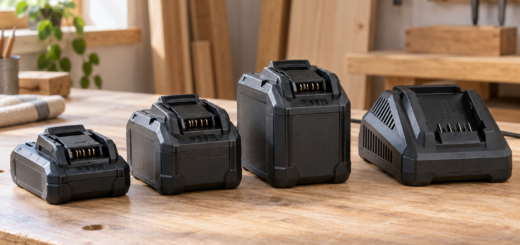
For a first purchase, a corded SDS-Plus rotary hammer often delivers the lowest operating cost. Cordless versions are more convenient, but batteries and chargers can add $80 to $250 if you are not already invested in that brand.
Hidden Costs and Common Failure Modes
Bits are a major part of the budget. Hammer-drill masonry bits are inexpensive, but dull bits make the tool run hotter and encourage excessive pressure. Rotary hammers need SDS bits, which cost more individually; a practical starter set may add $20 to $60.
Dust is another cost and maintenance issue. Drilling without clearing the hole can pack dust at the bottom, reducing cutting performance and causing the bit to bind. Use a vacuum, squeeze bulb, or repeated bit withdrawal. For overhead work, protect the chuck and vents from falling dust.
Do not use a hammer drill on reinforced concrete expecting it to behave like a rotary hammer. You may spend ten minutes on one hole, overheat the motor, and still not reach the required depth. Conversely, using a rotary hammer for delicate brick can chip the face or enlarge the hole. Reduce pressure, use the correct bit, and let the tool do the impact work.
Seasonal and Brand-Value Buying Advice
Spring and early summer promotions often target home renovation tools, while November sales commonly discount cordless kits and older battery platforms. Check the price of the bare tool, battery, charger, and bits together. A “cheap” cordless deal is not cheap if it starts an entirely new battery system.
Brand value matters most in batteries, service, chuck quality, and warranty support. Established professional brands usually cost more but offer better platform availability and replacement parts. For occasional corded use, a reputable budget brand can be a sound value. For weekly concrete work, spending more on a proven rotary-hammer platform is easier to justify.
Compare cordless SDS-Plus tool-only prices against complete kits before buying. If you already own compatible batteries, cordless convenience may win. If not, a corded model usually offers more impact capability for the money.
The Practical Buying Rule
Buy a hammer drill for occasional small holes and general household versatility. Buy a rotary hammer when masonry is more than an occasional task, when concrete is hard, or when chiseling is part of the job. The lower-priced tool is not automatically the lower-cost tool: match the machine to the material, hole size, and workload, then budget for good bits and dust control.