Harbor Freight vs Ryobi: Which Brand Is Better for a Limited DIY Budget?
What's inside
As an Amazon Associate I earn from qualifying purchases. This post may contain affiliate links at no extra cost to you.
For a limited DIY budget, Harbor Freight and Ryobi solve different problems. Harbor Freight usually gets you into a tool for the least money today. Ryobi usually costs more at the start, but its 18V ONE+ battery system can become a useful long-term platform for home repairs, yard work, and occasional projects.
The better choice depends on how often you work, whether you already own batteries, and how expensive failure would be. A homeowner hanging shelves twice a year has different needs from someone remodeling a room every weekend.
As an Amazon Associate we earn from qualifying purchases at no extra cost to you.


Harbor Freight vs. Ryobi at a glance
| Factor | Harbor Freight | Ryobi |
|---|---|---|
| Lowest purchase price | Usually better, especially for corded tools and basic hand tools | Higher entry cost unless a kit is on sale |
| Battery platform | Several separate systems, including Hercules and Bauer | Large, consistent ONE+ 18V system |
| Best use | Infrequent DIY, backup tools, specialty tools, low-risk jobs | Regular home maintenance and a growing cordless collection |
| Warranty and service | Varies by brand and product; store-based support is a major advantage | Generally straightforward warranty support through the manufacturer |
| Long-term convenience | Good if you stay within one battery line; less convenient across lines | Excellent once you own batteries and chargers |
Where Harbor Freight is the better value
Harbor Freight is hard to beat for corded tools, shop accessories, and tools that will see only occasional use. A corded drill, angle grinder, heat gun, moving blanket, clamps, or basic socket set can do the job without making you buy batteries and chargers. For a homeowner who needs to drill six holes into softwood, a low-cost corded drill may be entirely adequate.
It is also a sensible choice when the tool could be damaged, lost, or used for one specific project. Buying a budget cordless oscillating multi-tool for one flooring repair is less painful than investing in a full premium ecosystem. The trade-off is that cheaper tools can have more play in the chuck, rougher speed control, weaker batteries, and less comfortable grips.
Harbor Freight’s major complication is its brand structure. A Bauer battery does not generally run a Hercules tool, and neither should be treated as a universal Harbor Freight battery. Decide on the line before buying cordless equipment. Mixing systems can leave you with three chargers and several expensive battery types.
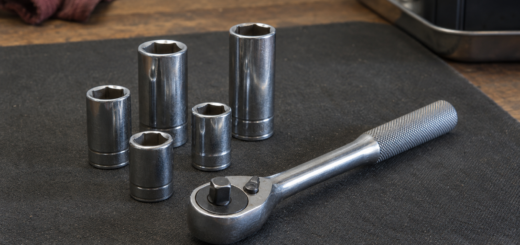
For basic hand tools, Harbor Freight’s replacement policies and local store access can matter more than small differences in finish quality. A $15 wrench set is fine for assembling furniture or servicing a bicycle. It is a poorer bet for repeated automotive work, where rounded fasteners and inaccurate sizes can cost more time than the set saved.
Where Ryobi earns its higher price
Ryobi’s strongest argument is the ONE+ 18V ecosystem. Once you own a charger and one or two batteries, bare tools become much easier to justify. The same batteries can power drills, impact drivers, lights, sanders, inflators, fans, shop vacuums, yard tools, and many specialty devices.
That matters because batteries and chargers can add $50 to $150 or more to a cordless purchase, depending on capacity and whether the kit is discounted. If you expect to buy four or five cordless tools over several years, Ryobi’s battery compatibility can offset the higher price of each first purchase.
A Ryobi kit is often the safer starting point for someone who does regular maintenance: assembling cabinets, building a workbench, repairing a deck, or trimming a small yard. A drill/driver and impact driver kit with two batteries provides more practical capability than a series of unrelated bargain tools.
Ryobi is not automatically the superior choice for heavy construction. Its consumer-focused tools can overheat, slow down, or drain a small battery during long runs in hardwood, masonry, or thick pressure-treated lumber. For occasional projects, that is usually manageable. For daily production work, step up to a professional platform rather than assuming a more expensive consumer tool solves everything.
Battery cost and performance trade-offs
Battery size affects both runtime and handling. A compact 1.5Ah or 2.0Ah pack is lighter for overhead drilling, but it may run down quickly in a circular saw or shop vacuum. A 4.0Ah or 5.0Ah pack lasts longer but adds noticeable weight. For a first cordless purchase, two mid-size batteries are often more useful than one oversized pack.
Harbor Freight can be cheaper at the register, but compare the complete package: tool, battery, charger, and replacement battery availability. A $40 bare tool is not a bargain if the battery kit costs another $70 and you have no other compatible tools. Ryobi’s frequent kit promotions can narrow that gap, especially around major holiday sales.
For a dependable first Ryobi 18V drill kit, look for two batteries, a charger, and a carrying bag rather than chasing the most powerful advertised model. For Harbor Freight, buy the battery system only if you can name at least three tools you will likely use.
The best strategy for a limited budget
Start with the job, not the brand. If you need one tool for a single repair, buy the least expensive tool that has adequate power and a usable return or warranty policy. Corded Harbor Freight tools are especially attractive here. If you expect a steady stream of projects, buy into one cordless platform and add bare tools during sales.
Prioritize a drill/driver, impact driver, or reciprocating saw before buying specialty gadgets. A drill and impact driver combo kit covers most fastening and drilling tasks. Add a circular saw only when a project requires repeated cuts; for two or three boards, a handsaw may be the better budget decision.
Do not ignore accessories. A dull drill bit, undersized battery, or cheap circular-saw blade can make a good tool appear weak. Reserve roughly 20% of the tool budget for bits, blades, sanding discs, and eye protection.
When to buy
Shop major sale periods around Memorial Day, July Fourth, Labor Day, Black Friday, and the weeks before Christmas. Ryobi kits commonly become more attractive during holiday promotions, while Harbor Freight discounts may target individual tools, coupons, or rotating “deal” events. Compare the final kit price rather than the percentage-off claim.
If you are not in a hurry, track the normal price for two or three weeks. A sale is meaningful only when it includes the battery capacity you need and does not replace a two-battery kit with a smaller single pack.
The practical choice
Choose Harbor Freight when the tool will be used occasionally, the job is low risk, or a corded tool avoids battery costs. Choose Ryobi when you want cordless convenience, expect to add tools, and can take advantage of kit pricing. For most limited DIY budgets, the smartest setup is not brand loyalty: use Harbor Freight for inexpensive corded and hand tools, then choose one cordless battery system—Ryobi or a Harbor Freight line—and stay consistent.