Worx vs Greenworks Yard Tools: Comparing Affordable Battery Systems
What's inside
As an Amazon Associate I earn from qualifying purchases. This post may contain affiliate links at no extra cost to you.
Worx and Greenworks both sell affordable cordless yard tools, but they are built around different battery ecosystems. The right choice is less about whether one brand is “better” and more about the size of your yard, the tools you expect to add, and how often you are willing to charge or replace batteries.
Worx usually offers compact, homeowner-friendly tools with a strong emphasis on its 20V PowerShare platform. Greenworks has a broader range, from lightweight 24V equipment to more powerful 40V, 60V, and 80V systems. That wider range gives Greenworks an advantage for larger properties, while Worx can be the simpler and cheaper option for light maintenance.
As an Amazon Associate we earn from qualifying purchases at no extra cost to you.

Battery platforms and compatibility
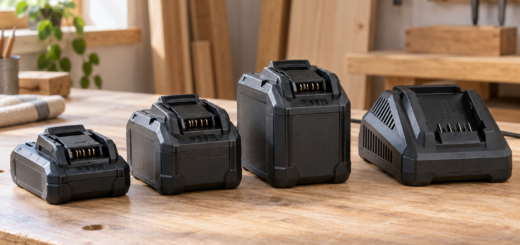
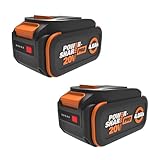
Worx PowerShare batteries are designed to work across the company’s 20V tools. Many Worx tools use one battery, while higher-demand equipment may use two batteries together for a 40V output. This is convenient if you already own several compact Worx tools, but it also means a demanding mower can consume two batteries at once.
Greenworks divides its tools among voltage families. A Greenworks 24V battery is not interchangeable with a 40V battery, and 60V and 80V batteries belong to their respective systems. This is less tidy than Worx’s central PowerShare approach, but it lets you buy a lighter battery system for trimming and a more powerful one for mowing or snow removal.
Neither brand’s battery can be used on the other brand’s tools. Battery shape, electronics, and chargers are proprietary. If you switch brands later, assume you will need a new charger and at least one battery, even if the tools look similar.
Worx vs. Greenworks at a glance
| Factor | Worx | Greenworks |
|---|---|---|
| Main strength | Compact tools and a straightforward 20V ecosystem | Broader power range and stronger selection for larger yards |
| Best fit | Small to medium suburban yards and light upkeep | Medium to large yards, heavier grass, and demanding seasonal work |
| Typical mower approach | 20V batteries, often used in pairs on higher-output models | Dedicated 40V, 60V, or 80V systems depending on the mower |
| Battery cost | Often reasonable in kits, but a mower may require two packs | Higher-voltage replacement packs can be expensive |
| Tool variety | Good homeowner selection, especially for compact equipment | Very broad selection across several voltage families |
| Value risk | Buying multiple battery-powered tools can become costly if each needs a separate pair of packs | Buying into several voltage families defeats the benefit of one ecosystem |
Mowers, trimmers, and blowers
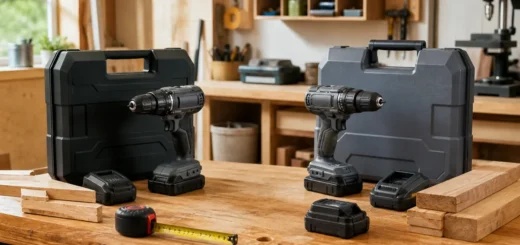
For a small lawn—roughly 2,000 to 4,000 square feet—either brand can work well. A Worx mower using two batteries is attractive when storage space is limited and the grass is cut regularly. Its lighter equipment is easier to maneuver around garden beds, but runtime drops quickly in wet, tall, or thick grass.
Greenworks has more choices for lawns beyond that size. A 40V mower is generally a sensible middle ground for an ordinary suburban yard. The 60V and 80V lines make more sense when the lawn is large, the grass grows aggressively, or you want performance closer to a gas mower. The trade-off is price: a larger battery and charger can cost a substantial portion of the mower’s purchase price.
For string trimmers and blowers, the cheaper option is often fine. A compact Worx or Greenworks system can handle edging, driveway cleanup, and leaves on a small property. Do not expect a small battery blower to replace a gas backpack blower; high-power blowing can drain a battery in 10 to 20 minutes, especially at full throttle.
When comparing kits, look at battery watt-hours rather than voltage alone. Watt-hours are calculated by multiplying volts by amp-hours. For example, a 20V 4.0Ah battery stores about 80 watt-hours, while a 40V 4.0Ah battery stores about 160 watt-hours. Actual runtime varies with load, but this gives a better comparison than the voltage label by itself.
What the real cost looks like
Tool-only prices can make either brand look inexpensive. The first battery and charger are where the budget changes. A bare tool may be a good deal for an existing owner and a poor deal for a new buyer who must add a $100-or-more battery and charger.
For occasional trimming, a basic Worx 20V string trimmer kit can be enough. For a more demanding yard, compare complete mower kits rather than bare mowers. A Greenworks 40V mower package may cost more initially, but it can provide better cutting capacity and avoid the need to run two small batteries at once.
Battery replacement is another long-term cost. Lithium-ion packs commonly lose noticeable capacity after several years of frequent use, and heat accelerates aging. Store batteries indoors, away from freezing temperatures and hot sheds. Let a hot pack cool before charging it. A replacement battery can cost enough that buying a new tool kit during a sale is sometimes cheaper—but only if the included tool is useful.
Which system should you choose?
Choose Worx if your priorities are compact storage, lighter tools, and a simple collection for routine maintenance. It is a particularly reasonable choice for a townhouse, a small lot, or a homeowner who needs a trimmer, blower, hedge trimmer, and occasional-use saw. The cheaper system is fine when the grass is short, the lawn is modest, and you can recharge between tasks. Browse Worx PowerShare yard tools as a platform rather than buying isolated tools.
Choose Greenworks if you expect to mow more area, deal with heavy growth, or add equipment such as a snow blower or pole saw. Start by selecting one voltage family and stay within it. For many homeowners, the 40V line is the value sweet spot; smaller 24V tools are adequate for light work, while 60V or 80V equipment is justified by property size and workload.
When to buy and what to check
Spring promotions often have the best selection of mower and trimmer kits, while late summer and fall can bring deeper discounts on remaining inventory. Battery bundles are usually more valuable than a small percentage discount on the tool alone. Check whether the kit includes one battery or two, the battery capacity, charger type, deck width, and the warranty terms.
Before ordering, measure your lawn and note slopes, gates, and storage space. A wide mower may save time but fail to fit through a narrow gate. Also check whether the mower’s claimed runtime is based on light, dry grass. If your grass is frequently wet or overgrown, buy for the heavier condition rather than the advertising estimate.
For compact yards and light-duty users, Worx can deliver the better value. For buyers who want more power and a clearer path to larger equipment, Greenworks is usually the safer long-term platform. In either case, the best bargain is the battery system that matches your workload—not the cheapest bare tool on the shelf.