Worx vs Ryobi Cordless Lawn Tools: Comparing Affordable Battery Systems
What's inside
As an Amazon Associate I earn from qualifying purchases. This post may contain affiliate links at no extra cost to you.
Worx and Ryobi both sell cordless lawn tools aimed at homeowners who want to avoid gas engines without paying premium-brand prices. The better value depends less on the logo than on the yard: how much grass you cut, whether you already own batteries, and whether one battery platform can cover the rest of your tools.
As an Amazon Associate we earn from qualifying purchases at no extra cost to you.

The short version
Choose Ryobi if you want a broad range of outdoor tools and expect to buy into one system over time. Its lawn lineup and battery choices make it easier to build around mowing, trimming, blowing and other yard work. Choose Worx if a compact, straightforward set of tools suits your property and you find a kit with the batteries and charger you need at a good price.
Neither brand is automatically the bargain. A bare tool looks cheap until you add a battery and charger. Compare complete kits, battery capacity and the cost of adding another battery—not just the price printed beside the tool.
Battery systems and real cost
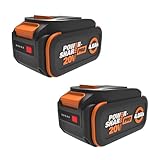
Worx’s 20V Power Share batteries work across compatible Worx tools, including many outdoor and household products. Ryobi’s 18V ONE+ system covers a large range of tools; Ryobi also sells higher-voltage outdoor equipment for jobs that need more power. Batteries are not interchangeable between the brands, and voltage labels alone do not tell you how long a tool will run.
For a small yard, a kit with two modest-capacity batteries may be more useful than one larger battery: you can keep working while the other charges. For a mower, capacity matters more. A small battery can run out partway through a lawn, especially in thick or damp grass, forcing a stop to recharge or swap packs.
Before buying, check exactly what is included. Some listings are tool-only; others include a battery, charger, or multiple batteries. If you own no compatible tools, a complete kit is usually the sensible starting point. If you already have batteries, a bare tool can save money—but only if those batteries are suitable for the new tool and the workload.
At-a-glance comparison
| Factor | Worx | Ryobi |
|---|---|---|
| Best fit | Homeowners wanting a simple set of compatible tools | Homeowners building a wider tool and yard-care collection |
| Core battery platform | 20V Power Share | 18V ONE+, plus separate higher-voltage outdoor lines |
| Value check | Compare kit contents and battery capacity | Compare kit contents, battery platform and sale price |
| Main limitation | Less choice may be available for some tool types or local deals | More options can make platform and battery choices confusing |
Prices and kit contents change with promotions, so treat brand-wide price claims cautiously. A discounted mower kit can be a better buy than a cheaper bare tool, while an existing battery collection can reverse that calculation.
Mowers: match the battery to the lawn
For a small, fairly level lawn, either brand’s suitable cordless mower can be a reasonable gas-free choice. The trade-off is runtime: mowing through tall, wet or dense grass uses more power than cutting a dry lawn regularly. If the mower bogs down, the battery drains faster and the cut can look uneven. Raise the deck or slow down rather than forcing the blade through heavy growth.
Measure the lawn and check the mower’s stated cutting width, battery requirements and included pack count. Do not assume a mower works with just one battery because other tools in the same brand do. If your lawn takes 30 minutes to mow, a listing’s optimistic runtime estimate may not leave enough margin for thick patches, edging or a second pass. Consider a cordless mower kit with the batteries included rather than pricing the tool alone.
Trimmers and blowers: easier entry points
A string trimmer or leaf blower is often a safer first battery purchase than a mower. These tools are used in shorter bursts, and a spare battery can cover a modest yard without a major investment. A battery trimmer is also lighter to start and maintain than a gas model, though it may struggle with thick, woody weeds that a stronger gas trimmer handles more easily.
Blowers are useful for clearing paths and patios, but battery models can disappoint if you expect them to move heavy, wet leaves across a large lawn. Use a rake for piled-up leaves or a larger blower for substantial fall cleanup. Compare battery capacity and tool weight: a powerful blower with a heavy battery can tire your arm before the pack runs out. Look at cordless trimmer kits or cordless blower kits only after checking which battery and charger are included.
How to get better value
Price the system, not the first tool. Add up the mower or trimmer, batteries, charger and any extra pack you will realistically need. Then compare that total against the other brand’s complete kit. A battery is useful only if it fits the tool and gives enough runtime; buying several small packs to make a mower work can erase the savings.
Buy around your actual season. Spring promotions can make starter kits attractive, while late-season discounts may lower prices on tools you can store until next year. Check that the discounted package includes the same batteries as the regular listing; retailers sometimes sell visually similar kits with different contents.
Finally, keep batteries in a dry place and avoid leaving them in a hot shed or freezing vehicle. A pack that is too hot or cold may pause charging, and repeatedly cutting grass until the mower stops can shorten working time over the day. For most small-to-medium yards, the least expensive kit that comfortably finishes the job is the right choice. Pay extra only for a larger battery, wider cut or broader tool selection you will actually use.