Metabo HPT vs Skil Circular Saws: Which Offers Better Value for DIYers?
What's inside
As an Amazon Associate I earn from qualifying purchases. This post may contain affiliate links at no extra cost to you.
For a DIYer buying a circular saw, the better value usually comes down to the price of the whole setup—not the logo on the blade guard. Metabo HPT and Skil both sell useful homeowner saws, but their lineups vary by power source, included battery, and intended workload. Compare the exact kits on offer: a low bare-tool price can stop looking like a bargain once you add a battery and charger.
As an Amazon Associate we earn from qualifying purchases at no extra cost to you.


Quick verdict
Choose Skil if you want an affordable saw for occasional projects and can buy a kit with the battery and charger included. Choose Metabo HPT if a corded model fits your work, or if you already own compatible batteries from its cordless platform. For a few shelves, a shed repair, or cutting plywood for a weekend project, either brand can do the job. Paying extra is worthwhile mainly when it buys a more complete kit, a platform you already use, or features that matter for frequent cutting.
Compare the real cost
Prices and kit contents change with promotions, so compare current listings rather than relying on a brand-wide price assumption. In particular, check whether the listing includes a battery, charger, blade, and carrying case. A cordless saw sold bare is not a fair price comparison with a corded saw that is ready to plug in.
| Factor | Metabo HPT | Skil |
|---|---|---|
| Best value when | You own compatible batteries or want a corded saw | You find a complete kit at a strong sale price |
| Upfront cost to check | Bare tool versus kit; battery and charger may add substantially | Kit contents vary; verify battery capacity and charger |
| Good fit | Repeat cutting, home renovation, or an existing tool platform | Occasional DIY cuts and budget-conscious projects |
| Main trade-off | Some cordless deals are less compelling without batteries | Lower kit cost may mean fewer platform or heavy-use options |
| What to inspect | Blade size, bevel range, shoe, battery compatibility | Blade size, included battery, cut depth, warranty terms |
Corded or cordless changes the math
A corded saw is often the simplest value choice for a fixed work area. It needs no battery investment, and you can keep cutting as long as you have power and a safe extension cord. The drawbacks are managing the cord around long sheet goods and having no freedom to work far from an outlet. A cord can also snag or land in the cut path, so route it behind you before starting.
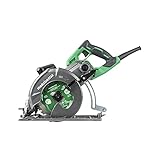
Cordless makes sense for outdoor repairs, framing in a new structure, or moving between work areas. But count the battery as part of the purchase. A small battery may be light and convenient, yet run down sooner during repeated cuts in thick lumber. If you have no batteries already, compare the price of a ready-to-use Metabo HPT cordless circular saw kit with a complete Skil kit—not with a bare tool from the other brand.
What matters in actual DIY work
For basic crosscuts in framing lumber and breaking down plywood, a correctly sized, sharp blade and a stable shoe matter more than small differences in brand reputation. Check the saw’s maximum cut depth at 90 degrees and at 45 degrees against the material you plan to cut. A common 7-1/4-inch saw can handle typical 2-by lumber in one pass, while a bevel cut reduces available depth. Do not assume that two saws with the same blade diameter have identical cut capacity or bevel adjustment.
Both brands’ budget options can be adequate for intermittent use, but expect trade-offs in weight, adjustment feel, and how easily the shoe stays square after repeated handling. Before buying, inspect the bevel scale, depth lock, and sight line; those controls affect accuracy on every job. A heavy saw can be tiring overhead, while a light saw may feel less settled when cutting long boards. If possible, handle the exact model rather than judging only from its listed specifications.
For clean plywood cuts, use a sharp blade suited to the material, support the sheet close to both sides of the cut, and avoid forcing the saw. A dull blade increases resistance and can leave a rough edge or make the motor work harder. Clamp a straightedge when a precise rip matters; the stamped shoe edge is not a substitute for a guide. If you need a saw mainly for occasional sheet cutting, look for a dependable Skil circular saw kit with battery and charger on sale, rather than paying more for features your projects will not use.
Common buying mistakes
The first is choosing by advertised tool price alone. Add any missing battery and charger, then compare the total with a corded saw or complete kit. The second is overlooking blade cost: a basic included blade may be fine for rough construction cuts but leave tear-out on finished plywood. A suitable replacement blade can add to the first-job cost.
Also check whether the tool is intended for the battery family you already own. Battery systems are not interchangeable just because two tools share a voltage label. Confirm the exact platform and included battery capacity before ordering. Finally, do not use a worn or misaligned saw to compensate for poor work support. A board that shifts can pinch the blade, cause a sudden stall, or spoil the cut; support the offcut so it cannot trap the blade as the cut closes.
When to buy
Watch for holiday sales, spring project promotions, and clearance when a retailer replaces a kit or color scheme. The best deal is often a bundle that includes a useful battery and charger, not a dramatic discount on a bare tool. Check the return window and warranty coverage, especially when buying a clearance item, and make sure the listing is for the saw configuration you intend to use.
If you already have Metabo HPT batteries, its compatible bare tool may be the better deal. If you are starting from scratch and find a Skil kit that includes everything needed to cut, Skil may cost less overall. For a one-off project with an outlet nearby, a corded saw can beat both cordless options on total cost. Match the purchase to your workload: occasional DIY does not require paying for a professional-duty setup, but repeated work makes battery compatibility, adjustment durability, and comfort more valuable.