PPE for Angle Grinders: What to Wear for Grinding vs. Cutting
What's inside
As an Amazon Associate I earn from qualifying purchases. This post may contain affiliate links at no extra cost to you.
The minimum PPE for an angle grinder is ANSI Z87.1+ safety glasses worn under a full face shield, snug cut-resistant gloves, and hearing protection rated at least 25–30 NRR — but the right combination shifts depending on whether you’re cutting, grinding, or wire-brushing, and each task changes which spec matters most.
As an Amazon Associate we earn from qualifying purchases at no extra cost to you.
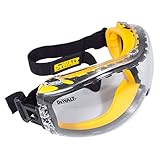
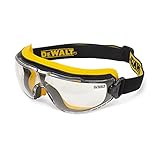

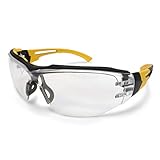
Why Glasses and a Face Shield Go Together
A face shield is secondary protection. ANSI guidance and OSHA both treat it as a supplement to — not a replacement for — primary eye protection. The reason is simple: grinding debris doesn’t travel in one direction. Sparks and fragments ricochet off the workpiece, the floor, and your own hands, and a shield leaves gaps at the cheeks and brow. Safety glasses or goggles underneath catch what gets past the edge of the visor.
The marking to look for is Z87+, not just Z87. The “+” certifies high-velocity and high-mass impact resistance; a plain Z87 rating only covers basic impact and is not adequate for a shattered cutoff wheel. Polycarbonate shields carry a thickness around 0.040–0.060 in — thicker visors like the 0.060 in ones on the Uvex Bionic and similar full-coverage shields resist cracking under repeated spark bombardment better than thin economy visors.
PPE by Task: What Actually Changes
The table below maps the four most common grinder jobs to the gear each one demands. The pattern: cutting concentrates the hazard (a dense spark stream and disc-shatter risk), while wire-brushing spreads it (individual wires eject at speed and embed in skin and eyes).
| Task | Eye Protection | Face Shield | Gloves | Hearing (NRR) | Respiratory |
|---|---|---|---|---|---|
| Metal cutting (cutoff wheel) | Z87+ glasses | Yes — full polycarbonate | A4+ cut-resistant, leather palm | 27+ (cutting peaks ~100+ dBA) | N95; P100 for galvanized or stainless |
| Surface grinding / flap disc | Z87+ glasses | Yes | Anti-vibration (ISO 10819) or A4 | 25+ | N95 |
| Wire brush / cup brush | Z87+ glasses or goggles | Mandatory | Leather gauntlet | 25+ | N95 |
| Masonry / concrete cutting | Sealed Z87+ goggles | Yes | A4+ | 30+ | P100, or dust shroud + vac per OSHA Table 1 |
Cutting
Cutoff wheels throw a tight, hot spark stream and carry the highest disc-fragmentation risk — a wheel that binds and shatters ejects pieces at rim speed. This is the case where the full shield earns its keep, and where a leather apron or heavy cotton jacket matters: the spark stream will chew through polyester fleece and melt it to skin. Long sleeves, no cuffs, boots over sneakers.
Surface grinding
Flap discs and grinding wheels produce a broader, less directional shower. The bigger long-term issue is vibration. If you grind for more than 15–20 minutes at a stretch, look for gloves certified to ISO 10819 anti-vibration standards rather than padded “comfort” gloves — certified gloves have a measurable transmissibility rating; marketing padding does not. Tingling or numb fingers after sessions is a signal to add anti-vibe gloves and shorten runs.
Wire-brushing
Wire wheels shed individual bristles that fly fast enough to puncture skin and lodge in eyes — this is the single most underestimated grinder task. A shield is non-negotiable, and leather gauntlet gloves beat thin mechanics gloves because wires pass straight through knit backs. Check the brush’s max RPM against your grinder: an 11,000 RPM tool on a brush rated for 8,500 is a failure waiting to happen.
Masonry and tile
Concrete cutting adds respirable crystalline silica to the hazard list. OSHA’s Table 1 allows cutting with a grinder fitted with a shroud and a vacuum rated to capture dust, or respiratory protection when that isn’t practical. A standard N95 is the floor; a half-mask respirator like a 3M 7500-series with P100 cartridges seals better and filters finer. Swap glasses for sealed goggles (e.g., Pyramex I-Force style) — airborne dust gets behind open-frame lenses.
Hearing Protection: Do the NRR Math
A 4½-inch grinder under load typically runs 95–105 dBA. Unprotected, NIOSH’s 3 dB exchange rate gives you roughly 15 minutes at 100 dBA before exceeding its recommended daily dose. The fix is cheap, but the number on the package overstates real-world performance.
OSHA’s field estimate is to subtract 7 from the labeled NRR. A foam plug rated NRR 33 delivers about a 26 dB reduction in practice: 100 dBA in, roughly 74 dBA at the ear — comfortably under the 85 dBA recommended limit. That’s the math that makes a $0.30 foam plug adequate for most grinding.
| Product (type) | Rated NRR | Field Estimate (NRR − 7) | Notes |
|---|---|---|---|
| Howard Leight MAX-1 (foam plug) | 33 | ~26 dB | Highest common plug rating; bell-shaped fit |
| Moldex Pura-Fit 6800 (foam plug) | 33 | ~26 dB | Longer, tapered — suits larger canals |
| 3M Peltor Optime 105 H10A (muff) | 30 | ~23 dB | Shop standard; watch the glasses-arm seal |
| 3M Peltor X5A (muff) | 31 | ~24 dB | Highest muff rating; bulky cup |
| 3M Peltor X4A (muff) | 27 | ~20 dB | Slim profile — sits better over thin glasses arms |
One real-world catch: earmuff cushions sit over your glasses arms, breaking the seal and knocking several dB off the effective rating. Thin, straight-arm glasses like the 3M SecureFit 400 minimize the leak. For extended cutting sessions above ~105 dBA, wear plugs and muffs together — dual protection adds roughly 5 dB over the higher of the two ratings.
Gloves: Snug Beats Thick
The rotating-disc rule that bans gloves around drill presses and mills does not apply the same way to grinders — contact injuries dominate here, and standard grinder safety guidance calls for snug-fitting gloves. The catch is fit: loose knit or garden gloves can snag on the disc or guard, so “no dangling cuffs, no slack fingertips” is the rule.
- Handling sharp cut edges: ANSI/ISEA 105 cut level A4 or higher. Fresh-cut steel and rebar ends slice A1–A2 gloves open.
- Spark exposure: leather palms or full leather. Synthetic shells melt.
- Long sessions: ISO 10819-certified anti-vibration gloves.
- Wire work: leather gauntlets — wires penetrate knit backs.
Mechanix Wear, Ironclad, Tillman, and Youngstown all make task-specific options across these categories; match the cut level and material to the task rather than buying one “grinder glove.”
Decision Matrix: Kit by Situation
| Your Situation | Recommended Kit | Typical Spend |
|---|---|---|
| Occasional DIY — a few cuts a month | Z87+ glasses, basic polycarbonate shield, A4 mechanics gloves, NRR 33 foam plugs | $40–60 |
| Weekly metalwork / fab | Full-coverage shield (Uvex Bionic class) + spare visors, leather gauntlets, NRR 30+ muffs over plugs, half-mask P100 | $120–180 |
| Concrete or tile cutting | Sealed goggles + shield, shrouded grinder + vac or P100 half-mask, A4 gloves, NRR 30+ | $150+ (incl. shroud) |
| Long sessions, hand numbness | Add ISO 10819 anti-vibe gloves; check grinder’s vibration spec and side-handle damping | +$30–50 |
Ownership Realities: What Wears Out First
Face shield visors haze before headgear fails. Spark pitting and scratches cloud polycarbonate within a few months of regular grinding; buy a shield with a replaceable window and keep a spare — it’s a $10–15 consumable. Foam plugs are single-day items; oils and compression kill the seal. Earmuff cushions flatten in 6–12 months of regular use, quietly costing you 3–5 dB — replacement cushion kits exist for the major Peltor models. P100 cartridges last months for metal grinding but should be swapped when breathing resistance climbs; mark the install date on the filter.
Three recurring mistakes worth flagging: wearing the shield alone with bare eyes; an N95 over a beard (no seal, near-zero protection); and anti-fog coatings on glasses wearing off fast if you wipe them dry — rinse dust off first.
FAQ
Can I just use my welding helmet?
Yes, for grinding — most auto-darkening helmets have a grind mode or a Z87+ clear state. You still want glasses or goggles underneath for the deflected-debris gap, same as a face shield.
Are goggles or glasses better for grinding?
Glasses are fine for most metal work under a shield. Go to sealed goggles when the dust itself is the hazard — concrete, tile, drywall compound — because fine particulate swirls behind open frames.
Is an N95 enough for grinding steel?
For occasional mild-steel grinding in a ventilated space, yes. Step up to a P100 half-mask for galvanized, stainless, painted surfaces, or anything you’ll do for hours — it’s the better long-term default.