Best 10-Inch Ryobi Sliding Miter Saws
What's inside
- Best 10-Inch Ryobi Sliding Miter Saws at a Glance
- 1. Ryobi TSS103L: Best Overall for a Home Workshop
- 2. Ryobi PBLMS01B: Best Cordless 10-Inch Option
- 3. Ryobi TSS102L: Best Lower-Cost Corded Choice
- Head-to-Head: Capacity, Adjustments, and Features
- Which 10-Inch Ryobi Saw Fits Your Situation?
- 10-Inch vs. 12-Inch Sliding Miter Saw
- Stand Compatibility and Workshop Setup
- Ownership Realities: What Wears and What to Maintain
- Final Verdict
- Related Guides
- Best 10-Inch Ryobi Sliding Miter Saws at a Glance
- 1. Ryobi TSS103L: Best Overall for a Home Workshop
- 2. Ryobi PBLMS01B: Best Cordless 10-Inch Option
- 3. Ryobi TSS102L: Best Lower-Cost Corded Choice
- Head-to-Head: Capacity, Adjustments, and Features
- Which 10-Inch Ryobi Saw Fits Your Situation?
- 10-Inch vs. 12-Inch Sliding Miter Saw
- Stand Compatibility and Workshop Setup
- Ownership Realities: What Wears and What to Maintain
- Final Verdict
- Related Guides
As an Amazon Associate I earn from qualifying purchases. This post may contain affiliate links at no extra cost to you.
The best 10 inch Ryobi sliding miter saw for most home workshops is the corded TSS103L, while the cordless PBLMS01 is the better choice for portability and the older TSS102L is worth considering only when its lower market price outweighs its simpler feature set.
As an Amazon Associate we earn from qualifying purchases at no extra cost to you.
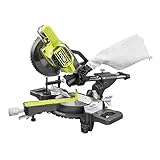
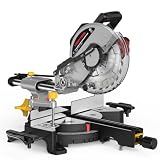


Best 10-Inch Ryobi Sliding Miter Saws at a Glance
Ryobi’s 10-inch sliding lineup is aimed at DIY remodelers, trim carpenters, deck builders, and homeowners who need more crosscut capacity than a non-sliding saw provides. The main decision is not simply which saw has the largest specification; it is whether you value cord-free convenience, maximum support for long boards, or the lowest purchase cost.
| Model | Power | Maximum crosscut | Bevel and miter adjustment | Approx. weight | Best fit |
|---|---|---|---|---|---|
| Ryobi TSS102L | 15-amp corded | About 12 in. at 90 degrees | Up to 45 degrees bevel; up to 50 degrees miter | About 32 lb | Budget DIY and occasional projects |
| Ryobi TSS103L | 15-amp corded | About 12 in. at 90 degrees | Up to 45 degrees bevel; up to 50 degrees miter | About 39 lb | Best all-around home workshop choice |
| Ryobi PBLMS01B | 18V ONE+ HP cordless | About 12 in. at 90 degrees | Up to 45 degrees bevel; up to 47 degrees miter | About 38 lb without battery | Portable work and ONE+ battery owners |
Specifications can vary slightly by package, production revision, and region. Before buying, confirm the exact manual for the model suffix being offered, especially if the listing includes a battery, blade, or stand.
1. Ryobi TSS103L: Best Overall for a Home Workshop
The TSS103L is the strongest general-purpose pick in the Ryobi sliding miter saw 10-inch range. Its 15-amp motor avoids battery-runtime concerns, and its approximately 12-inch crosscut capacity handles common 2×6, 2×8, shelving, flooring, and trim work in a single pass. It is also the more practical choice for repeated cuts because it can run continuously without stopping to recharge.
A typical setup includes a carbide-tipped blade, a laser or cut-line indicator depending on the package, a dust bag, blade wrench, and work clamps. The saw usually provides positive miter detents for frequently used angles, with a miter range reaching approximately 50 degrees in both directions and a bevel range of approximately 45 degrees.
The main disadvantage is weight. At roughly 39 pounds, it is manageable to move occasionally but too cumbersome for carrying up and down stairs all day. Its longer sliding rails also require more bench depth than a compact non-sliding saw. Choose this model if the saw will live on a bench, folding stand, or rolling cart.
2. Ryobi PBLMS01B: Best Cordless 10-Inch Option
The PBLMS01B uses Ryobi’s 18V ONE+ HP battery system and is the best 10 inch Ryobi sliding miter saw for work sites without convenient power. It is particularly useful for framing repairs, outdoor projects, punch-list work, and installations where moving an extension cord would be inconvenient.
Its brushless motor is designed for more efficient cordless operation, but runtime depends heavily on the battery size, material, blade sharpness, and cutting pace. A high-capacity battery is a better match than a small compact pack for thick lumber or repeated cuts. The battery and charger may be sold separately, so the initial cost can exceed that of a corded saw if you are not already invested in ONE+ tools.
The cordless design does not make the saw especially light: the tool itself is around 38 pounds before adding the battery. Its advantage is freedom from the cord, not effortless carrying. The approximately 12-inch crosscut capacity is comparable to the corded models, while the miter range is commonly listed at up to 47 degrees and the bevel range at up to 45 degrees.
For occasional cutting, calculate battery value before choosing it. For example, if a 4.0Ah battery and charger add roughly $100 to $180 to the package and you use the saw for only six projects per year over three years, that equipment contributes about $6 to $10 per project before considering the saw itself. Cordless convenience may still be worth it, but it is not automatically the cheaper option.
3. Ryobi TSS102L: Best Lower-Cost Corded Choice
The TSS102L is an older and simpler corded 10-inch sliding model that remains appealing when sold at a substantial discount. It provides the central capability most DIY users want: a sliding rail system, a 15-amp motor, approximately 12 inches of 90-degree crosscut capacity, and common bevel and miter adjustments.
Compared with the TSS103L, the differences are more likely to involve convenience features, packaging, refinement, and availability than a dramatic change in cutting size. Depending on the version, the cut-line system and included accessories may be less sophisticated. Inspect the package carefully for the blade, clamps, dust collection parts, and warranty terms.
It is a sensible choice for occasional baseboard, deck, picture-frame, and shelving projects. It is less attractive when the price approaches that of the newer corded model, because the newer saw may offer easier adjustments, better accessory support, or a more current parts supply.
Head-to-Head: Capacity, Adjustments, and Features
Cutting capacity
All three saws are designed around the useful middle ground of a 10-inch blade. A roughly 12-inch crosscut at 90 degrees is enough for many 2x boards and wide trim pieces. Capacity decreases at compound angles, and a thick board may need to be repositioned or cut in stages.
Do not judge a saw only by its advertised crosscut number. The fence opening, sliding smoothness, scale readability, and ability to hold a long board squarely matter just as much. For crown molding, check the listed nested-crown capacity and use auxiliary support rather than balancing long stock on the small table.
Bevel and miter adjustment
A bevel range of approximately 45 degrees is adequate for most trim, framing, and furniture tasks. Miter detents make repeated 0-, 15-, 22.5-, 31.6-, and 45-degree cuts faster, but detents are starting points rather than guarantees of perfect accuracy. Dust and chips can prevent the table from seating fully, so clear the detent area before diagnosing an angle problem.
Included features
Ryobi commonly includes a carbide blade, hold-down clamp, dust bag, blade wrench, and a cut-line aid, but inclusions vary by model and retailer package. The dust bag is useful for containing larger chips, yet it will not replace a shop vacuum. A vacuum adapter and a properly supported hose can substantially improve visibility around the cut.
Which 10-Inch Ryobi Saw Fits Your Situation?
| Your situation | Recommended choice | Why |
|---|---|---|
| Lowest sensible cost for occasional work | TSS102L | Core sliding capacity without paying for cordless equipment |
| Frequent home renovation and trim work | TSS103L | Continuous corded power and a current all-around feature set |
| Already own several 18V ONE+ batteries | PBLMS01B | Battery and charger costs are easier to justify |
| No nearby outlet or frequent outdoor work | PBLMS01B | No extension cord and easier setup between locations |
| Very limited bench depth | None without measuring first | Sliding rails need rear clearance; consider a compact rail design or a non-sliding saw |
10-Inch vs. 12-Inch Sliding Miter Saw
A 10-inch sliding miter saw usually costs less, weighs less, and uses less expensive blades than a 12-inch model. Its 12-inch-class crosscut is sufficient for most residential trim and dimensional lumber. Blade availability is also excellent, and a quality 10-inch blade can produce clean results on wood, plywood, and composite trim.
A 12-inch sliding saw is preferable when you regularly cut large timbers, wide fascia, tall crown molding, or thick hardwood. It generally offers more vertical and compound capacity, but it is larger, heavier, more expensive, and harder to store. For a home workshop primarily cutting 2x4s, 2x6s, baseboard, casing, and shelving, the 10-inch format is usually the better-balanced purchase.
Stand Compatibility and Workshop Setup
Ryobi miter saws can be mounted to compatible Ryobi stands and many universal miter-saw stands, provided the mounting slots or brackets align with the saw base. Confirm the stand’s maximum load, mounting-hole range, and whether it leaves room for the sliding rails to travel fully. A stand that supports the front of the saw but blocks rear rail movement defeats the purpose of a sliding design.
For a fixed bench, allow room for the workpiece on both sides and check rear clearance before drilling mounting holes. Long boards should rest on level extensions. If the left and right supports are different heights, the board can rock or lift as the blade enters, producing inaccurate cuts and increasing kickback risk.
Ownership Realities: What Wears and What to Maintain
- Blade: The blade is normally the first consumable. Replace or sharpen it when cuts burn, wander, or require excessive feed pressure.
- Sliding rails: Keep them free of resin and sawdust. Do not apply a heavy sticky lubricant that attracts abrasive dust; follow the manual’s lubrication guidance.
- Table and detents: Brush chips from the miter mechanism before locking an angle. A small obstruction can create a repeatable but incorrect cut.
- Carbon brushes: Older corded motors may eventually need brush service. Reduced power, intermittent operation, or unusual sparking warrants inspection and qualified repair.
- Dust collection: Empty the bag frequently and clear the blade guard area with the saw unplugged or the battery removed. Never defeat the lower guard.
Before the first project, verify the blade is square to the table and fence, check that the fence halves are aligned, and make a test cut in scrap. This five-minute check prevents a large batch of baseboard or flooring from being cut at the wrong angle.
Final Verdict
Choose the TSS103L for the best balance of capacity, continuous power, and home-workshop value. Choose the PBLMS01B if cordless mobility is central to your work and you already own compatible ONE+ batteries. Choose the TSS102L only when its price is clearly lower and you need a basic corded slider for occasional projects. For most homeowners comparing a 10 inch Ryobi sliding miter saw with a larger 12-inch machine, the 10-inch models deliver enough capacity with lower ownership and storage costs.